




French Rococo Timepiece
A french rococo timepiece brings organic asymmetry and sculptural gilt bronze into a room, serving both as an ornate centrepiece and a working clock.
French Rococo Timepiece
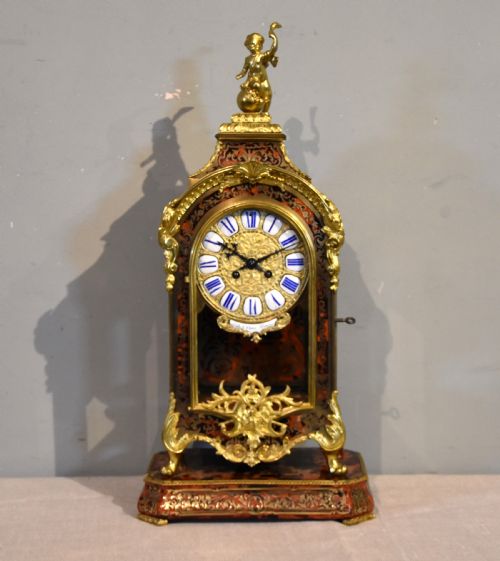
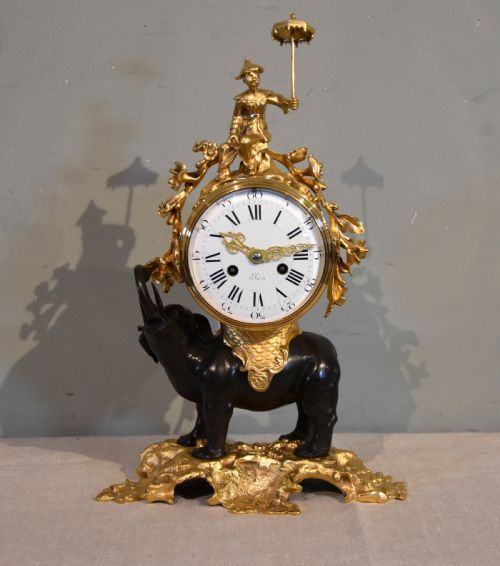
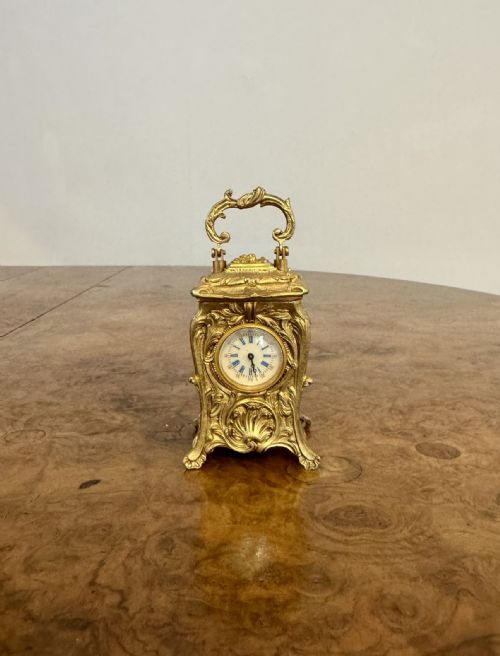
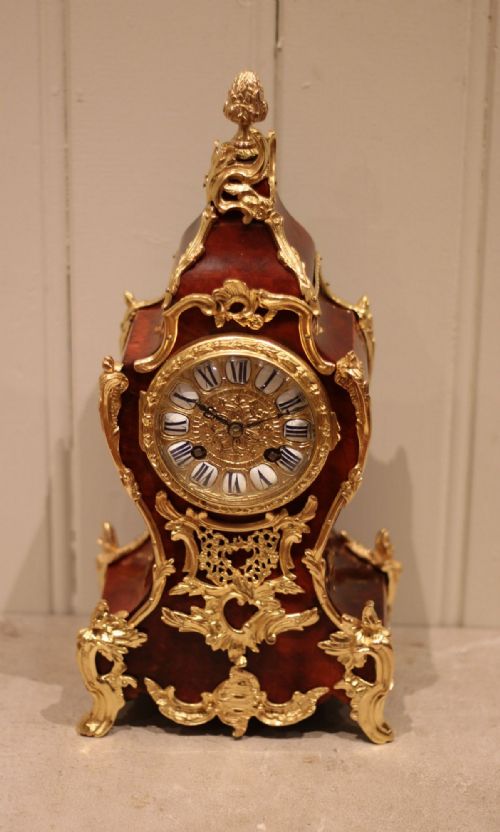
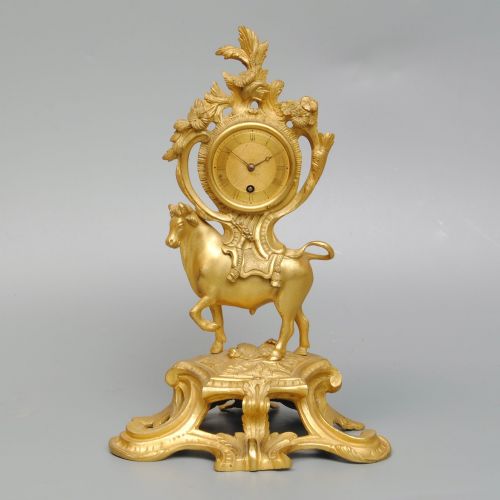
A french rococo timepiece is an ornamental clock typically housed in a heavily cast and chased metal case filled with C-scrolls, foliage, and asymmetrical flourishes. These objects range from substantial mantel clocks depicting figures or animals to smaller boudoir and bedside pieces.
The versions most commonly met on this page date from the nineteenth century, drawing heavily on earlier Louis Quinze and Louis Seize design idioms. Makers utilised gilt bronze, ormolu, brass, and porcelain, frequently incorporating enamel dials and intricate figural subjects such as cherubs or mythological scenes.
Beyond standard mantel clocks, forms include wall-hung cartel clocks and tortoiseshell-inlaid Boulle pieces. Buyers encounter both domestic French workshop output and pieces influenced by the broader European revival movements of the Victorian era.
How they were made
The construction relies on heavy bronze or brass castings that were hand-chased to sharpen the scrolling detail and foliage. These metal housings were frequently finished with mercury gilding or modern electroplating to achieve the characteristic ormolu surface.
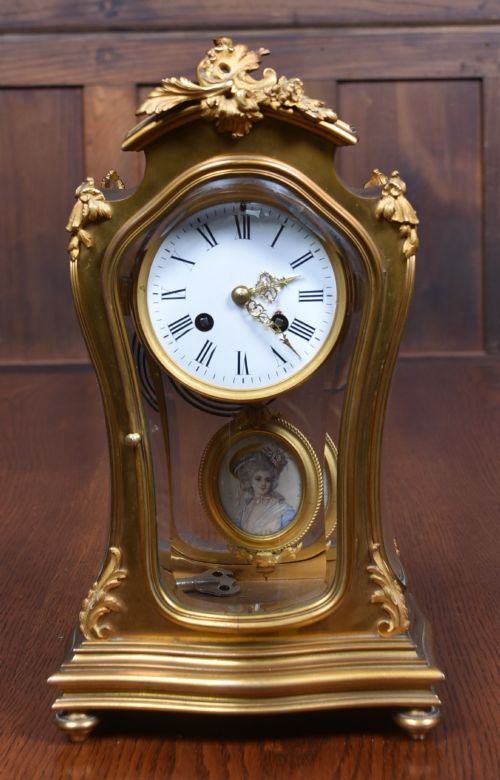
Clockmakers paired these sculptural cases with precise mechanical movements, often sourcing individual gear trains and escapements from specialised provincial factories. Dials combined white enamel numerals with delicate hands, sometimes protected behind curved glassbezels or mounted alongside hand-painted porcelain panels.
French Rococo Timepiece Retail Price Guide 2026
Typical asking prices for french rococo timepiece among the pieces listed under this phrase on Sellingantiques today, from the lower quarter to the upper quarter. They describe what is for sale here now, not the wider market.
Listings feature periods spanning from the eighteenth to the late nineteenth century, predominantly utilising ormolu, gilt bronze, and tortoiseshell.
What varies in quality
Quality rests primarily in the crispness of the bronze casting and the depth of the subsequent hand-chasing. Superior examples display sharply defined relief work where the organic motifs appear fluid and deeply undercut, whereas lesser pieces show softer, shallower surface details resulting from worn moulds.
The mechanical movement inside contributes significantly to the standing of a piece. Signed movements from known makers or established industrial houses indicate higher manufacturing standards and better overall clockmaking provenance.
Samuel Marti·Japy Freres·A.D. Mougin·Leon Message·John Bennett
The French Rococo Timepiece Glossary
- Ormolu
- Gilded bronze, typically achieved through the application of a gold amalgam or modern electroplating onto a cast bronze base. This finish provides the bright, reflective golden surface characteristic of many antique clock cases.
- Boulle
- A form of marquetry utilising tortoiseshell and cut brass inlay, named after the famous cabinetmaker Andre-Charles Boulle. Pieces utilising this technique often feature contrasting dark shell panels interwoven with intricate metallic arabesques.
- Cartel clock
- A wall-mounted clock housed in an ornate, asymmetrical frame made of gilt bronze or carved wood. These pieces were designed to hang directly on a wall rather than rest upon a mantel or bracket.
- Champleve
- An enamelling technique where troughs or cells are hollowed out of the metal surface and filled with coloured glass paste before firing. This decorative method frequently appears on the dials and bezels of later nineteenth-century clocks.
French Rococo Timepiece: Frequently Asked Questions
How do I wind a french rococo timepiece?
Winding requires a matching key inserted into the winding holes on the dial face, turning gently until resistance is felt. Care must be taken not to overwind the mainspring.
Most movements run for several days on a single wind, depending on whether the clock includes a strike train for the hours and half-hours.
Where should I place my clock?
These clocks sit best on stable, level surfaces such as mantelpieces, console tables, or sturdy desks where vibrations are minimal. Levelling the case ensures the pendulum swings evenly and the clock keeps steady time.
Avoid placing them in direct sunlight or areas subject to dampness, which can damage the delicate enamel dials and the gilt metal surfaces.
How do I tell nineteenth century pieces apart?
Nineteenth-century pieces often combine rococo revival scrolls with industrial movement stamps from volume makers like Samuel Marti or Japy Freres. Stylistic markers include machine-toothed gears and standardised backplates.
Earlier eighteenth-century examples exhibit hand-cut wheel teeth and more idiosyncratic movement layouts produced by individual master horologists.
What is the difference between ormolu and gilt brass?
Ormolu consists of cast bronze treated with gold to create a warm, deep metallic lustre that ages gracefully over decades. The underlying metal is heavy and dense.
Gilt brass is typically lighter and may reveal a brighter, yellower metallic tone where surface wear exposes the base alloy beneath.