



French Ribbon Mirror
A french ribbon mirror combines disciplined neoclassical symmetry with carved drapery, bringing a sense of lightness and formal grace to an interior wall.
French Ribbon Mirror
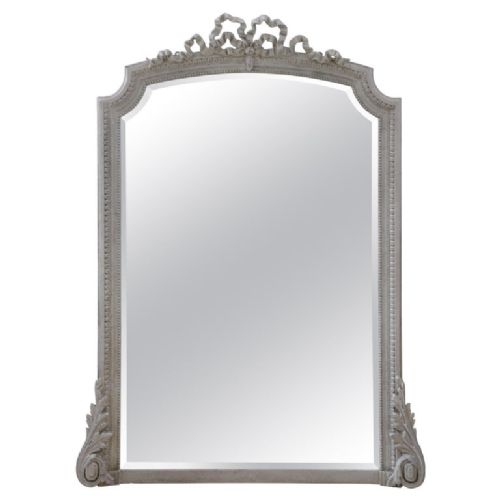
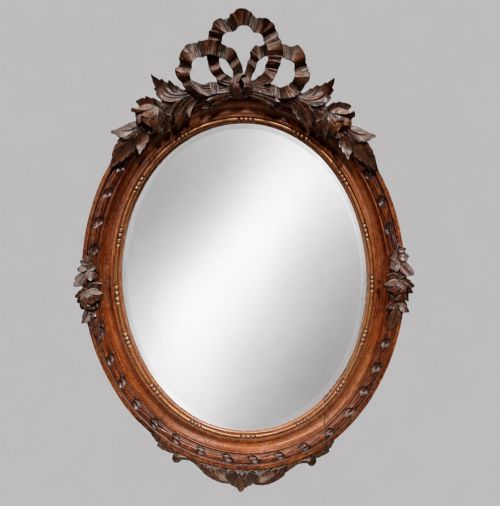
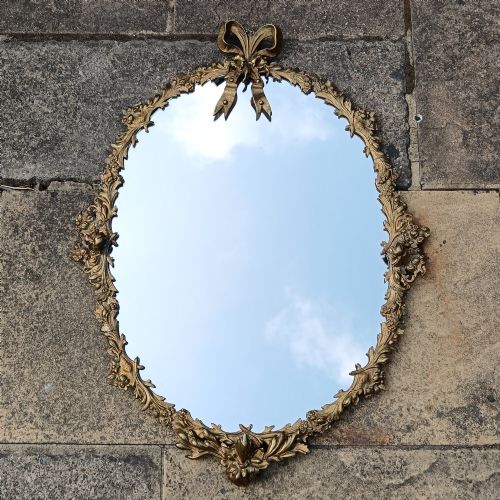
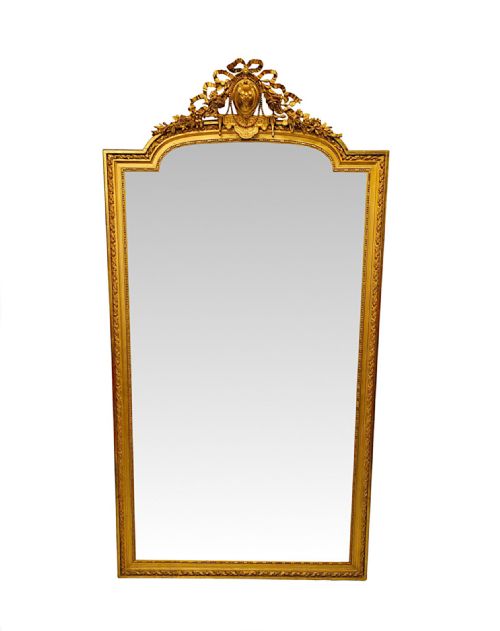
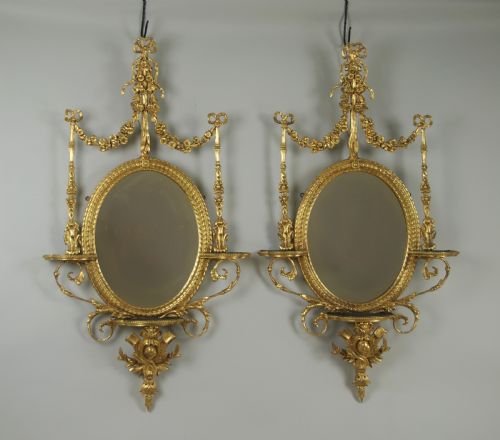
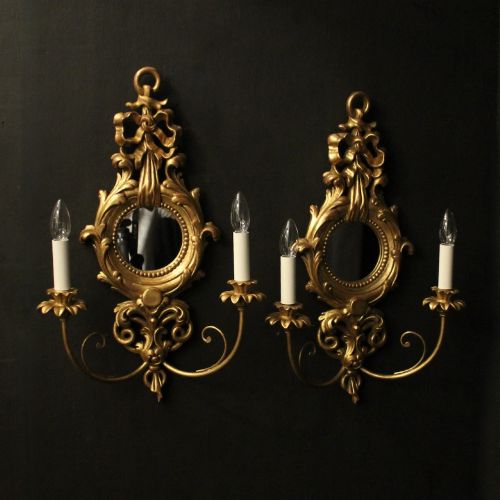
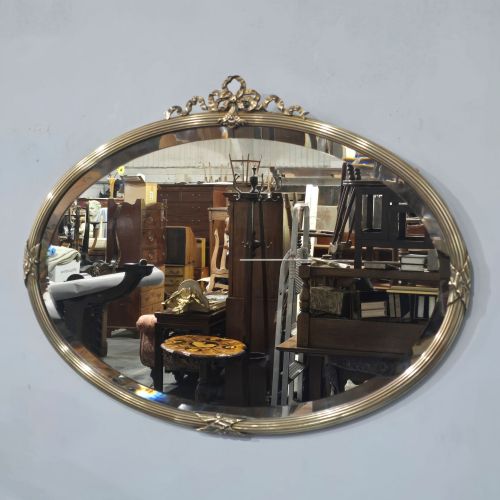
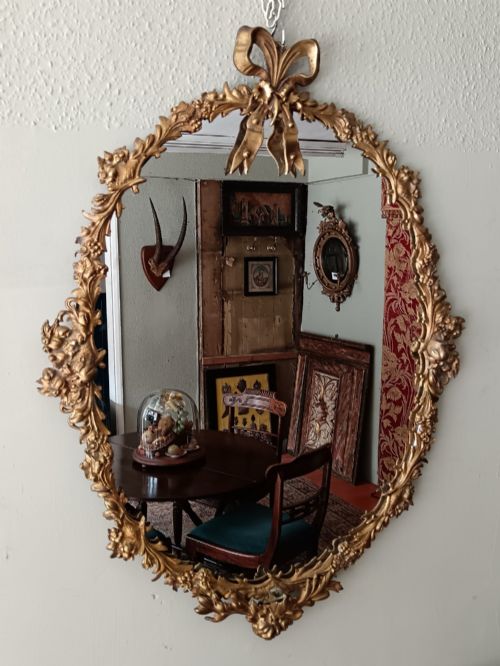
When you search for a french ribbon mirror, you encounter decorative looking-glasses defined by carved bows, knotted ribbons, and floral crests atop oval or arched frames. These pieces emerge predominantly from the nineteenth and early twentieth centuries, spanning periods from the Victorian era through the Belle Époque.
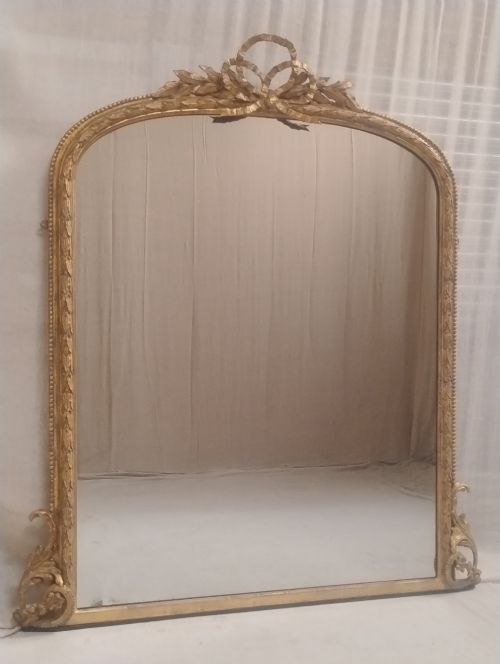
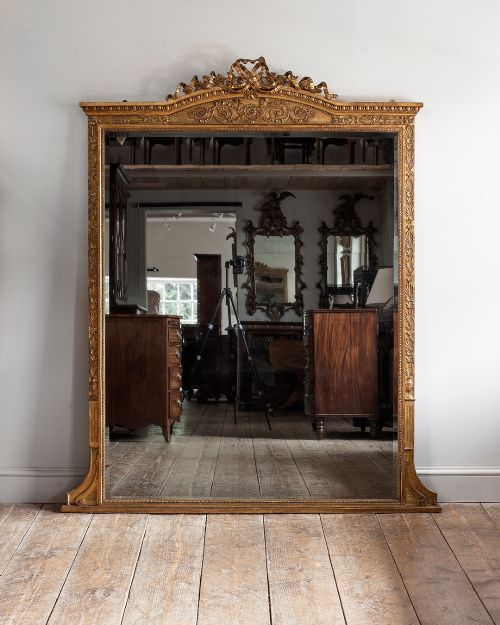
The version you are most likely to meet on this page is an oval wall mirror featuring a giltwood, gesso, or gilt bronze frame topped with a carved ribbon crest. These range from intimate vanity and dressing pieces to large overmantel and pier mirrors designed to anchor a principal reception room.
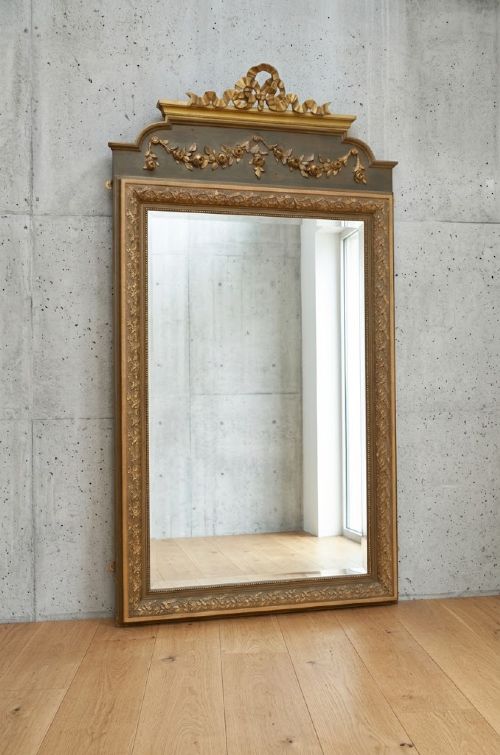
The stylistic lineage draws heavily on Louis XVI and neoclassical revivals, where symmetry and delicate ornamentation replace heavier baroque flourishes. Alongside gilded examples, the inventory includes painted wood and parcel gilt variants that display softer colour palettes suited to period and eclectic settings.
Materials and construction
Makers built these frames using seasoned timber carcasses, applying coats of gesso to build up the intricate relief work for the ribbons, bows, and floral swags before gilding or painting the surface. Giltwood and gilt bronze provide the primary reflective brilliance, while secondary pieces utilise painted wood and brass.
Mirrored glass plates, often bevelled at the edges, are set within the rebated frame and secured from the rear. The crispness of the ribbon crests depends entirely on the skill of the carver working the gesso or wood directly.
Listings span the nineteenth and early twentieth centuries, featuring glass, gesso, giltwood, and painted wood formed into wall, overmantel, and vanity mirrors.
Judging quality in these mirrors
The distinction between ordinary and exceptional pieces lies in the depth and crispness of the carved ribbon and bow crests. Superior examples feature undercut carving where the ribbons appear to lift freely from the frame, rather than flat, moulded application.
Quality also shows in the integration of the crest to the main frame, ensuring the joinery is seamless and the original gilding or painted finish retains its subtle tonal variations without heavy overpainting.
The French Ribbon Mirror Glossary
- Giltwood
- Timber that has been coated with a thin layer of gold leaf over a prepared gesso ground. This technique creates a warm, reflective metallic surface that ages with a distinctive soft patina.
- Gesso
- A mixture of gypsum, chalk, and size used as a base for painting or gilding on wood. Artisans carved and built up this paste to form three-dimensional decorative motifs like ribbons.
- Overmantel Mirror
- A large mirror designed specifically to hang above a fireplace mantelpiece. These pieces often feature wide proportions to reflect the light and space of the room.
- Trumeau
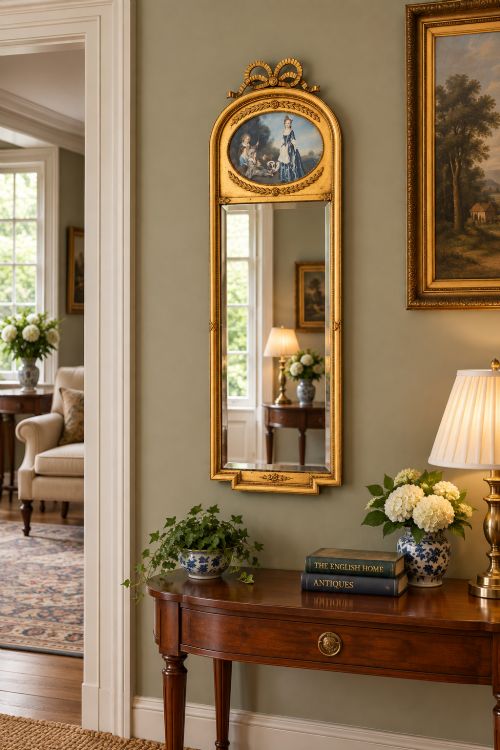
- A decorative wall mirror incorporating a painted panel or carved artwork within the upper section of the frame. These architectural pieces integrate directly into wall panelling.
- Pier Mirror
- A tall, narrow looking-glass designed to fit the wall space between two windows. They frequently incorporate display brackets or consoles at the base.
French Ribbon Mirror: Frequently Asked Questions
Where should I hang a french ribbon mirror?
These mirrors work best hung at eye level above a mantelpiece, console table, or dressing chest where their decorative crests can be appreciated without visual competition.
Ensure the wall fixings match the weight of the timber and gesso frame, as larger overmantel examples require substantial support.
How do I clean the gilt frame?
Dust the carved ribbon crests gently using a soft, dry artist brush or ostrich feather duster to prevent disturbing the delicate gesso or leaf.
Avoid using water, commercial solvents, or polishes, which can strip historic gilding and damage the underlying preparation layers.
Are the mirror plates original?
Many nineteenth-century examples retain their original silvered glass, which often displays minor foxing, speckling, and authentic distortion.
Original bevelled glass adds historical integrity to the piece, while replaced plates offer a clearer, brighter reflection.
How do I identify a Louis XVI revival piece?
Look for strict symmetry, straight or oval geometric lines, pearl beading, and classical botanical motifs such as acanthus leaves paired with the characteristic ribbon bow.
Nineteenth-century revival pieces interpret these eighteenth-century Parisian motifs with high technical skill and distinct period framing techniques.