


French Revival Wall Sconces
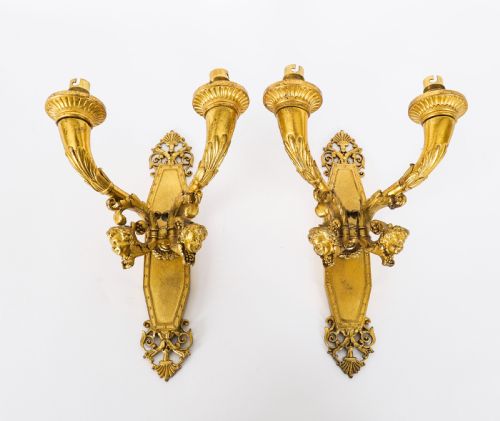
French revival wall sconces bring gilded decorative presence to a room, spanning periods from the nineteenth century into the twentieth with ornate metallic forms.
French Revival Wall Sconces
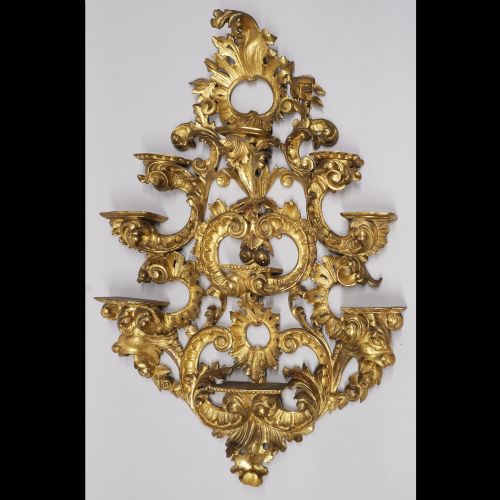
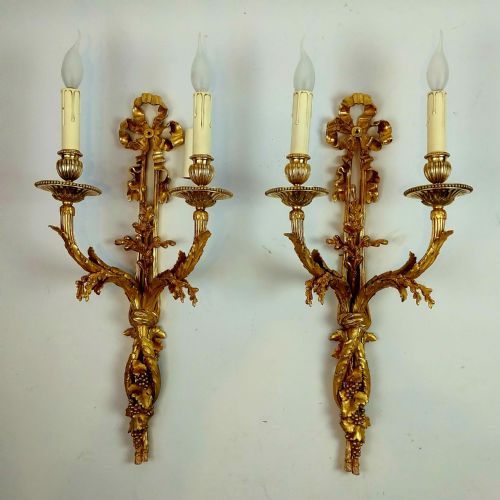
French revival wall sconces encompass multi-branched wall lights, wall brackets, and girandole mirrors designed to illuminate and adorn interiors. When searching for french revival wall sconces, buyers encounter pieces derived predominantly from nineteenth-century revivals of Louis XIV, Louis XV, and Louis XVI styles, alongside Regency and Rococo interpretations.
Origins span standard nineteenth-century manufacturing phases up to twentieth-century interpretations, utilising brass, ormolu, and gilt bronze. Buyers frequently select these fixtures to introduce period character and decorative illumination into reception rooms and hallways.
Materials and construction
Construction relies heavily on cast metal, brass, ormolu, and gilt bronze, often shaped into complex scrolling arms and floral motifs. Giltwood, gesso, and gold leaf apply to carved wooden brackets and mirror frames, providing a reflective metallic or gilded finish.
Makers employed casting and carving techniques to achieve the sculptural depth characteristic of Rococo and Louis revivals. Glass components integrate into girandole mirrors and secondary decorative elements to enhance light distribution.
Object forms span dedicated multi-branch wall lights, girandole mirrors, console mirrors with shelves, and carved wall brackets.
Assessing quality and execution
Quality reveals itself in the crispness of the cast detailing and the depth of the gilding across ormolu, gilt bronze, and giltwood surfaces. Finer examples display deliberate hand-chasing on metal mounts, whereas simpler pieces rely on basic casting without subsequent surface refinement.
The structural integrity of multi-branch arms and the weight of the supporting backplates distinguish superior manufacturing from lighter, more utilitarian brass or cast metal productions. Cohesion of style, whether following Louis XV or Regency models, dictates the aesthetic success of the piece.
The French Revival Wall Sconces Glossary
- Ormolu
- A metallic application mimicking gold, frequently utilised on nineteenth-century French lighting to provide a rich surface sheen. It appears extensively across revival wall lights and girandoles.
- Giltwood
- Timber treated with gold leaf or gold paint, standard in the production of ornate nineteenth-century wall brackets and mirror frames. This technique adds warmth and reflectivity to carved details.
- Girandole
- A decorative wall mirror featuring attached candle branches designed to multiply the effect of ambient light. These fixtures combine functional illumination with reflective glass.
- Rococo Revival
- A nineteenth-century design movement characterised by asymmetrical scrolling, C-scrolls, and organic plant motifs. It heavily influences the curved arms of many wall sconces.
- Wall Bracket
- A projecting shelf or support mounted to a wall, sometimes paired with ceramic or mirrored elements. They serve to display small decorative objects or hold lighting components.
French Revival Wall Sconces: Frequently Asked Questions
What periods do these sconces date from?
The available pieces primarily date from the nineteenth century, encompassing various revival phases from the 1800s through the Victorian era. Later twentieth-century examples also appear.
Design influences reach back to earlier French reigns, reinterpreted through nineteenth-century manufacturing techniques and materials.
How do I style wall sconces in a modern home?
These fixtures integrate into contemporary interiors by mounting them at eye level to frame mirrors, artworks, or architectural focal points. They introduce metallic texture and historical contrast to neutral walls.
Wiring considerations allow them to function as operational wall lights while maintaining their period aesthetic.
What materials are most common?
Ormolu, gilt bronze, brass, and cast metal form the primary metallic elements of the wall lights and sconces. Giltwood, gesso, and gold leaf appear frequently on mirrors and wall brackets.
Glass and ceramic components occasionally supplement the metal and wood structures.
How can I tell the different revival styles apart?
Louis XIV revival pieces feature heavier, more symmetrical classical ornamentation, while Louis XV and Rococo revivals favor flowing, asymmetrical curves and organic leaf motifs. Louis XVI styles introduce straighter lines and neoclassical symmetry.
Regency and Adam revivals incorporate distinct classical geometric patterns and urn or swag details.