



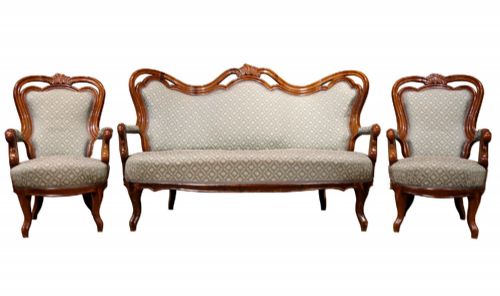


French Revival Settee
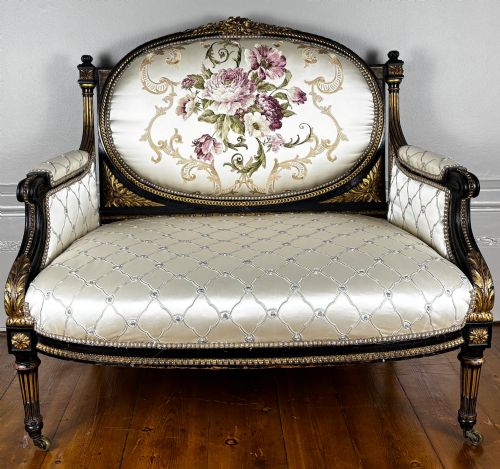
A French revival settee brings continental curves and period romance directly into a reception room.
French Revival Settee
When searching for a french revival settee, collectors encounter heavily carved wooden frames paired with historic continental styling. These pieces span the nineteenth century and early twentieth century, drawing inspiration from Louis court aesthetics and Victorian tastes.
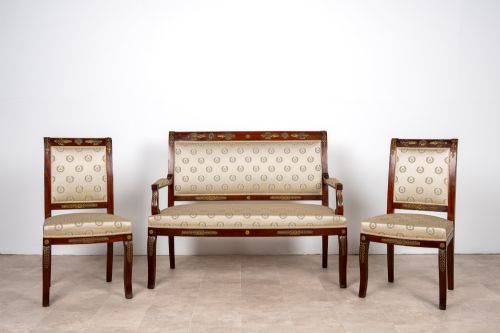
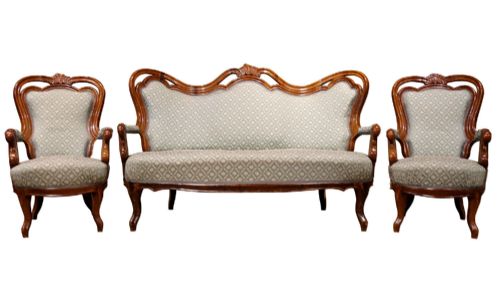
The selections here range from walnut three-piece salon suites and gilded wood sofas to mahogany chaises longues and caned couches. Walnut and mahogany dominate the timber choices, often shaped into Rococo and Louis XVI revival silhouettes.
Buyers most frequently meet nineteenth-century walnut frames and later gilded or painted variations. These range from compact two-seater settees to large salon pieces and low end-of-bed seating.
How they were made
Cabinetmakers shaped solid timber frames from walnut, mahogany, rosewood, and giltwood using traditional hand-carving techniques. Structural joints relied on sturdy joinery to support the ornate cabriole legs and serpentine rails characteristic of the revival styles.
Upholstery completed the seating, utilising fabrics such as velvet, textile, and standard upholstery fabric. Canework panels also appeared on specific revival frames, requiring careful weaving by hand into open wooden channels.
French Revival Settee Retail Price Guide 2026
Typical asking prices for french revival settee among the pieces listed under this phrase on Sellingantiques today, from the lower quarter to the upper quarter. They describe what is for sale here now, not the wider market.
Some nineteenth-century makers quietly tucked delicate floral carvings onto the rear legs where only sweeping floorboards could admire them.
What varies in quality
The depth and crispness of the wood carving distinguish higher tier pieces from simpler production. Sharp relief work on walnut or giltwood frames indicates superior craftsmanship compared to shallow or cast decoration.
The integrity of the timber framing and the proportion of the silhouette dictate overall distinction. Pieces retaining original canework or fine gilding command greater appreciation among purists.
The French Revival Settee Glossary
- Rococo Revival
- A nineteenth-century design movement mimicking the asymmetrical scrolls and natural motifs of the eighteenth-century French court. It appears frequently on carved walnut frames.
- Louis XVI Revival
- A neoclassical style favouring straight tapered legs, fluting, and rectangular proportions. This aesthetic emerged strongly in late nineteenth and early twentieth-century seating.
- Giltwood
- Timber coated with a thin layer of gold leaf or metallic paint. It defines the bright finish seen on many formal salon sofas.
- Canework
- Woven rattan or cane panels utilised for backrests and seats. It provides a lighter texture alongside solid wood framing.
- Chaise Longue
- An elongated upholstered chair designed for reclining. Several nineteenth-century examples appear alongside standard settees.
French Revival Settee: Frequently Asked Questions
Where did these settees fit in a home?
These pieces sat primarily in formal drawing rooms, parlours, and large reception spaces as central seating. They served visitors during social gatherings and afternoon calls.
Today, they function effectively as statement furniture in living rooms, bedrooms, or wide hallways, maintaining their decorative purpose.
How do I identify a revival date?
Look closely at the timber patina, joinery methods, and underlying structural hardware. Nineteenth-century pieces often show hand-tool marks and older seasoning.
Stylistic shifts also help narrow the span, as Louis XVI revival details differ visibly from earlier heavy Victorian Rococo carving.
Can these settees be used daily?
Most antique frames remain robustly constructed from dense hardwoods like walnut and mahogany. Proper weight distribution ensures the frame suffers no undue stress during everyday sitting.
Upholstery condition dictates the comfort level, meaning modern padding updates allow frequent use without harming the antique timber structure.
What maintenance do wood frames require?
Maintain the polished timber surfaces by dusting regularly with a dry cloth and avoiding excessive moisture. Direct sunlight fades both exposed wood and textile coverings over time.
Occasional waxing protects natural walnut and mahogany finishes, preserving the grain depth recorded across these historical pieces.