






French Porcelain Stands
These French porcelain stands and jardinières unite fine ceramic plaques with rich timber frames and gilt mountings for interior display.
French Porcelain Stands
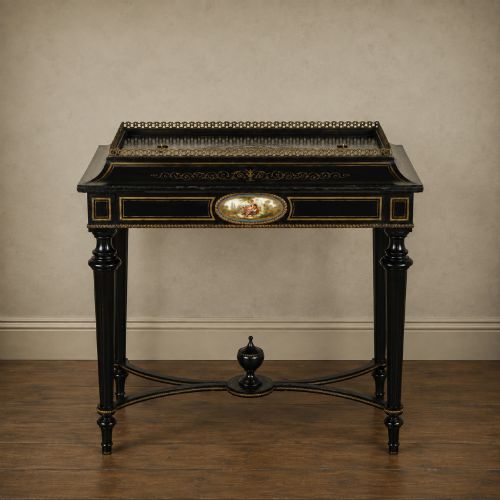
When you examine French porcelain stands, you encounter pieces designed primarily as jardinières, planter stands, and small tables incorporating decorated ceramic panels. The forms span the nineteenth century, drawing heavily on Louis XV and Louis XVI revivals alongside Napoleon III tastes.
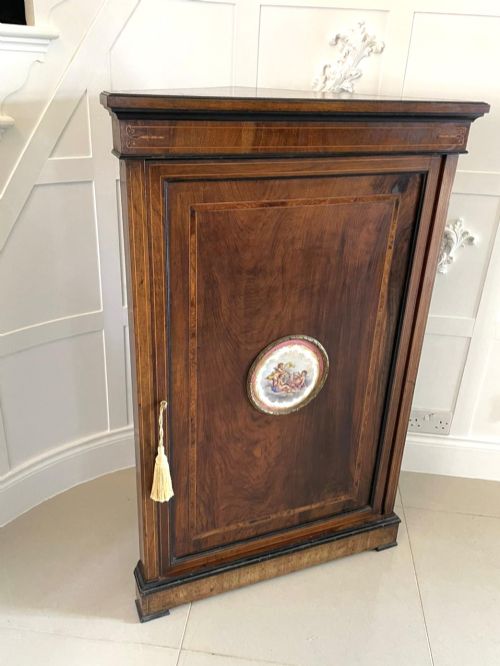
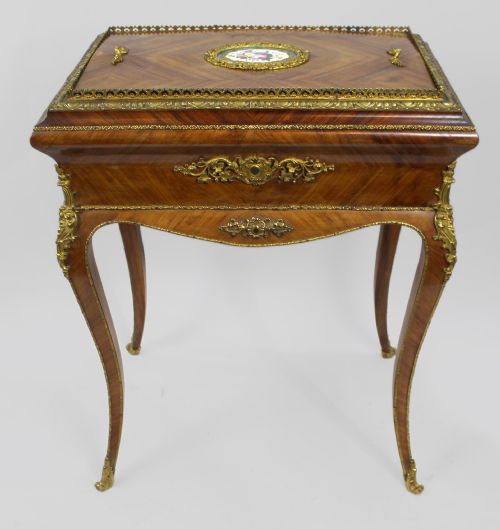
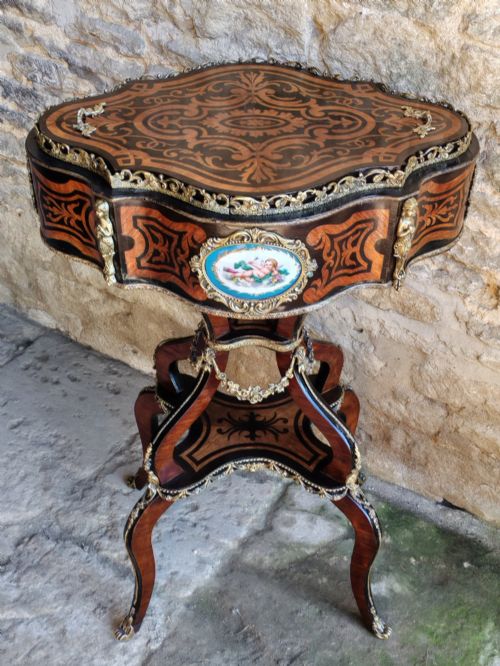
Most examples you meet on this page utilise marquetry or ebonised wood frames mounted with ormolu or brass, framing painted or glazed ceramic plaques. Forms range from freestanding jardinière stands to side tables and tiered étagères carrying porcelain decoration.
Makers and workshops produced these pieces to hold plants or display decorative arts within nineteenth-century drawing rooms. The surviving items reflect both grand continental commission work and more modest domestic furnishings of the period.
Materials and construction
Cabinetmakers constructed the main bodies using kingwood, walnut, and ebonised wood, frequently employing intricate marquetry and fine wood veneers. These timber frames provide the structural support required for heavier ceramic plaques and metal mounts.
Foundries cast ormolu and gilt bronze mounts to edge tabletops, frame porcelain plaques, and form decorative feet. Artisans then joined these metal elements securely to the wooden carcasses and brass bases.
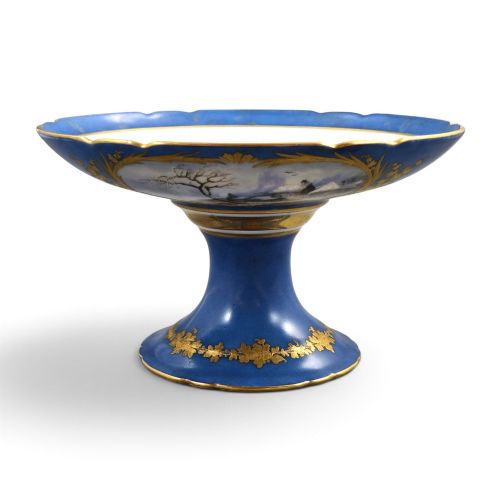
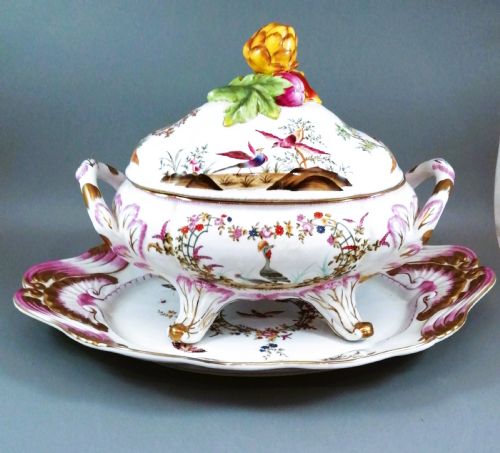
Ceramic elements include painted porcelain plaques, hand-painted panels, and biscuit porcelain shafts integrated into the stands, tazzas, and desk accessories. These plaques were fired, painted with floral or figural scenes, and set flush into the wooden or metal structures.
French Porcelain Stands Retail Price Guide 2026
Typical asking prices for french porcelain stands among the pieces listed under this phrase on Sellingantiques today, from the lower quarter to the upper quarter. They describe what is for sale here now, not the wider market.
Listings feature items from the nineteenth century, including pieces dated around eighteen-fifty, eighteen-sixty, eighteen-eighty, and nineteen-hundred.
Assessing quality
The standard of the hand-painted porcelain plaques dictates much of the visual value, with finer pieces displaying delicate brushwork and complex figural or floral scenes. Lesser examples rely on repetitive printed motifs or simpler glazed surfaces.
Ormolu casting and chasing separate ordinary mounts from exceptional ones, as sharper detail and heavier gilding distinguish superior metalwork. The crispness of the leaf scrolls and caryatid figures shows the hand of a skilled bronze worker.
Cabinetwork quality reveals itself in the precision of the marquetry inlay and the stability of the timber frames. Well-joined kingwood and walnut carcasses maintain their alignment and structural integrity far better than simpler constructions.
Louis Pierre Malpass·Sevres
The French Porcelain Stands Glossary
- Jardinière
- An ornamental stand or container designed to hold plants or flowers indoors. They frequently incorporate metal liners to protect the surrounding woodwork from moisture.
- Ormolu
- Gilt bronze mounted upon furniture or decorative objects to provide decorative edging and feet. The technique involves applying a mercury and gold amalgam to bronze before heating.
- Marquetry
- Inlay work using thin pieces of wood veneer to create decorative patterns and pictures on furniture surfaces. Craftsmen assemble contrasting timbers like kingwood and walnut to form geometric or floral designs.
- Tazza
- A shallow saucer-like dish mounted upon a stem and foot, used for display or serving. These often feature porcelain bowls supported by metal bases.
- Biscuit porcelain
- Unglazed ceramic ware that has undergone a single firing to achieve a matte, marble-like texture. It appears frequently in figures and decorative shafts.
French Porcelain Stands: Frequently Asked Questions
What were french porcelain stands used for?
These stands functioned mainly as indoor plant holders, jardinières, or display surfaces for decorative porcelain items within nineteenth-century reception rooms.
Their sturdy timber frames and metal liners allowed owners to house potted plants safely inside furnished parlours without damaging surrounding carpets or tables.
How do I identify the period of a stand?
You determine the age by examining the wood types, revival styles, and mounting techniques typical of nineteenth-century cabinetmaking. Pieces referencing Louis XV or Napoleon III tastes often carry specific construction traits from those decades.
Comparing the hand-painted porcelain plaques and ormolu chasing against dated examples helps narrow down the decade of manufacture between eighteen-thirty and nineteen-hundred.
Can these stands still hold real plants?
Many retain their original metal or tin liners designed to catch water, though modern gardeners usually place a potted plant inside a separate saucer first.
Protecting the interior wood and gilt bronze from prolonged moisture exposure preserves the structural integrity of the kingwood and marquetry.
What is the difference between a jardiniere and a tazza?
A jardinière acts as a larger container or stand meant for housing growing plants or floral arrangements, often featuring an elongated or deep body.
A tazza is an elevated shallow dish on a central stem, designed purely for visual display rather than supporting soil and greenery.