



French Period Commode
A french period commode brings substantial timber and polished marble to a room, offering both generous storage and distinct continental presence.
French Period Commode
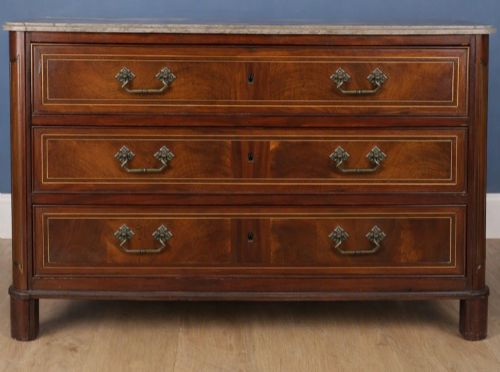
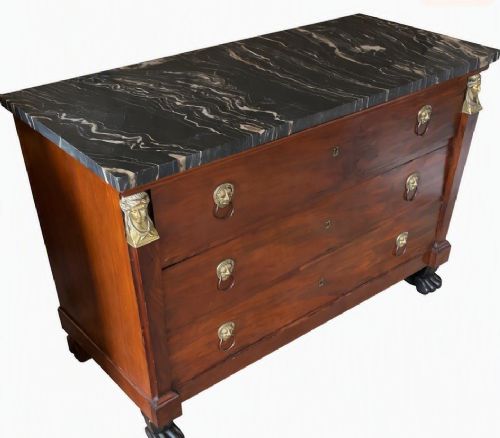
A french period commode functions as a low chest of drawers, primarily originating from continental workshops during the eighteenth and nineteenth centuries. These forms range from serpentine shapes of the Régence era to upright Louis Philippe examples and formal Empire mahogany chests.
Most pieces encountered here hail from the eighteenth and nineteenth centuries, spanning regional provincial workshops and grander metropolitan centres alike. Walnut, fruitwood, and mahogany dominate the selection, frequently paired with thick marble tops.
Buyers seeking a french period commode will find various regional interpretations, including restrained oak provincial chests and decorative pieces veneered in kingwood, rosewood, and satinwood. These chests provide practical drawer space while anchoring a room with period character.
What varies in quality
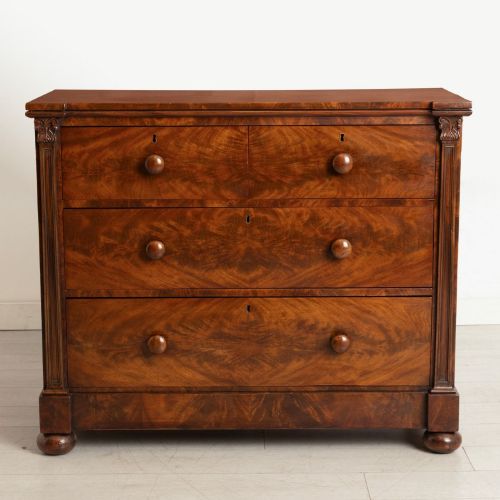
The refinement of the timber selection and the precision of the veneer matching separate standard pieces from exceptional ones. Finer examples display carefully chosen grain patterns that flow seamlessly across multiple drawers.
Hardware quality also dictates distinction, where heavy, crisply chased ormolu mounts indicate high-status workshops compared to simpler stamped brass fittings. Additionally, the presence of an original, undamaged marble top contributes significantly to a piece's integrity.
French Period Commode Retail Price Guide 2026
Typical asking prices for french period commode among the pieces listed under this phrase on Sellingantiques today, from the lower quarter to the upper quarter. They describe what is for sale here now, not the wider market.
Several pieces incorporate secret locking drawers hidden beneath the top moulding, designed for keeping private papers safe from prying eyes.
The French Period Commode Glossary
- Ormolu
- Gilded bronze mounts used to decorate the corners, feet, and aprons of finer furniture. This technique added rich metallic contrast to dark woods like mahogany and kingwood.
- Serpentine
- A front shape curving outward in the centre and inward at the sides, creating a gentle undulating line. This contour required advanced woodworking skill.
- Transitional
- A design phase bridging the heavy curves of the Louis XV style and the straight lines of the Louis XVI neoclassical period. Pieces often feature geometric veneers with subtle curved outlines.
- Escutcheon
- A protective plate surrounding a keyhole, frequently cast in brass or bronze. These details often match the surrounding drawer pulls and corner mounts.
French Period Commode: Frequently Asked Questions
What is a French period commode?
A french period commode is a decorative chest of drawers produced in France during specific historical eras, such as the Régence, Louis XV, or Empire periods. They were traditionally used in bedchambers and reception rooms for storing garments and linens.
These pieces are defined by their low profile, substantial timber construction, and often feature marble tops and ornate metal mounts. They serve both storage and display functions in modern interiors.
How do I style a commode in a modern home?
Placing a french period commode in a contemporary setting allows the antique wood tones and marble surfaces to stand out against neutral walls. Use the top surface for lamps, ceramics, or framed art rather than cluttering it with small items.
In living rooms or hallways, these chests provide functional surface area and deep drawers while introducing historical texture. Ensure the surrounding furniture scale complements the substantial proportions of the commode.
Are these commodes suitable for everyday bedroom use?
These chests offer deep drawers and sturdy construction, making them practical for storing folded clothing, linens, or personal items in a bedroom. The heavy drawers glide on traditional wood runners.
Care should be taken with moisture and heavy impacts, particularly on marble tops and veneered surfaces. Using coasters and felt pads protects the antique finish from daily wear.