





French Period Candlesticks
French period candlesticks bring monumental weight and precise gilding to a room, cast in bronze and ormolu during the eighteenth and nineteenth centuries.
French Period Candlesticks
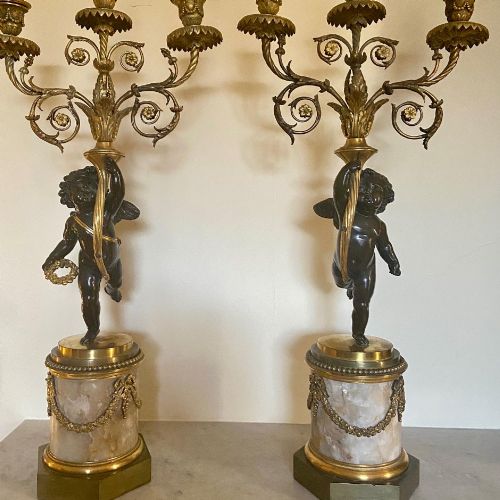
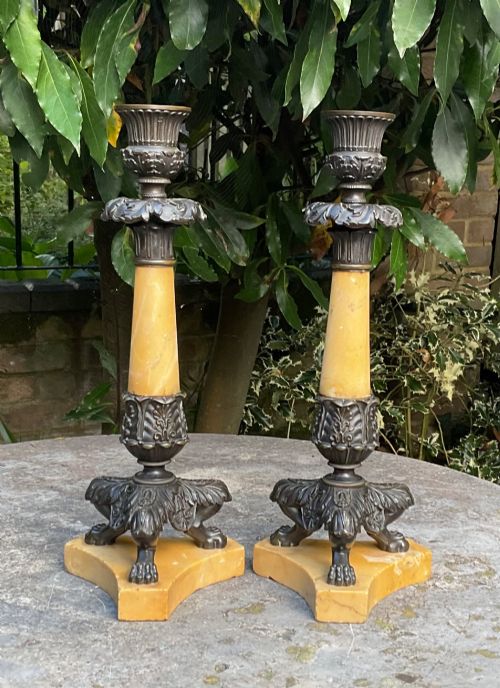
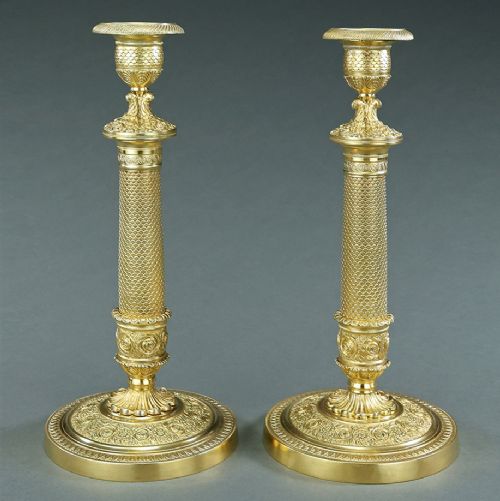
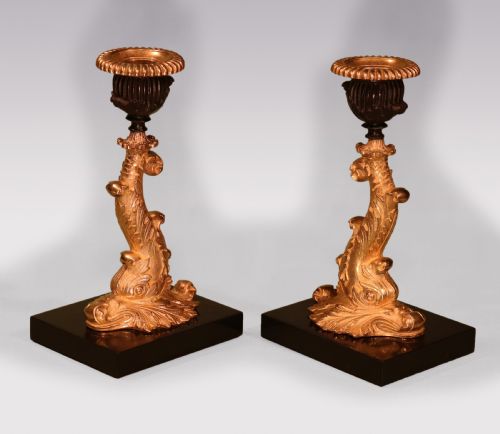
When you search for french period candlesticks, you encounter matched pairs and groupings designed to hold candles upon formal tables or mantelpieces. The selections here span the eighteenth and nineteenth centuries, moving through Louis XVI, Empire, Regency, Charles X, and Restauration styles.
Most items on this page take the form of standard candlesticks or multi-light candelabra, occasionally adapted into table lamps. These pieces originate from distinct classical design movements that favoured symmetry and sculptural dignity.
The prevailing aesthetic draws heavily upon neoclassical motifs, incorporating classical figures, columns, and architectural bases. They serve as functional lighting instruments and substantial decorative ornaments.
How they were made
Maker workshops utilised lost-wax and sand casting methods to shape bronze into intricate figures, foliate scrolls, and architectural plinths. Artisans then applied mercury gilding to create the brilliant ormolu surfaces characteristic of the period.
Makers combined contrasting materials within single objects, pairing patinated dark bronze with polished gilt metal, cut glass, and various marbles including Sienna and slate. This juxtaposition of textures provided the visual depth expected in high-end domestic metalwork.
French Period Candlesticks Retail Price Guide 2026
Typical asking prices for french period candlesticks among the pieces listed under this phrase on Sellingantiques today, from the lower quarter to the upper quarter. They describe what is for sale here now, not the wider market.
Listings feature pieces spanning the eighteenth and nineteenth centuries, incorporating bronze, ormolu, marble, fluorspar, and cut glass.
What varies in quality
The depth and preservation of the original mercury gilding or ormolu finish determine the visual brilliance of the piece. Superior examples retain their original contrasting textures between bright fire-gilt highlights and matte patinated areas.
Francois Redmond
The French Period Candlesticks Glossary
- Ormolu
- Gilded bronze produced by applying a mercury-gold amalgam to a bronze base and heating it to vaporise the mercury. This technique creates a durable, luminous golden surface.
- Patinated bronze
- Bronze that has been chemically treated or allowed to age naturally to produce a dark, uniform surface colour. It provides a stark contrast against bright ormolu mountings.
- Candelabra
- A branched candlestick designed to hold multiple candles simultaneously. These fixtures often feature removable arms to allow conversion into single candlesticks.
- Sienna marble
- A yellow-gold decorative marble featuring dramatic purple and grey veining. It was frequently imported from Italy and used for the bases of high-status French bronzes.
- Fluorspar
- A colourful mineral featuring banded purple and white hues, occasionally utilised for decorative bowls or candle bodies. It brings a translucent quality to nineteenth-century assemblies.
French Period Candlesticks: Frequently Asked Questions
What is the difference between French Empire and Charles X candlesticks?
French Empire pieces display heavy classical influence with severe architectural lines and military motifs. Charles X examples often lighten these forms with softer floral detailing while retaining bronze and ormolu construction.
Both styles utilise similar casting methods, yet the later Charles X designs introduce a slightly more relaxed domestic elegance compared to the strict symmetry of the earlier Empire period.
How do I clean bronze and ormolu candlesticks?
Maintenance requires only gentle dusting with a soft, dry brush to prevent dirt accumulation within the chased recesses of the bronze. Avoid chemical metal polishes entirely, as abrasive substances strip away the historic fire gilding.
Protecting the original patination and mercury gilding preserves both the visual integrity and the historical value of the piece. Moisture should be kept away from any marble or slate components.
Were these pieces always made in pairs?
Makers typically produced candlesticks and candelabra in matched pairs to maintain symmetry upon formal mantelpieces and dining tables. Surviving pairs remain the standard format for this category of antique metalwork.
Occasional single items or assembled sets of three appear, reflecting the flexible arrangements used in nineteenth-century interiors. Matched pairs command stronger interest among collectors.
Can antique candelabra be used with modern candles?
Most antique sockets accommodate standard taper candles, though minor variations in nineteenth-century sizing occur across different workshops. Inserting modern candles requires checking the diameter against the nozzle to ensure a secure fit.
Care should be taken to catch drips before they reach the delicate ormolu surface or marble plinth. Using snug-fitting candles prevents tilting and potential wax damage to the bronze.