



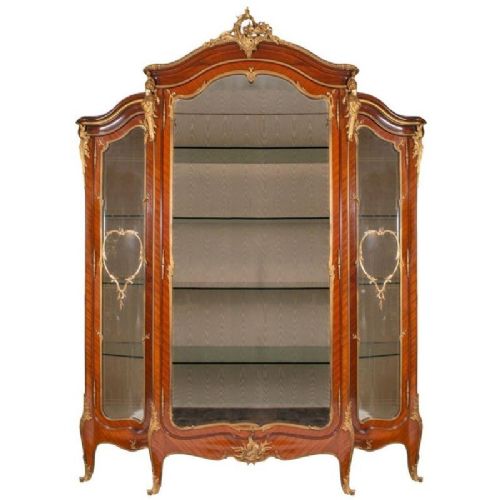


French Parlor Cabinet
A French parlor cabinet brings architectural presence and refined display into a room, offering glazed vitrines and mounted timber surfaces.
French Parlor Cabinet
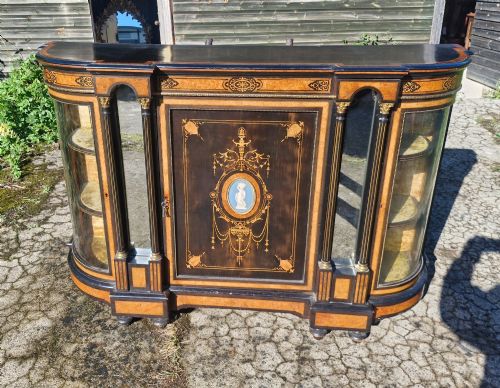
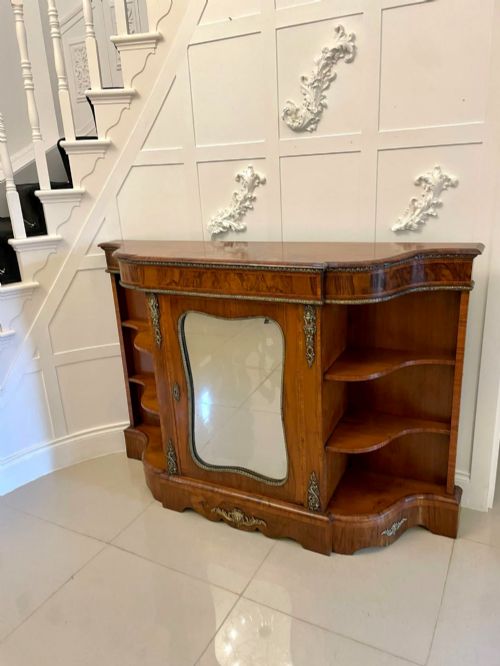
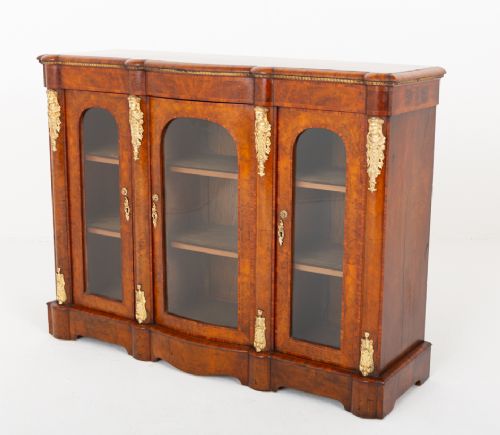
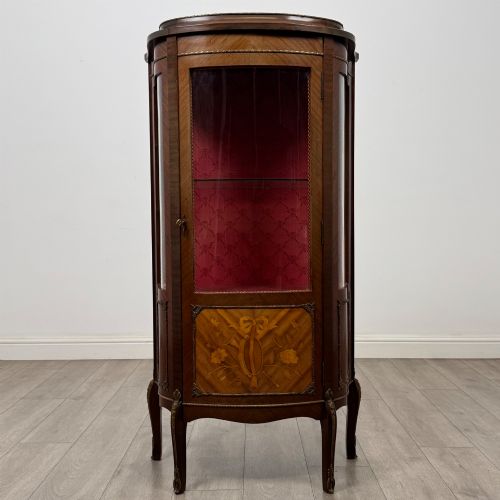
A French parlor cabinet encompasses display cabinets, vitrines, and credenzas originating across the nineteenth century, including Victorian and Edwardian iterations. These pieces function primarily to display decorative objects behind glass panels while offering enclosed storage within side cabinets and credenzas.
The variations on this page lean heavily into Revival styles, featuring Louis XV and Louis XVI aesthetics alongside Victorian French revivals and the Belle Epoque. Buyers encounter forms ranging from serpentine credenzas with marquetry panels to marble-topped vitrines and music cabinets.
Materials span figured walnut, burr walnut, kingwood, and mahogany, frequently enhanced by ormolu mounts and painted panels. Such diversity allows a parlor cabinet to serve as both a focal point and a functional storage item in a traditional interior.
Materials and construction methods
Cabinet makers utilised dense timber foundations of walnut, kingwood, and mahogany, often applying intricate marquetry patterns and burr walnut veneers to primary surfaces. Structural integrity depended on careful joinery suited to serpentine shapes and bombe profiles.
Decorative embellishments relied on cast ormolu mounts secured to corners and friezes, alongside painted Vernis Martin panels depicting classical scenes. Glazed doors and mirrored backs required precise framing to support heavy glass plates within display sections.
French Parlor Cabinet Retail Price Guide 2026
Typical asking prices for french parlor cabinet among the pieces listed under this phrase on Sellingantiques today, from the lower quarter to the upper quarter. They describe what is for sale here now, not the wider market.
Music cabinets wait quietly to hold sheet scores behind painted doors that once echoed with parlor piano recitals.
Assessing quality in parlor cabinets
Quality rests upon the crispness of the cast ormolu mounts and the precision of the marquetry inlay across the timber surfaces. Higher grades display seamless veneer matching and sophisticated hand-painted Vernis Martin panels rather than simple stencilled decoration.
Linke
The French Parlor Cabinet Glossary
- Ormolu
- Gilded bronze mounts applied to furniture. These decorative elements frame doors and highlight structural corners on nineteenth-century pieces.
- Marquetry
- Inlaid wood veneers forming detailed pictorial or geometric patterns. Craftsmen arranged contrasting timbers to decorate cabinet doors and panels.
- Vitrine
- A glass-fronted display cabinet designed for porcelain and small objects. These pieces feature transparent panels on multiple sides to maximise visibility.
- Credenza
- A low cabinet, frequently with mirrored backs and glass side cupboards. This form originated for storing and displaying silver and dining wares.
- Vernis Martin
- Simulated Japanese varnish developed in France. Artisans applied successive layers of translucent paint to create lustrous decorative panels.
French Parlor Cabinet: Frequently Asked Questions
What is a french parlor cabinet?
A french parlor cabinet is a decorative storage or display piece originating from the nineteenth and early twentieth centuries. These items include vitrines, credenzas, and side cabinets designed for formal rooms.
They combine glazed viewing areas with timber construction, often incorporating marquetry, ormolu mounts, and painted panels to enhance their visual impact.
How were these cabinets used?
These cabinets served primarily to display porcelain, glassware, and small ornaments behind protective glass doors. The enclosed sections held linens, documents, or collection items out of sight.
In period homes, they acted as social centerpieces in parlors and drawing rooms to signal taste and refinement to visitors.
Where should I place a vitrine?
A vitrine requires a stable wall placement away from direct sunlight to protect antique timbers and interior fabrics. Positioning them in reception rooms or hallways allows adequate light to pass through the glass panels.
Consider the clearance needed for side-opening doors and the weight of marble tops when selecting a permanent position.