





French Painted Sofa
A french painted sofa brings lightness and neoclassical restraint to a room, offering elegant seating rooted in continental design traditions.
French Painted Sofa
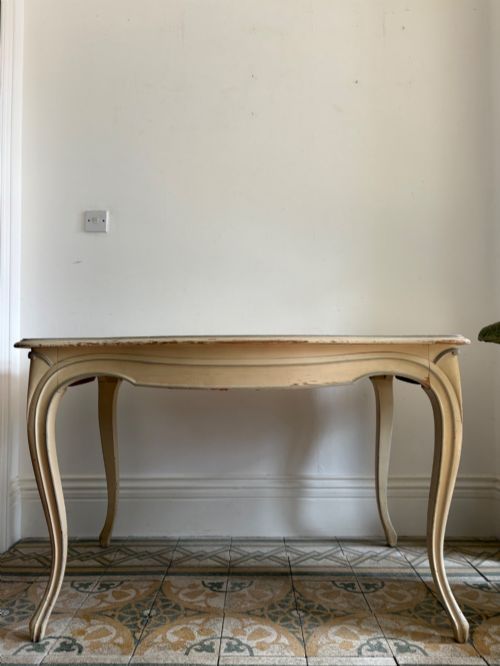
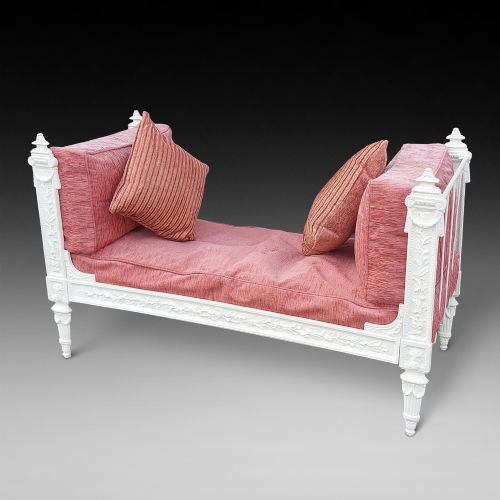
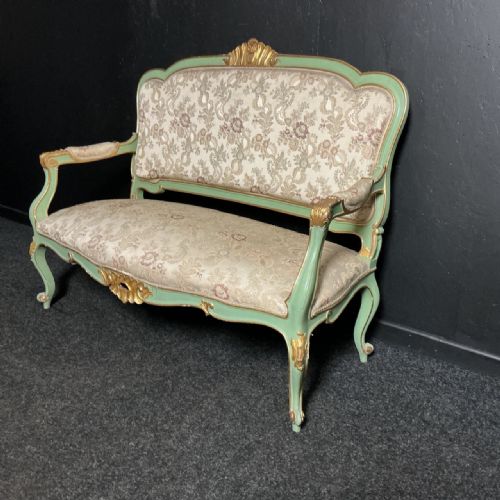
These pieces most frequently emerge from nineteenth-century workshops, drawing heavily on Louis XV and Louis XVI stylistic revivals with characteristic curved lines or straight fluted legs.
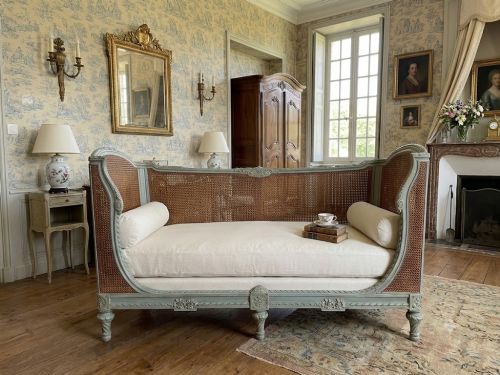
Buyers will encounter two-seat settees and larger salon sofas, often retaining original fabric, needlepoint tapestry, or canework panels.
How they were made
Carpenters shaped frames from timber such as beech, pine, and other hardwoods, carving decorative motifs before applying layers of paint or gilt.
Cane panels were woven directly into the wooden frames of caned sofas and bergères to provide resilient, breathable seating surfaces.
Upholsterers finished the pieces with webbing, stuffing, and textile coverings ranging from calico and burlap to floral needlepoint tapestry.
French Painted Sofa Retail Price Guide 2026
Typical asking prices for french painted sofa among the pieces listed under this phrase on Sellingantiques today, from the lower quarter to the upper quarter. They describe what is for sale here now, not the wider market.
The listings span the eighteenth to the twentieth centuries, with the nineteenth century heavily represented alongside Louis XV and Louis XVI revival pieces.
What varies in quality
The refinement of the wood carving dictates the standard of the piece, distinguishing crisp, deep relief work from softer, simpler moulding.
Surface finish preservation separates superior examples, where original layered paintwork and parcel-gilt details remain intact beneath subsequent wear.
Structural integrity of the joined frame and the retention of authentic components, such as early cane work or traditional upholstery foundations, elevate the standing of a settee.
The French Painted Sofa Glossary
- Canapé
- An upholstered sofa or settee, typically featuring an exposed wooden frame in French classical styles.
- Bergère
- An enclosed upholstered armchair or sofa with solid sides, often incorporating cane panels.
- Louis XVI style
- A neoclassical design movement characterised by straight lines, fluted legs, and geometric symmetry.
- Louis XV style
- A decorative aesthetic defined by asymmetrical curves, cabriole legs, and organic scrollwork.
- Parcel-gilt
- A surface decoration technique where specific carved details are highlighted with thin applications of gold leaf over paint.
French Painted Sofa: Frequently Asked Questions
How do I date a painted French sofa?
Dating relies on examining the joinery, timber type, and stylistic traits that align with specific revival periods like the nineteenth century or Edwardian era.
Subtle indicators include the wear patterns on the painted surface and the method used for the frame construction beneath the upholstery.
Are these sofas comfortable for daily use?
Many examples provide upright seating designed for formal salons rather than deep lounging, though proportions vary across different models.
Modern comfort levels depend entirely on whether the interior webbing and padding have been traditionally restored or rebuilt.
What is the difference between a canapé and a settee?
A canapé is the traditional continental term for an ornamental sofa with an exposed carved wood frame, while settee is a broader descriptor.
Both terms frequently overlap in marketplace listings describing French-style seating from the nineteenth and early twentieth centuries.
Should I keep the original painted finish?
Preserving the original painted surface maintains the historical character and visual authenticity valued by collectors of period furniture.
Conservation rather than repainting is generally preferred to retain the patina accumulated over decades or centuries.