



French Painted Bergere
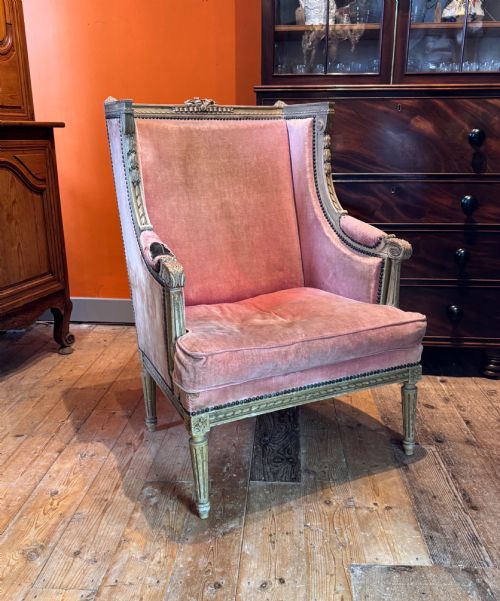
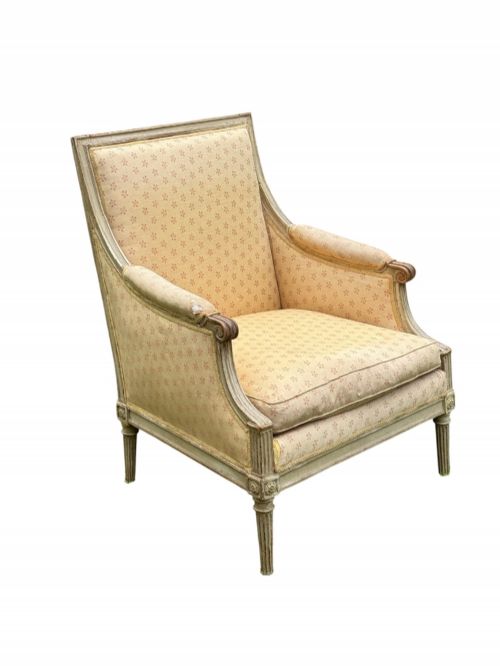
A french painted bergere brings deep upholstered comfort and classic carved framework together in a seating form designed for eighteenth-century leisure.
French Painted Bergere
When you search for a french painted bergere, you are looking at enclosed, deep-seated armchairs and occasional settees built with solid wooden frames and upholstered components. These seating forms developed in France to provide shelter from draughts while offering a relaxed posture compared to formal straight-backed chairs.
The examples you meet span from the eighteenth century through the nineteenth century and into the early decades of the twentieth century. They frequently arrive in revival aesthetics such as Louis XV style and Louis XVI style, alongside pieces retaining their original painted finish or sourced directly from a French chateau.
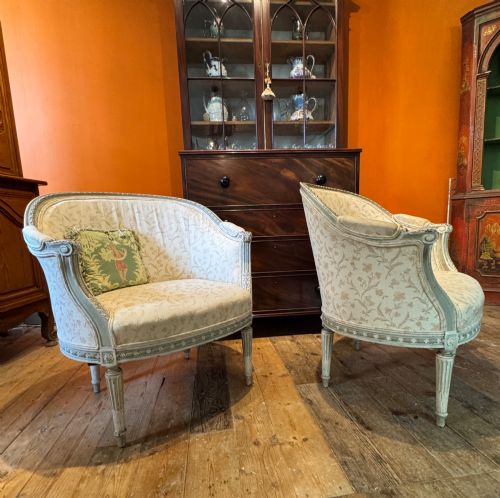
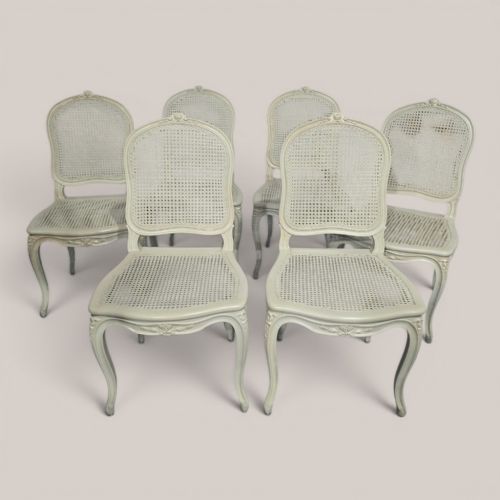
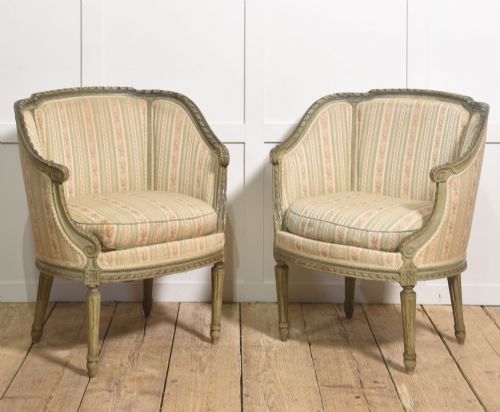
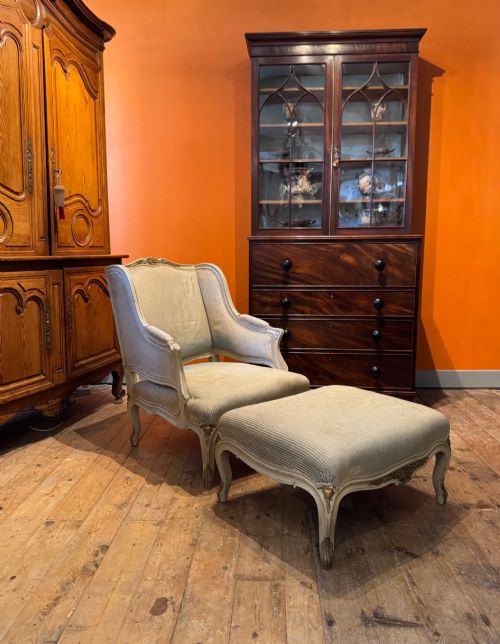
While single armchairs appear regularly, you will also encounter matched pairs of tub armchairs, dining chairs, salon armchairs, and larger seating forms like the duchesse brisée chaise longue or caned sofas. Their origins bridge grand country houses and urban salons, carrying historical decorative idioms into domestic spaces.
How they were made
Cabinetmakers constructed the supportive frames of these seats predominantly from beech or other robust hardwoods capable of taking intricate carved details. Surfaces were finished with paint, often layered over gesso or chalk grounds, creating tactile matte or softly aged patinas.
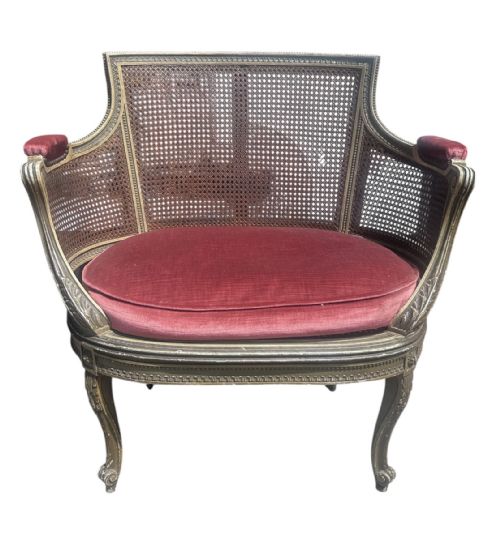
Cane or rattan cane formed the woven side panels and backs on many bergere designs, requiring skilled hand-weaving techniques to achieve durable tension. Upholstery added internal padding finished in traditional fabrics, velvet, or specialised upholstery materials tailored to the specific period.
French Painted Bergere Retail Price Guide 2026
Typical asking prices for french painted bergere among the pieces listed under this phrase on Sellingantiques today, from the lower quarter to the upper quarter. They describe what is for sale here now, not the wider market.
Listings feature items spanning the eighteenth, nineteenth, and early twentieth centuries, utilising beech, rattan cane, fabric, and painted wood.
What varies in quality
The integrity of the carved wooden framework and the crispness of the decorative motifs set superior examples apart from standard production. Master joiners executed joints tightly and shaped arm supports and legs with organic fluidity rather than stiff mechanical symmetry.
The survival of original paint surfaces dictates a significant portion of historical and aesthetic interest. Pieces retaining untouched, layered historic paint retain greater integrity than those subject to later refinishing or heavy overpainting.
Henri Jacob
The French Painted Bergere Glossary
- Bergere
- An enclosed armchair featuring upholstered arms and a solid wooden frame, often complemented by a loose cushion. This form prioritised comfort and was typically designed for relaxed sitting.
- Duchesse brisée
- A multi-part chaise longue comprising an armchair and a separate footstool or two chair components joined together. It creates an extended platform for reclining.
- Louis XVI style
- A neoclassical aesthetic characterised by straight tapered legs, fluting, and geometric symmetry. It emerged in opposition to the flowing curves of earlier rococo designs.
- Cane
- Woven material made from peeled rattan stems, used to form light yet supportive backrests and side panels. It allowed airflow and light through the frame.
- Original paint
- A surface finish applied during the period of manufacture that has survived without being stripped or heavily altered. It displays authentic ageing and wear patterns.
French Painted Bergere: Frequently Asked Questions
How do I care for a painted bergere?
Keep these seats away from direct sunlight and steady moisture to protect both the wooden frames and the delicate painted finishes. Dust the carved surfaces gently with a dry, soft cloth rather than using chemical polishes.
Inspect the cane panels periodically and maintain moderate indoor humidity to prevent the natural fibres from becoming brittle. Treat original upholstery and fabric components with similar care to preserve the textiles.
Are these chairs comfortable for daily use?
The deep seats and enclosed armrests of a bergere were originally engineered for relaxed lounging rather than upright formal sitting. Many people find them well-suited for reading rooms and quiet corners.
Depending on the age of the internal webbing and padding, modern users sometimes add supportive cushions. Historical padding methods vary, so sit gently until you understand the structure of each piece.
How can I tell Louis XV from Louis XVI style?
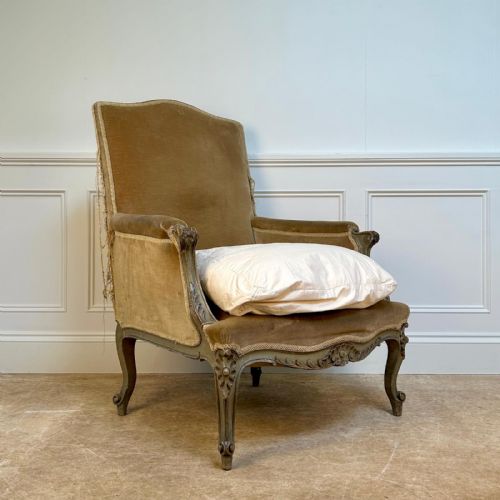
Louis XV style pieces rely on asymmetrical curves, cabriole legs, and organic scrollwork inspired by nature. The overall impression is flowing and undulating without sharp angles.
Can I use these chairs in a modern dining room?
While most bergere forms are designed as low salon chairs, specific matched sets were built for dining use. Their generous proportions require adequate table clearance and spatial planning.
Pairing antique armchairs with a simple contemporary table creates a striking contrast of eras. Ensure the seat height aligns comfortably with your table surface before arranging them together.