








French Ormolu Desk Accessories
French ormolu desk accessories bring tactile weight and gilded polish to a workspace, offering solid bronze craftsmanship combined with marble bases.
French Ormolu Desk Accessories
French ormolu desk accessories encompass inkstands, inkwells, candlesticks, decorative boxes, desk sets, and clocks designed to furnish a writing table. These pieces emerge predominantly from the nineteenth century, including specific periods like the French Empire, Napoleon III, and the Victorian era.
The objects combine functional utility for correspondence with sculptural presence, often uniting metalwork with substantial stone plinths. Inkstands frequently incorporate mounted bronze figures or animalier subjects alongside glass ink inserts.
Buyers will encounter items ranging from simple single inkwells to comprehensive desk sets matching candlesticks with central trays. Marble bases in Sienna or vert varieties appear regularly beneath the gilt metal mountings.
Defining quality
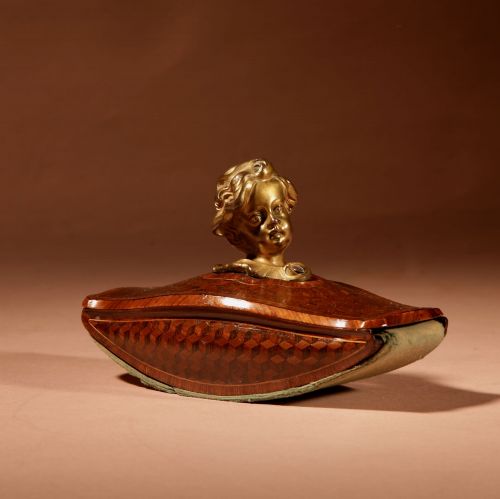
Quality rests upon the crispness of the bronze casting and the depth of the subsequent gilding. Superior examples display sharply defined figural work, such as sculpted lions, domestic cats, or portrait busts, rather than generic ornamentation.
The selection and mass of the underlying stone base also determine distinction, with dense Sienna and vert marbles providing solid foundations for the gilt mounts. Integration between the bronze mounts and the marble or mahogany carcase reveals the care taken by the maker.
French Ormolu Desk Accessories Retail Price Guide 2026
Typical asking prices for french ormolu desk accessories among the pieces listed under this phrase on Sellingantiques today, from the lower quarter to the upper quarter. They describe what is for sale here now, not the wider market.
Current listings feature nineteenth-century French desk accessories combining gilt bronze, ormolu, and Sienna or vert marble.
Albert Marionnet·Asprey Of London
The French Ormolu Desk Accessories Glossary
- Ormolu
- A method of applying finely ground gold-mercury amalgam to a bronze object, heated to leave a rich golden coating. It provides the characteristic bright surface seen on French metalwork.
- Encrier
- A French term for an inkstand or inkwell fitted for writing materials. These desk pieces hold ink reservoirs and sometimes pen trays.
- Champlevé
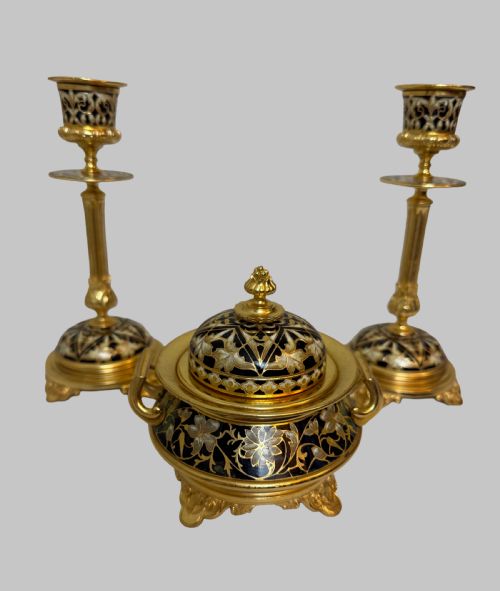
- An enamelling technique where troughs or cells are hollowed out of the metal surface and filled with vitreous enamel before firing. This adds colourful decorative patterns to the bronze body.
- Animalier
- A nineteenth-century artistic style focusing on the realistic depiction of animals. Desk accessories in this vein frequently feature lions, emus, or playing kittens.
- Sienna marble
- A yellow-hued decorative stone quarried in Italy, featuring deep veining in purple and grey. It is frequently employed as a contrasting base for gilt bronze mounts.
French Ormolu Desk Accessories: Frequently Asked Questions
What is included in a desk set?
A desk set typically groups matching items intended for correspondence, such as an inkwell mounted on a tray alongside matching candlesticks or blotters. These pieces were designed to sit together on a library table.
Materials usually coordinate across the set, combining gilt bronze and marble to create a unified appearance.
How do I identify the period?
Period identification relies upon stylistic clues within the bronze casting and the choice of stone. French Empire pieces show classical restraint and symmetry, whereas Napoleon III and later nineteenth-century items incorporate varied revivals and naturalistic animalier subjects.
Signatures or retailer marks, when present, also help anchor the piece to a specific decade or workshop.
How should I clean ormolu?
Cleaning ormolu requires only gentle dusting with a soft, dry cloth to remove surface particles. Moisture and chemical polishes can strip the historic gilt surface permanently.
Preserving the original fire-gilt finish means avoiding abrasives entirely.
What are marble bases made from?
Bases are carved from natural stone varieties, most notably Sienna marble with its yellow and purple tones, or dark vert marble. These heavy stone plinths anchor the lighter bronze components.
Some nineteenth-century pieces utilise mahogany wood foundations instead of stone.