


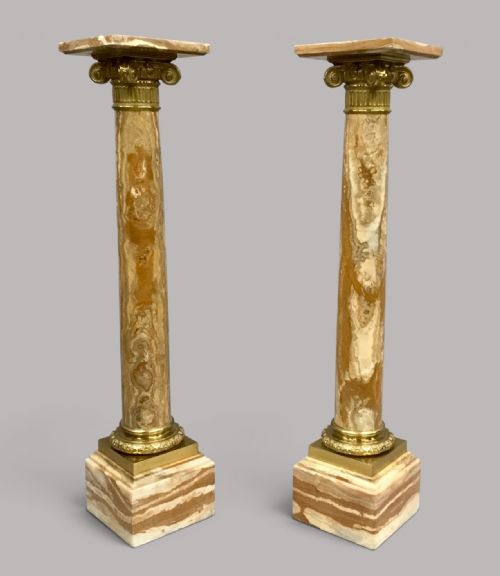


French Onyx Plant Stand
A french onyx plant stand brings sculptural presence and warm stone into a room, raised on metal or wood mounts.
French Onyx Plant Stand
When you search for a french onyx plant stand, you encounter tall columns, pedestals, and small occasional tables designed to display decorative objects or plants. The selections span the nineteenth century and the early twentieth century, taking the form of round or square stone tops supported by slender vertical shafts.
The most common versions on this page are columnar pedestals and torchere columns utilising contrasting metal collars and bases. You also find occasional tables and two-tier plant stands that adapt the same stone and metal vocabulary to lower furniture heights.
Materials and construction methods
These pieces combine turned slabs of onyx and marble with cast metal mounts in ormolu, brass, gilt bronze, and bronze. The stone is shaped into columnar shafts and flat tops, whilst metal components form decorative collars, capitals, and feet.
Some examples incorporate gilt wood frames or walnut structures to support the stone inserts, particularly in occasional tables featuring galleried edges and decorative flower mouldings.
French Onyx Plant Stand Retail Price Guide 2026
Typical asking prices for french onyx plant stand among the pieces listed under this phrase on Sellingantiques today, from the lower quarter to the upper quarter. They describe what is for sale here now, not the wider market.
The listings span the nineteenth century, Edwardian era, and nineteen-thirty, uniting onyx, marble, ormolu, and brass.
Markers of quality and execution
Quality rests in the depth of patterning within the onyx and the crispness of the cast metal mounts. Finely chiseled brass or ormolu collars with sharp architectural detail distinguish superior examples from simpler turned supports.
The integration of the stone top into the wooden or metal framework also indicates the standard of manufacture, where flush joints and substantial weight reveal deliberate workshop practice.
The French Onyx Plant Stand Glossary
- Onyx
- A translucent banded stone utilised for the tops and columns of these stands. It provides natural variation in colour and pattern across each surface.
- Ormolu
- Gilded bronze mounts applied to furniture and decorative columns. This technique creates a rich metallic contrast against the polished stone.
- Torchere
- A tall stand or column originally designed to hold a light source or candle. In these listings, the term describes slender columnar plant stands.
- Neoclassical
- A style drawing on classical antiquity, visible in the architectural columns, proportions, and decorative collars of nineteenth century pieces.
French Onyx Plant Stand: Frequently Asked Questions
What is a french onyx plant stand?
It is a decorative pedestal, column, or small table featuring an onyx top or shaft, often accented with metal mounts.
These pieces were made in France and during revival periods to elevate plants, urns, or sculptures within a room.
How were they used historically?
They served as display surfaces in formal reception rooms and parlours for botanical specimens or art objects.
Their height allowed plants and decorative vases to catch the light and command visual attention away from the floor.
How do I live with one?
Place them in corners or beside seating where their vertical lines can add architectural structure to an interior.
Ensure heavy items are balanced centrally on the stone top to maintain stability.
How do I date these pieces?
Dating relies on stylistic clues such as neoclassical column details, Louis XV revival walnut frames, and the character of the metalwork.
Nineteenth-century examples often feature heavier bronze or ormolu mounts, whilst later twentieth-century pieces incorporate chiseled brass.