





French Needlework
French needlework brings historic textile artistry into your home, offering finely stitched panels, practical sewing tables, and upholstered seating.
French Needlework
French needlework encompasses a diverse range of historic textile pieces, spanning framed pictures, panels, samplers, and decorative cushion covers. Buyers seek these items for their intricate stitchwork and the tangible connection they provide to past craftsmanship.
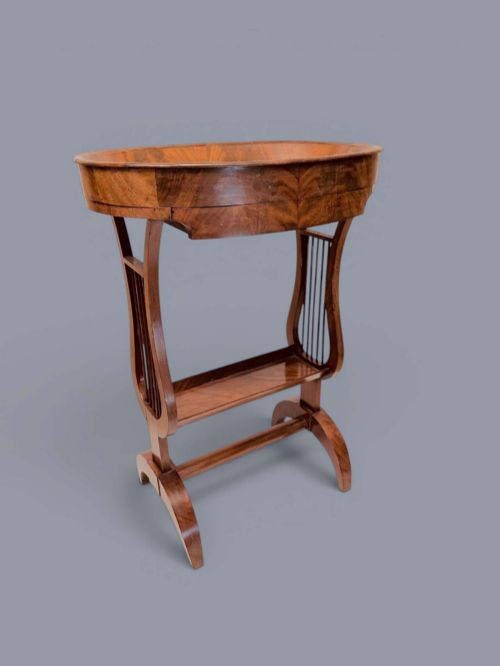
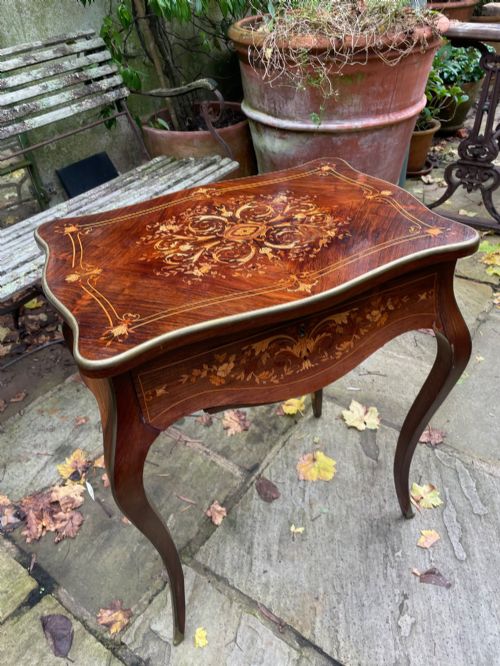
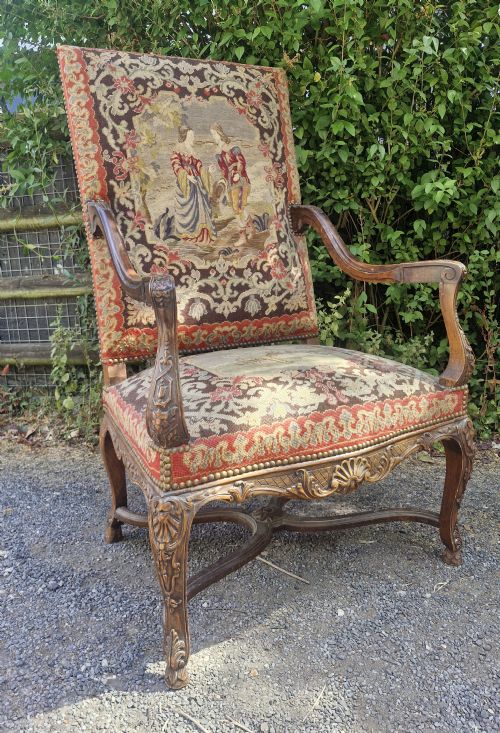
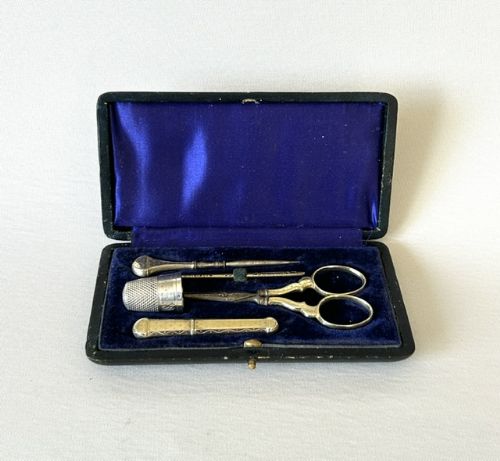
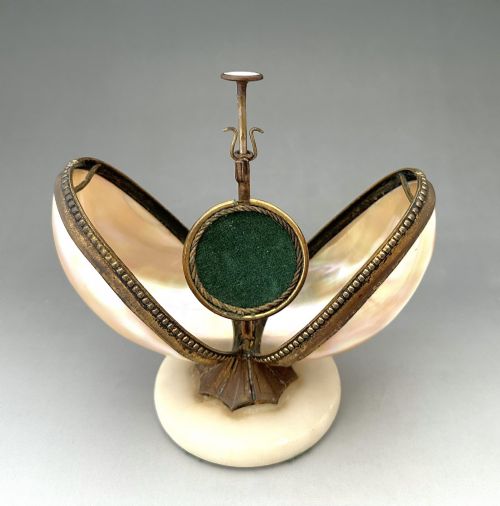
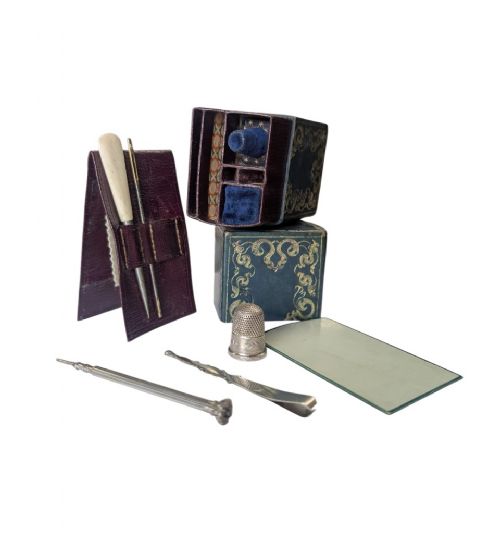
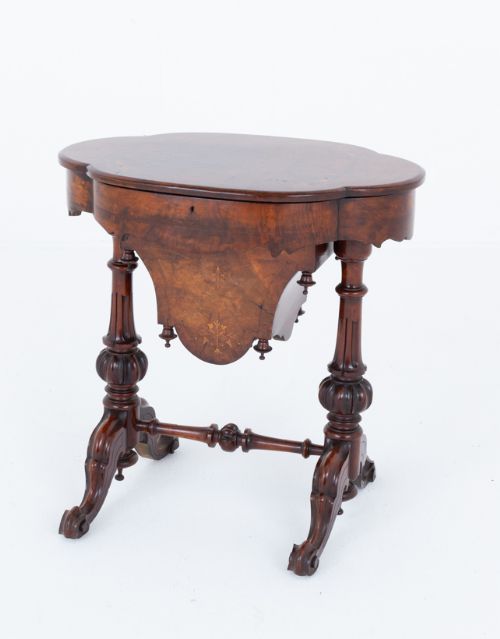
The pieces frequently appear integrated into functional antique furniture, notably sewing tables, work tables, armchairs, stools, and specialised etui boxes. These combined items showcase both textile skill and cabinetmaking from the seventeenth century through to the early twentieth century.
Silk embroideries, wool tapestries, and lace samplers form the primary visual formats encountered within this category. Originating across various French periods, these textiles range from grand architectural panels to intimate domestic accessories.
Materials and construction
Textiles rely heavily on natural fibres such as wool, silk, and cotton worked upon foundational canvas or linen backings. Artisans employed varied stitching techniques to create dense pictorial scenes or delicate geometric lace patterns.
Support structures and enclosures utilise timber frameworks including walnut, rosewood, kingwood, and burr walnut, often enhanced with marquetry. Metalwork components incorporate brass, silver gilt, gold leaf, and ormolu, alongside decorative elements of mother-of-pearl and faux tortoiseshell.
French Needlework Retail Price Guide 2026
Typical asking prices for french needlework among the pieces listed under this phrase on Sellingantiques today, from the lower quarter to the upper quarter. They describe what is for sale here now, not the wider market.
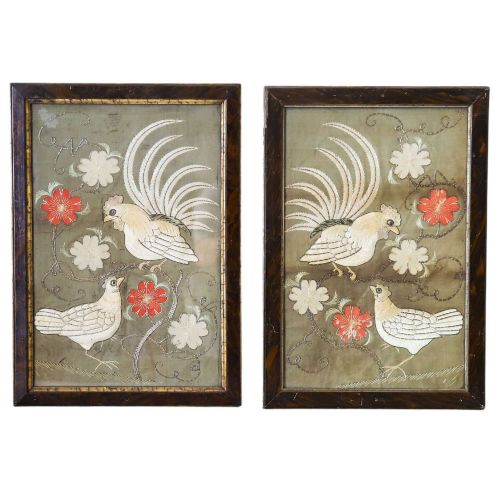
Several listings preserve tiny domestic scenes, including pairs of cockerels and hens stitched entirely in silk.
Judging quality
Quality in these textiles rests upon the density of the stitching, the complexity of the colour palette, and the clarity of the pictorial design. Superior panels display subtle tonal shading and precise execution without distortion in the underlying canvas.
For items combining textiles with furniture or cased accessories, the standard of the woodwork and metal mounts dictates the piece's standing. Refined marquetry, intact gilding, and original glass or brass fittings elevate the overall integrity of the work table or etui.
The French Needlework Glossary
- Etui
- A small ornamental box fitted for holding sewing implements, cosmetics, or writing tools. These containers often feature luxury materials such as mother-of-pearl, tortoiseshell, or ormolu mounts.
- Chatelaine
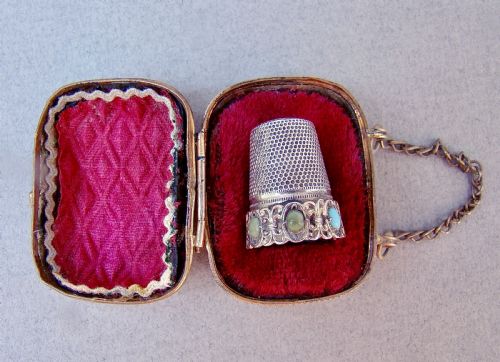
- A decorative belt hook worn with a series of suspended chains carrying household amenities like scissors, thimbles, and keys. They represent both practical utility and personal adornment.
- Marquetry
- The art and craft of applying decorative pieces of veneer to a structural wood surface to form intricate designs. This technique frequently graces the lids of nineteenth-century French sewing tables.
- Needlepoint
- A type of canvas work embroidery stitched with a yarn or thread using a counted thread or painted canvas method. It provides the firm, durable surface seen on many antique chair seats and framed panels.
- Sampler
- A piece of cloth demonstrating a collection of varied stitches, patterns, or alphabet motifs executed by a maker. They served historically as proof of skill or reference templates for embroiderers.
French Needlework: Frequently Asked Questions
What is French needlework?
French needlework comprises historical embroidered panels, tapestries, samplers, and textile pictures created using wool, silk, and other natural fibres.
These pieces also include upholstered elements on period chairs, stools, and specialised sewing furniture.
How were antique sewing tables used?
Antique sewing tables functioned as dedicated workspaces for needlecraft, housing threads, fabrics, and tools within fitted compartments and integrated baskets.
They served as functional furniture pieces in drawing rooms where ladies engaged in handwork.
How do I care for antique textiles?
Antique textiles require protection from direct sunlight to prevent the fading of delicate silk and wool threads.
Keeping pieces in stable environments away from high humidity preserves the fragile fibres and prevents wooden frames from warping.
How are different periods identified?
Periods are identified through a combination of textile style, framing materials, and the characteristics of the associated woodwork.
Details like ormolu mounts, marquetry patterns, and specific stitching methods align pieces with eras such as the Victorian period or the eighteenth century.