






French Metal Fire Guard
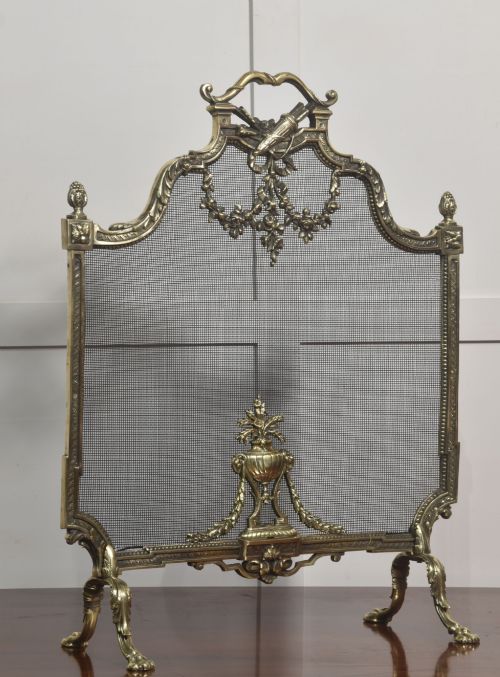
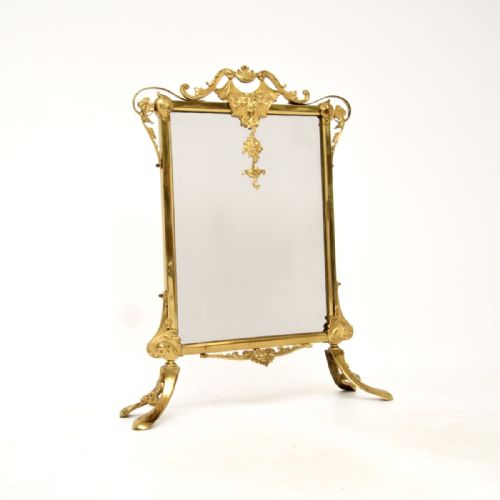
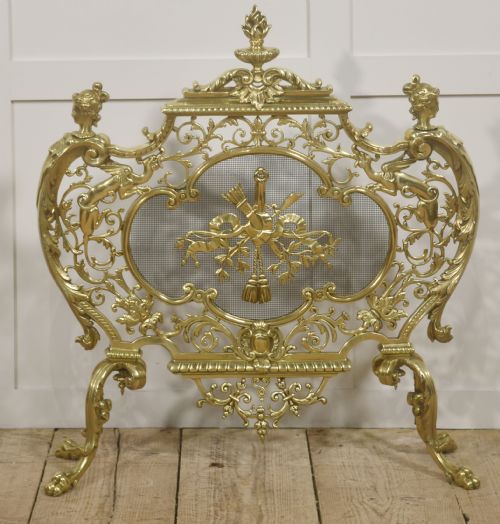
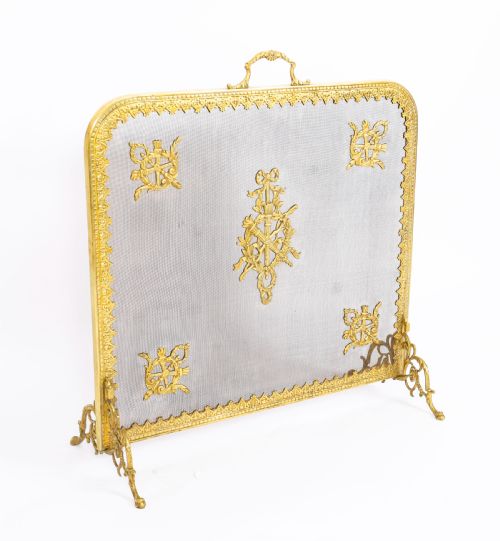
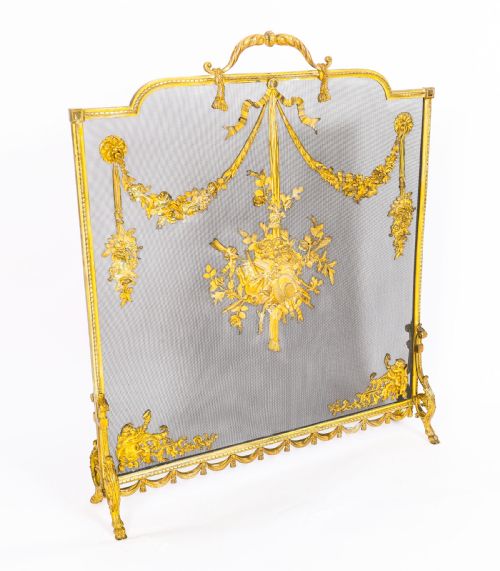
These French metal fire guard pieces are decorative hearth screens designed to block stray sparks while framing a fireplace.
French Metal Fire Guard
A French metal fire guard provides a functional barrier for the hearth while offering substantial decorative presence in a room. These pieces appear frequently as fire screens, fire guards, and fireplace fenders originating from the nineteenth century.
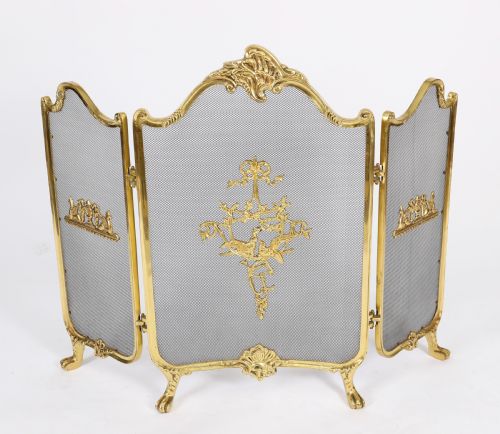
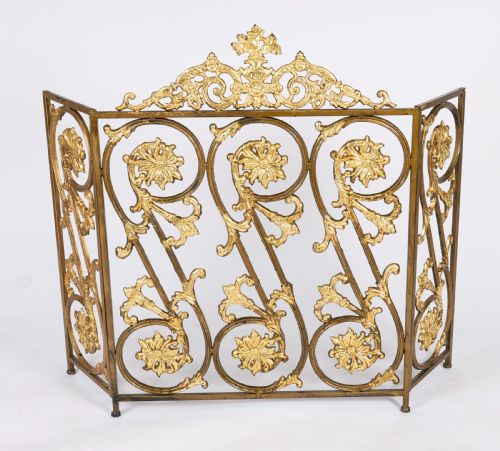
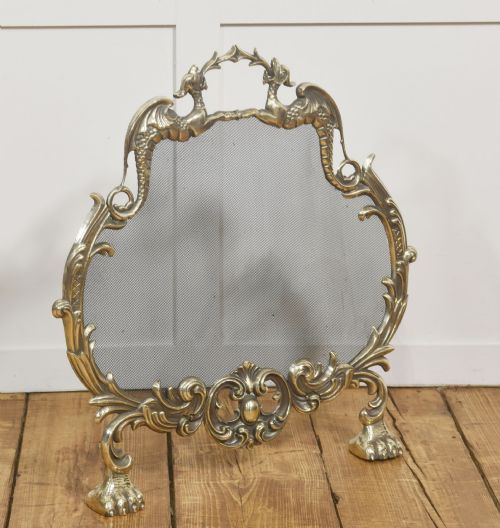
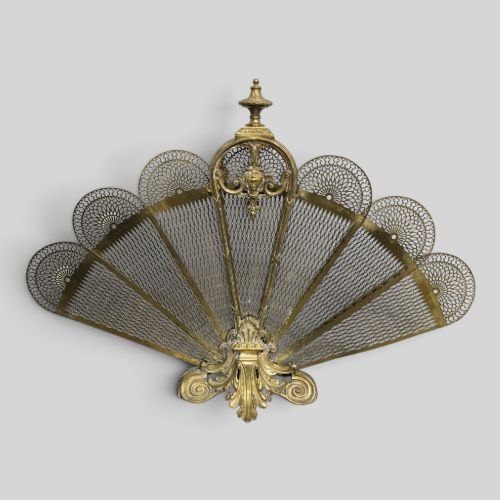
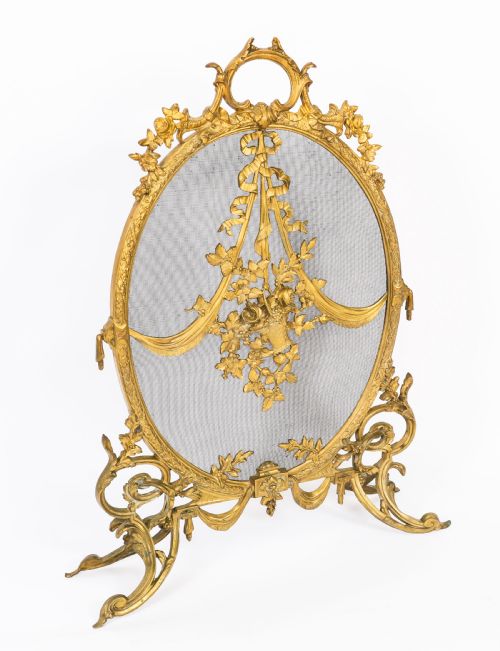
The selection centres heavily on French Rococo Revival and Louis styles, executed in brass, bronze, and gilt metals. Buyers often encounter folding triple screens, ornate pierced brass frames, and designs incorporating mesh panels.
Makers and workshops produced these items across several decades, ranging from 1860 to the early 1900s. The forms vary from simple protective spark guards to elaborate statement pieces featuring classical trophies and floral motifs.
Materials and construction
Metalworking techniques of the period involved casting bronze and brass, often followed by gilding to achieve a rich surface finish. Frames were shaped into elaborate Rococo scrolls or classical Neoclassical outlines through skilled moulding.
Wire mesh and steel mesh were integrated into the metal frames to contain sparks effectively while maintaining transparency. Pierced brass work and cast iron components added structural rigidity and intricate decorative detail to the heavier fenders and screens.
French Metal Fire Guard Retail Price Guide 2026
Typical asking prices for french metal fire guard among the pieces listed under this phrase on Sellingantiques today, from the lower quarter to the upper quarter. They describe what is for sale here now, not the wider market.
Listings feature periods from the 1860s through 1910, with Victorian and nineteenth-century examples predominating alongside French Rococo Revival styles.
Judging the quality
Quality rests in the crispness of the cast ornamentation and the depth of the chasing on the bronze or brass surfaces. Superior examples display sharply defined floral, musical, or imperial trophies rather than soft or blurred casting details.
The integrity of the mesh panels and the sturdiness of the hinges on multi-fold screens indicate superior craftsmanship. Heavier gauge metals and robust freestanding frames separate finer nineteenth-century examples from lighter production.
The French Metal Fire Guard Glossary
- Fire screen
- A movable panel placed in front of a fireplace opening to block radiant heat when the fire is low or to hide the empty grate. These items often feature decorative metal mesh.
- Gilt bronze
- Metalwork coated with a thin layer of gold, frequently known by the French term ormolu on nineteenth-century pieces. It provides a warm, durable metallic lustre.
- Rococo Revival
- A nineteenth-century design style mimicking the ornate, asymmetrical scrolls and naturalistic motifs of the French eighteenth century. It dominates the ornamentation of these guards.
- Fender
- A low metal frame placed on the hearth around the fireplace opening to contain rolling embers and protect the floor. Some examples combine cast iron and brass.
French Metal Fire Guard: Frequently Asked Questions
How do I clean a brass fire screen?
Dust the metal gently with a soft dry cloth to remove surface soot and debris. Avoid harsh chemical polishes that can strip historical patinas from nineteenth-century brass and bronze.
Test any mild cleaning solution on a small hidden area first. Protect the delicate wire mesh by brushing it softly rather than applying liquid directly.
What is a triple fire screen?
A triple fire screen consists of three hinged panels that can be angled to enclose the hearth area flexibly. This configuration allows the guard to fold flat for storage or expand to fit wider fireplace openings.
The side panels often feature decorative motifs like flaming torches or musical trophies that complement the central panel.
How can I date these metal screens?
Examine the casting quality, screw types, and mounting methods used on the reverse of the frame. Nineteenth-century pieces often display hand-finished chasing and heavy cast brass or bronze components.
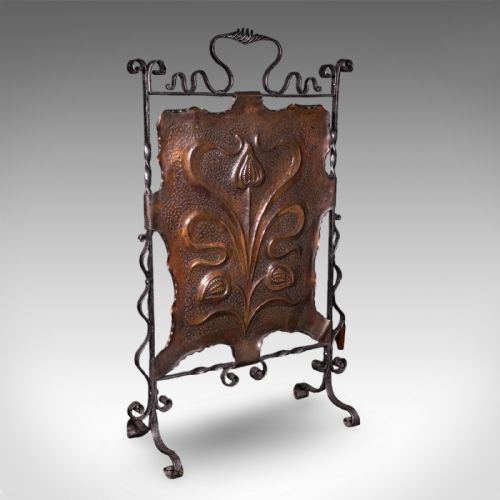
Compare the decorative style, such as Louis XIV Revival or Art Nouveau elements, against known production periods spanning from 1860 to 1910.