



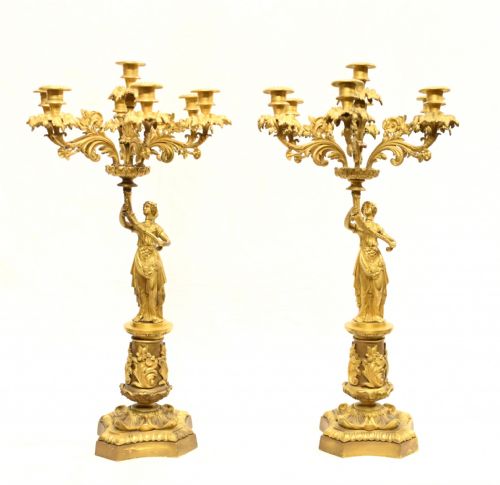
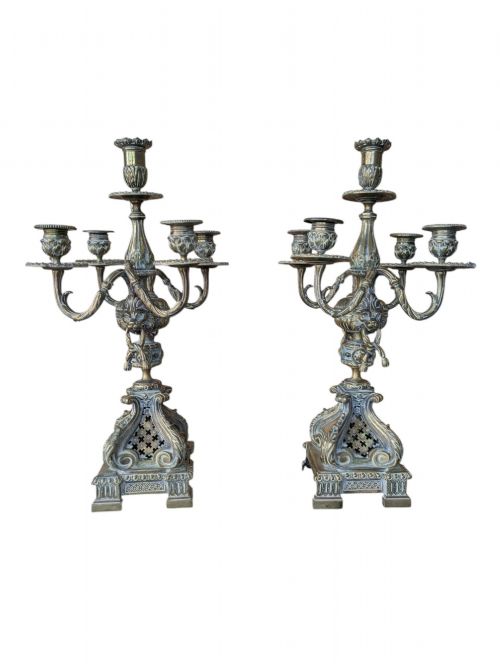


French Metal Candelabra
These French metal candelabra bring undeniable presence to a room, offering warm illumination through detailed cast bronze, ormolu, and brass forms.
French Metal Candelabra
When you search for french metal candelabra, you encounter multi-branch lighting pieces designed to hold multiple candles, often found in pairs. These items span periods from the eighteenth century through the early twentieth century, reflecting shifting decorative tastes.
Originating largely from French workshops and salons, these items served both practical lighting functions and decorative display roles. Buyers typically encounter gilt bronze, ormolu, and cast metal constructions dating across the nineteenth century.
Materials and construction methods
Maker techniques rely heavily on bronze casting, brass fabrication, and ormolu mercury gilding to achieve lasting surface brilliance. Artisans combined metalwork with white marble bases, slate, and occasionally porcelain elements to create visual contrast.
Components were cast in sections before being chased, hand-finished, and assembled with threaded fittings or pins. Surface treatments range from polished gilt metal to patinated bronze, sometimes paired with crystal drops or champlevé enamel detail.
French Metal Candelabra Retail Price Guide 2026
Typical asking prices for french metal candelabra among the pieces listed under this phrase on Sellingantiques today, from the lower quarter to the upper quarter. They describe what is for sale here now, not the wider market.
Listings span from the eighteenth century to the 1930s, incorporating gilt bronze, ormolu, marble, and champlevé enamel.
Distinctions in craftsmanship
Lesser pieces show softer surface definition from worn moulds, simpler base construction, or later electroplating rather than period fire gilding. The integration of high-grade components like matched marble plinths elevates the stature of specific pairs.
The French Metal Candelabra Glossary
- Ormolu
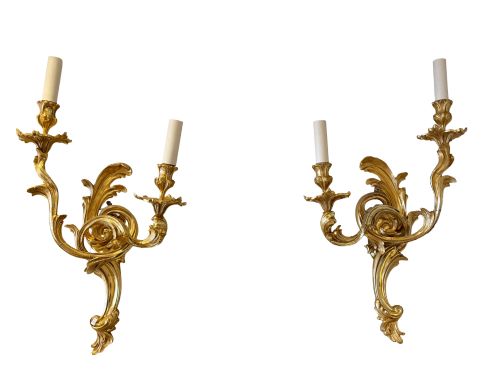
- A technique of applying finely ground high-carat gold amalgam to a bronze object, followed by firing to drive off the mercury. This leaves a durable, rich golden surface characteristic of fine French decorative arts.
- Candelabra
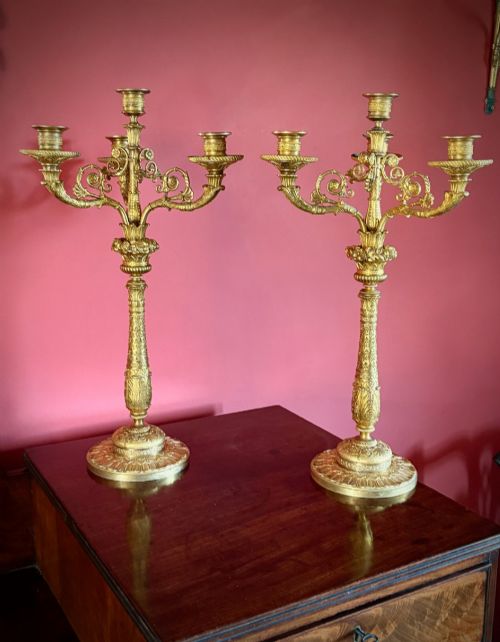
- A branched candlestick designed to hold multiple candles simultaneously. They often feature a central stem with radiating arms.
- Garniture
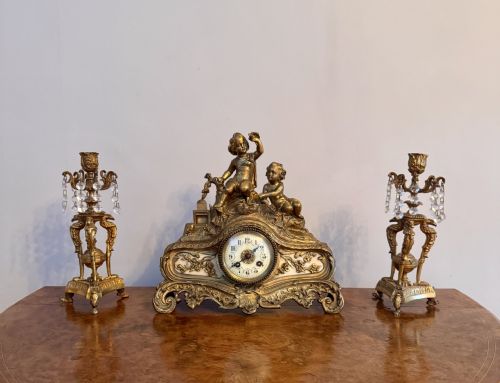
- A set of decorative objects designed to be displayed together, typically comprising a central clock flanked by matching candelabra or vases.
- Chasing
- The manual refinement of a cast metal surface using small hammers and punches to sharpen details, add texture, and correct minor casting flaws.
- Torchère
- A stand or decorative light fixture modelled to resemble a torch, frequently taking the figure of a cherub or maiden holding a light source.
French Metal Candelabra: Frequently Asked Questions
How do I clean antique ormolu?
Dust gently with a soft dry brush to remove surface particles without abrasive action. Avoid harsh chemical polishes that strip historical mercury gilding from the bronze base.
Keep moisture away from any integrated marble or fabric components to prevent staining and degradation of the underlying materials.
Were these converted to electricity?
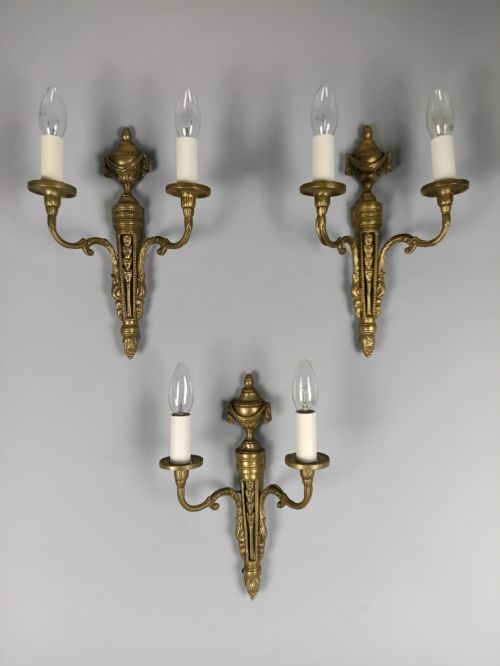
Many nineteenth-century examples underwent later conversion to function as table lamps or wired wall lights. This adaptation allowed period items to suit modern domestic lighting needs.
Buyers find both unmodified candle-holding versions and professionally wired electric variants within these listings.
What is a clock garniture set?
A matching ensemble consisting of a mantel clock accompanied by two side pieces, usually candelabra or urns. These sets were manufactured to create a balanced decorative display on a mantelpiece.
Materials such as marble, bronze, and ormolu link the components visually into a unified composition.
How do I identify Louis XVI style?
Louis XVI style pieces display neoclassical restraint, featuring straight lines, symmetrical geometry, and classical motifs like urns and swags. This aesthetic contrasts with the curving asymmetry of earlier Rococo designs.
Construction from this design vocabulary often emphasises architectural proportion and balanced leaf ornamentation.