




French Medallion Pendant
When you search for french medallion pendant, you enter a world of gold religious medals, floral shields, and zodiac charms shaped by Art Nouveau and Art Deco hands.
French Medallion Pendant
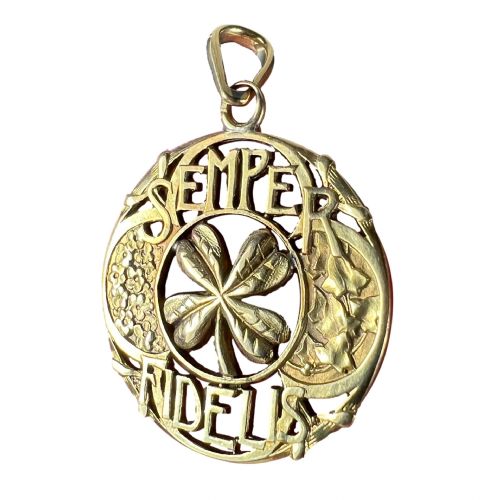
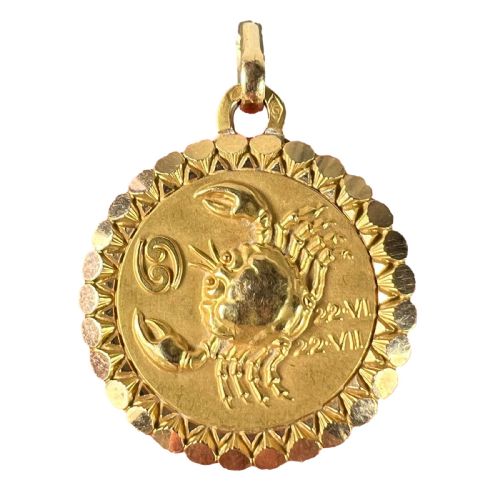
Makers frequently stamped these pieces with diminutive marks indicating metal purity and workshop identity. Buyers encounter numerous devotional pieces depicting Madonna and Child, alongside fortunate clover leaves, hunting horns, and monogrammed shields.
How they were made
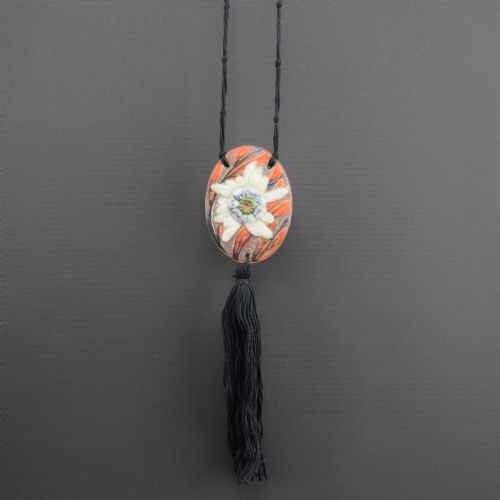
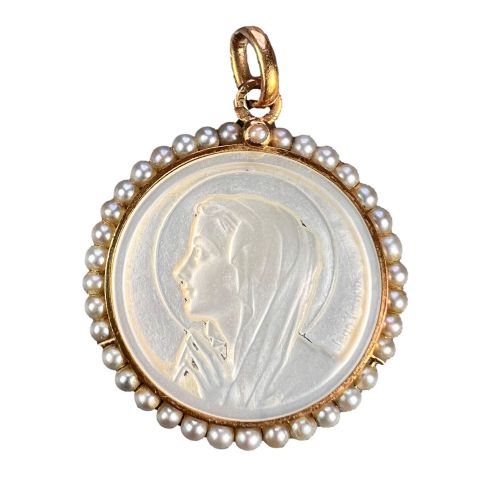
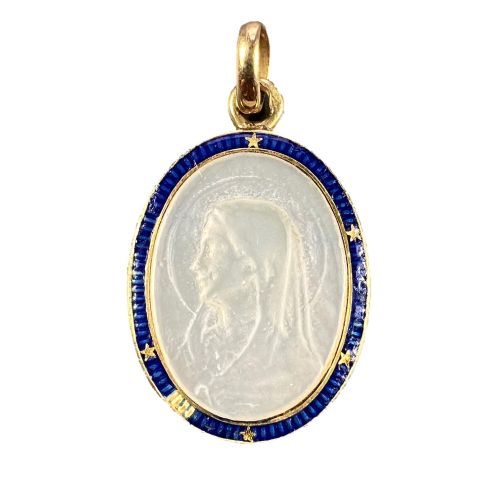
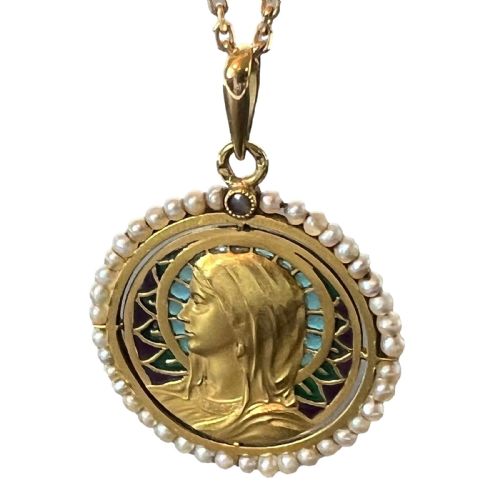
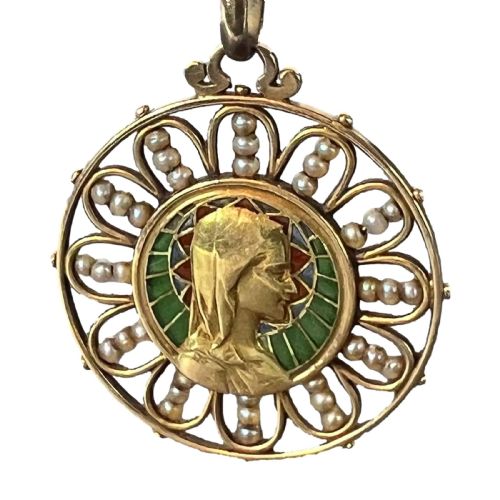
Goldsmiths shaped these pendants primarily in 18k yellow, rose, and white gold, often framing them with twisted wire or incorporating sterling silver in specific regional styles. Surface decoration relied heavily on translucent plique-a-jour enamel, glossy pate de verre, and carved mother of pearl.
Artisans set small seed pearls into frames or applied detailed engraving and repousse work to create high-relief portraits of saints and mythical creatures like griffons. Pendants combined cast metallic bases with hand-finished enamel work that allowed light to pass through the coloured glass panes.
Listings span several decades from the 1880s through the 1960s, encompassing Art Nouveau, Art Deco, and mid-century modern aesthetic movements.
What varies in quality
Quality rests upon the crispness of the medallist's strike and the fineness of the hand-chased details across the figures and floral wreaths. Pieces bearing signatures from known artists display superior depth in facial expressions and drapery folds.
The integrity of fragile enamel work, particularly plique-a-jour windows, distinguishes finer examples from simpler stamped metal discs. The presence of original matching suspension loops and well-preserved mother of pearl surfaces elevates the overall execution.
Argy Rousseau·Emile Monier·Paul Brandt·Perroud·Mazzoni·Pageli Perriat·Guilbert·Vernon·Emile Dropsy·Sellier·Rasumny·Ovide Yencesse·Tairac
The French Medallion Pendant Glossary
- Plique-a-jour
- An enamelling technique where the enamel is applied without a backing, resembling miniature stained glass. Light passes directly through the translucent coloured cells.
- Pate de verre
- A glass-crafting method involving crushed glass packed into a mould and fused by heat. This creates textured, frosted objects with distinct tonal gradations.
- Repousse
- A metalworking technique where the artisan hammers the reverse of a sheet to form a raised design in relief. Details are subsequently refined from the front.
- Medallion
- A circular or oval plaque worn as a pendant, frequently commemorating a person, religious figure, or significant event. These items often feature inscriptions on the reverse.
- Seed pearl
- Very small, naturally occurring or cultured pearls threaded or set closely together to form decorative borders. They add a delicate luminous texture to gold frames.
French Medallion Pendant: Frequently Asked Questions
What are french medallion pendants made of?
These pendants are primarily fashioned from 18k yellow, rose, and white gold, alongside occasional sterling silver examples. Artisans embellished many pieces with mother of pearl, enamel, and seed pearls.
The metal standard typically reflects French regional assay marks designating high-purity gold content. Enamel and glass elements like pate de verre introduce vibrant colour to the metallic bases.
How do I date a french medallion pendant?
Dating relies on stylistic markers such as flowing Art Nouveau floral lines, geometric Art Deco frames, and the specific attire of depicted saints. Many pieces originate from the late nineteenth century through the mid twentieth century.
Maker signatures stamped onto the medal surface offer a direct link to active workshop periods. Engraved dates on the reverse also provide precise chronological reference points.
Who made these religious medals?
Medals were produced by skilled French sculptors and jewellers who signed their miniature metalworks. Notable medallists include Emile Dropsy, Ovide Yencesse, and Paul Brandt.
These artists created intricate dies for striking religious and secular portraits in high relief. Their signatures usually appear subtly along the lower edge of the medal face.
How were these pendants worn historically?
Owners typically suspended these charms from fine gold chains as devotional tokens or personal talismans. Religious medals served as daily protectors or mementos of significant life milestones.
Secular examples featuring zodiac signs or hunting motifs expressed personal identity and hobbies. They were frequently worn close to the heart as both jewellery and spiritual items.