



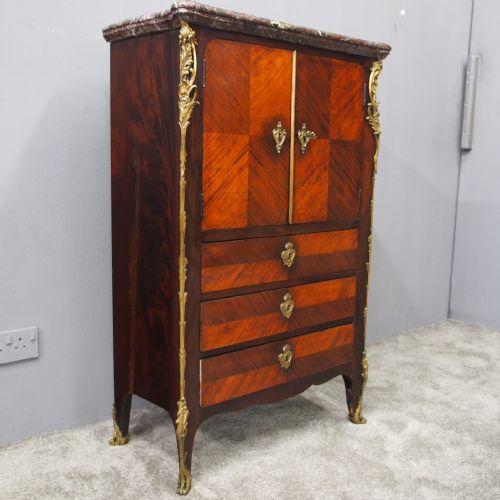


French Marble Top Semainier
These French marble top semainier pieces offer tall, slender storage with stone surfaces, bringing practical elegance to any bedroom.
French Marble Top Semainier
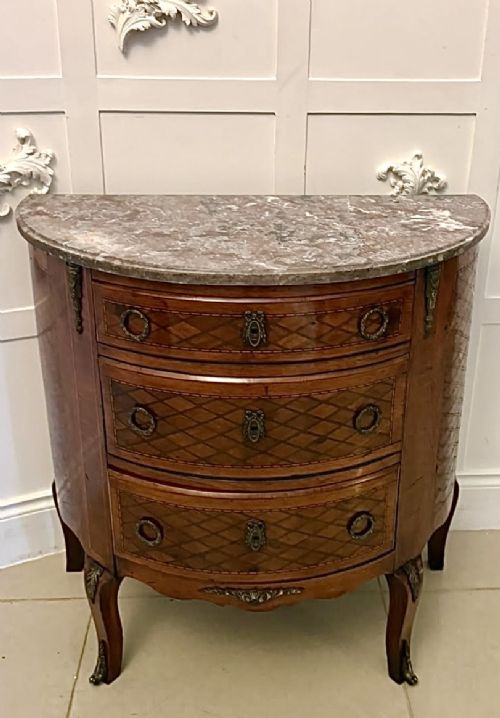
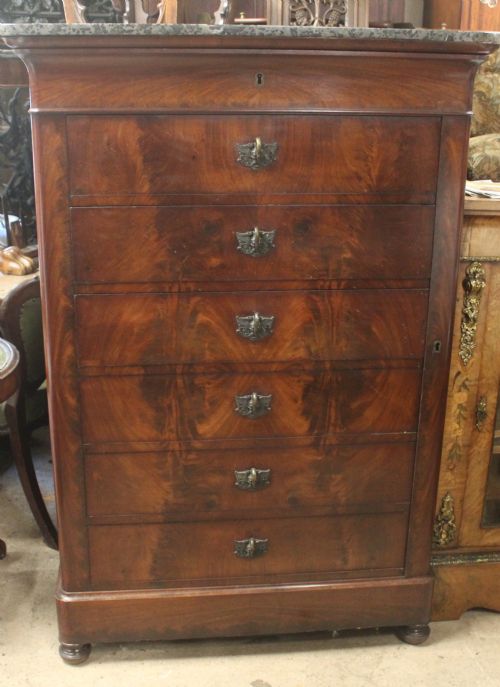
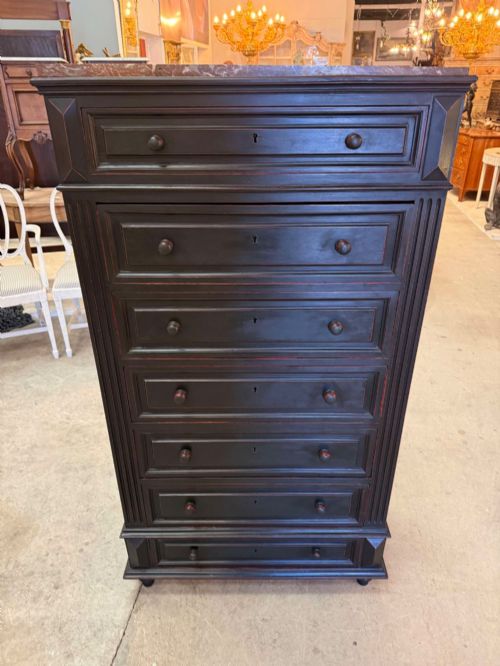
A french marble top semainier is a tall, narrow chest traditionally designed with seven drawers, one for each day of the week, topped with a fitted slab of stone. You will encounter these pieces chiefly from the nineteenth and early twentieth centuries, spanning revival aesthetics and chateau sensibilities.
The dominant forms on this page include tall seven-drawer chests and narrow bedside cabinets, often executed in rosewood, walnut, kingwood, or cherry veneer. Cabinetmakers constructed these upright carcasses to maximise storage within a minimal floor footprint.
Origins trace directly to continental workshops working within Louis styles, transitional aesthetics, and Empire designs. The combination of deep timber figuring and cold stone creates the distinctive silhouette buyers seek.
How they were made
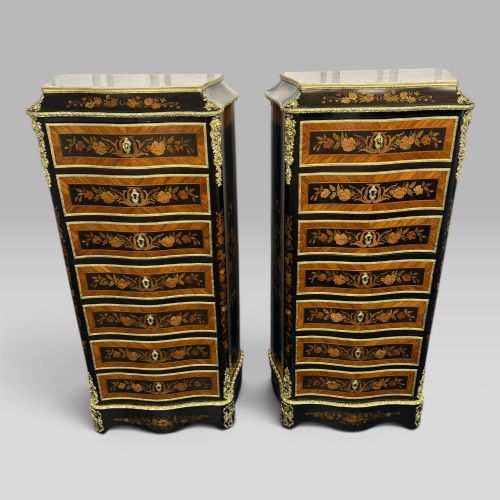
Carpenters laid fine veneers such as kingwood, rosewood, and tulipwood over sturdy timber carcasses, often incorporating intricate parquetry or marquetry patterns across the drawer fronts and sides. Brass inlay and gilt ormolu mounts were frequently added to accent the structural lines.
Heavy marble slabs were precisely cut and polished to fit the upper surface of each chest, serving as both a durable counter and a decorative crown. Cabinetmakers fitted the seven drawers closely within the upright frame to maintain the clean vertical proportions.
French Marble Top Semainier Retail Price Guide 2026
Typical asking prices for french marble top semainier among the pieces listed under this phrase on Sellingantiques today, from the lower quarter to the upper quarter. They describe what is for sale here now, not the wider market.
Design styles represented include French Chateau, French Empire, Louis XV Revival, Louis XVI, and Victorian aesthetic influences.
What varies in quality
The sophistication of the timber work and the complexity of the parquetry patterns set finer examples apart from simpler carcasses. Crisp casting in the ormolu mounts and the thickness and figuring of the marble top indicate the tier of the original commission.
Joinery precision in the seven drawers and the condition of the delicate veneers reveal the level of care taken during construction. Pieces bearing cabinetmaker stamps or sophisticated marquetry reflect the work of premier French workshops.
Leonard Boudin
The French Marble Top Semainier Glossary
- Semainier
- A tall, narrow chest of drawers traditionally featuring seven tiers, one for each day of the week. This form originated in France to hold weekly changes of linen and personal items.
- Ormolu
- Gilt-bronze mounts applied to furniture for decorative effect. This technique was widely utilised by French cabinetmakers during the eighteenth and nineteenth centuries.
- Parquetry
- Geometric wood veneer patterns arranged in repetitive motifs such as cubes or chevrons. It requires precise cutting and fitting of contrasting timbers across the surface.
- Kingwood
- A dense, richly figured exotic timber prized for its contrasting dark and golden brown tones. It was frequently employed in high-status French veneer work.
- Marquetry
- Pictorial or decorative veneer work using various tinted woods to create elaborate floral or scenic designs. Artisans inlaid these thin slices into the primary surface of the furniture.
French Marble Top Semainier: Frequently Asked Questions
What is a semainier used for?
A semainier provides tall, vertical storage with a narrow footprint, making it ideal for compact bedrooms or dressing areas. The traditional seven drawers were originally intended to organise weekly garments or personal linens.
The smooth stone surface above offers a durable platform for lamps, decorative objects, or bedside essentials while protecting the timber carcass below.
How do I care for the marble top?
Marble is a softer, porous stone that requires gentle cleaning with mild, pH-neutral soap and warm water. Avoid acidic liquids like vinegar, citrus, or wine, which can etch the polished surface.
Using coasters and mats will protect the stone from stains and scratches, preserving the polished finish for daily use.
How do I date these chests?
Dating relies on examining the timber construction methods, drawer dovetails, and prevailing decorative styles such as Louis XV revival, Empire, or transitional motifs. Nineteenth and early twentieth-century examples often combine machine-cut precision with hand-finished veneers and mounts.
Cabinetmaker stamps or paper labels found inside the drawers or on the carcass can also provide definitive clues to the period of origin.
Are these pieces purely French?
The design lineage and stylistic vocabulary of these chests are distinctly French, drawing heavily on chateau aesthetics and royal revival periods. Cabinetmakers throughout France produced these forms in regional woods like cherry alongside exotic imports like rosewood.
Similar vertical formats appear across continental Europe, but the specific combination of parquetry, ormolu, and marble remains tied to French furniture traditions.