




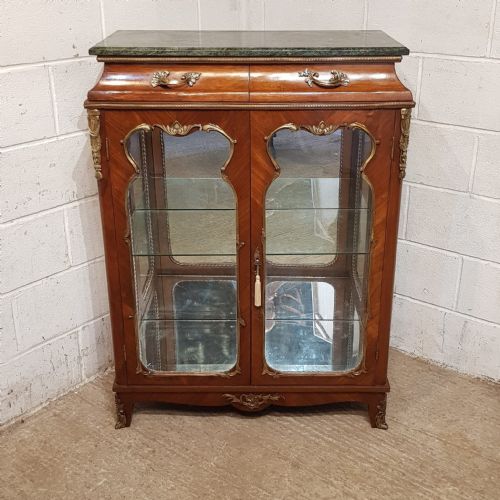
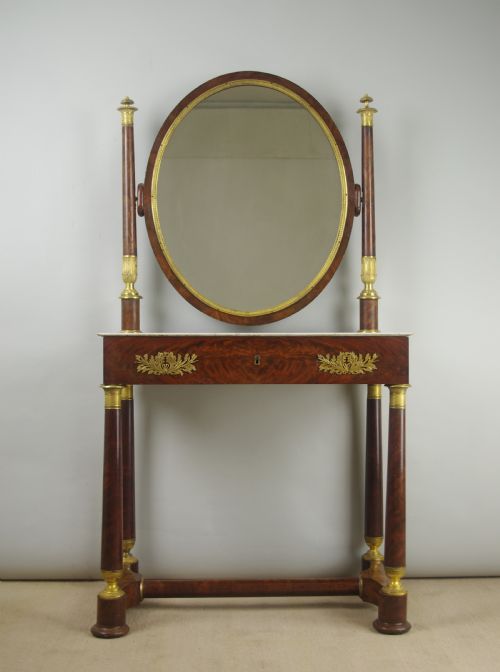
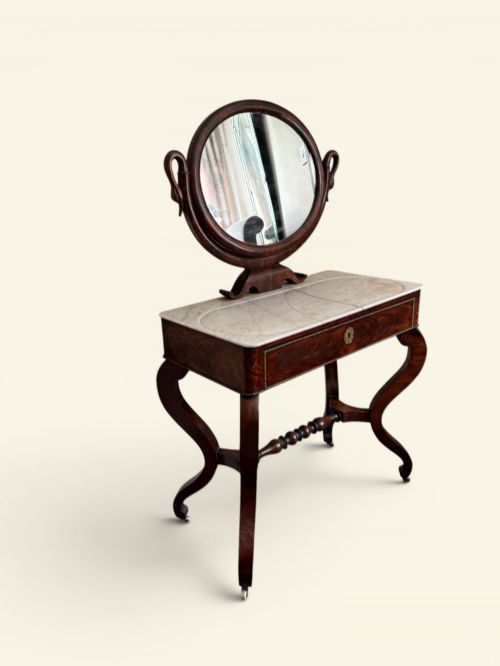
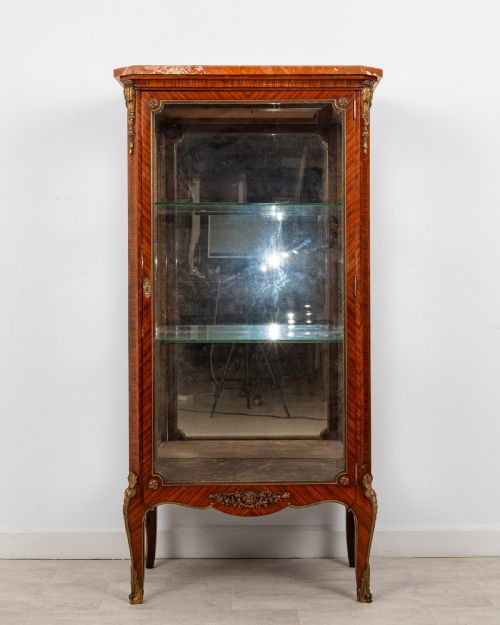

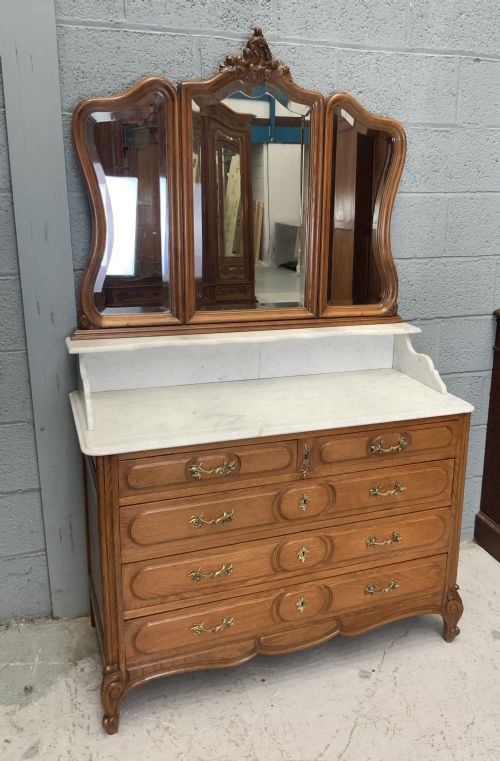


French Marble Mirror
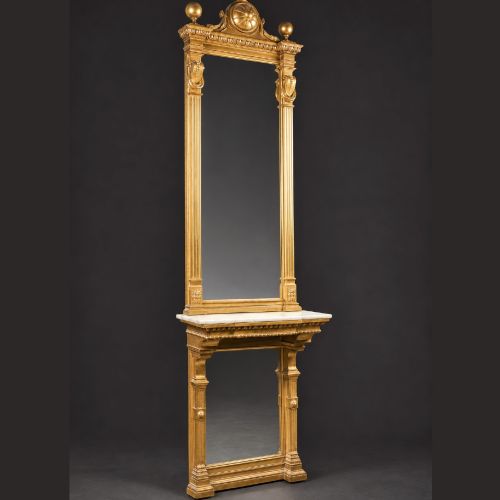
A french marble mirror brings architectural weight and reflective depth to a room, pairing cold stone surfaces with gilded or carved timber frames.
French Marble Mirror
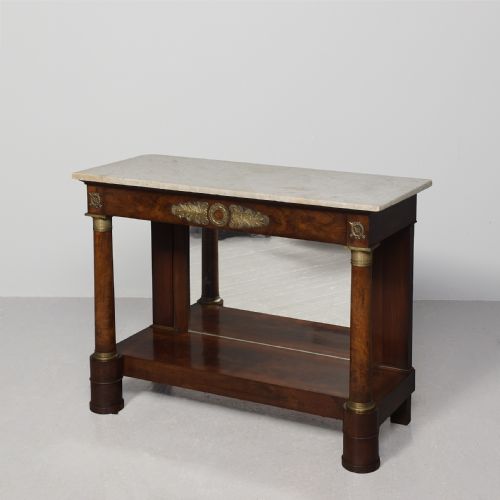
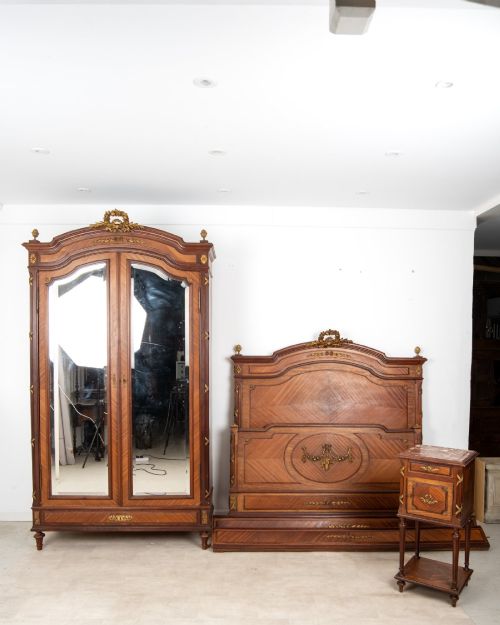
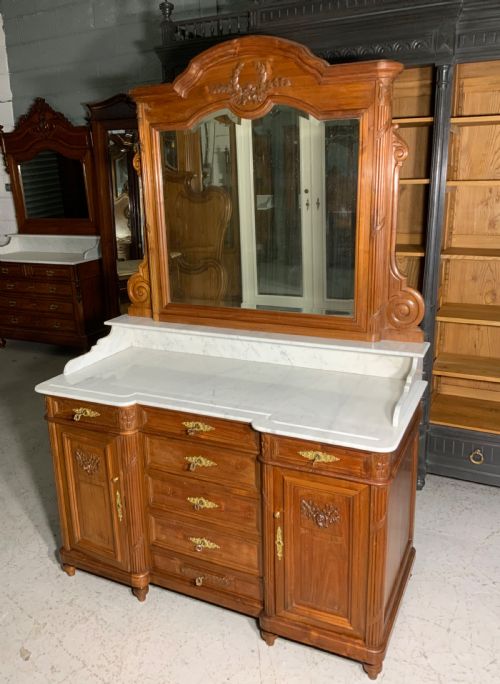
Buyers seeking a french marble mirror encounter pieces originating primarily from the nineteenth century, alongside earlier eighteenth-century examples and twentieth-century revivals. These objects frequently appear paired with console tables or integrated into larger salon and bedroom settings rather than standing entirely alone.
Materials extend beyond the glass and stone specified in the title to encompass substantial timber carcases of mahogany, walnut, kingwood, and oak. Giltwood frames and applied bronze ormolu mounts frequently accompany the primary stone and glass components.
Construction and Materials
Makers shaped structural carcases from dense hardwoods like mahogany, walnut, and oak, often applying decorative veneers of kingwood or exotic timber over secondary woods. Carved elements receive hand-applied gesso and leaf gilding or parcel gilding to achieve reflective metallic highlights.
Mounts cast in brass or bronze undergo chasing and ormolu gilding before attachment to the timber frames. Glass plates are bevelled and silvered by hand, while marble slabs are selected for colouration and cut to fit console tables or base sections associated with the mirror assemblies.
French Marble Mirror Retail Price Guide 2026
Typical asking prices for french marble mirror among the pieces listed under this phrase on Sellingantiques today, from the lower quarter to the upper quarter. They describe what is for sale here now, not the wider market.
Some dressing mirrors hide secret compartments behind miniature marble shelves, perfect for concealing small Victorian treasures.
Evaluating Quality
Distinction across the range lies in the crispness of hand-carved foliage, the weight and depth of cast ormolu mounts, and the integration of matching console elements. Superior examples display harmonious proportions between the timber frame, the mirror plate, and any associated marble surfaces.
The refinement of the gilding technique and the clarity of the original mercury or silvered glass plate signal higher workshops. Lesser examples rely on simplified machine mouldings and thinner timber construction with minimal decorative enrichment.
François Linke·G. Durand·Paul Sormani
The French Marble Mirror Glossary
- Ormolu
- Gilded bronze mounts applied to furniture and mirror frames for decorative contrast. This technique involves coating bronze with a mercury-gold amalgam and firing to drive off the mercury.
- Trumeau
- A decorative wall mirror or panel set above a mantelpiece or between windows. It frequently incorporates painted wooden panels or carved classical motifs within the frame.
- Pier Mirror
- A tall mirror designed to hang on the wall space between two windows, often positioned directly above a matching console table. These pieces maximise light reflection within formal nineteenth-century interiors.
- Kingwood
- A dense, heavily figured Brazilian hardwood prized for marquetry and veneering in luxury cabinet making. It displays rich dark brown and violet colouration with fine grain patterns.
- Carrara Marble
- A white or blue-grey marble quarried in Italy, utilised for tabletops and architectural details. Its uniform crystalline structure made it the preferred stone for nineteenth-century French console surfaces.
French Marble Mirror: Frequently Asked Questions
How do I hang a heavy marble mirror?
These pieces require professional wall anchoring due to the combined weight of the timber frame, glass plate, and any integrated stone elements. Secure fixings must engage directly with structural wall studs or masonry rather than standard plasterboard.
Ensure the hanging wire or integrated metal brackets are rated to support the entire load safely. Lower the mirror gently into position with assistance to avoid twisting the timber joints.
Were these mirrors always sold with console tables?
Many large wall mirrors and pier glasses were manufactured as matched suites alongside console tables to create a unified architectural statement in nineteenth-century salons. Other mirrors functioned as standalone wall pieces or dressing table attachments.
Checking for shared wood species, gilt styles, and matching proportions helps determine if a mirror and table originated as a pair. Individual pieces often survive independently after centuries of domestic rearrangement.
How do I clean antique mirror glass?
Clean the glass surface using a soft, lint-free cloth and a mild, ammonia-free cleaning solution applied to the cloth rather than directly to the mirror. This prevents moisture from seeping behind the silvered backing.
Take care near the edges of the glass where the historical silvering can be delicate and prone to flaking. Avoid abrasive pads or chemical sprays that might damage the surrounding giltwood or ormolu mounts.
How do I identify the period of the frame?
Examine the construction methods visible on the reverse of the timber frame, including joinery techniques and screw types. Earlier nineteenth-century pieces feature hand-cut joints and hand-hammered fixings, while later revivals incorporate machine-produced elements.
Stylistic indicators such as the symmetry of the carving, the choice of veneer, and the composition of the ormolu mounts point toward specific revivals like Louis XV or Empire.