

French Marble Gueridon Table
When you search for a French marble gueridon table, you find round pedestal pieces designed to sit centrally in a room or serve as occasional lamp tables.
French Marble Gueridon Table
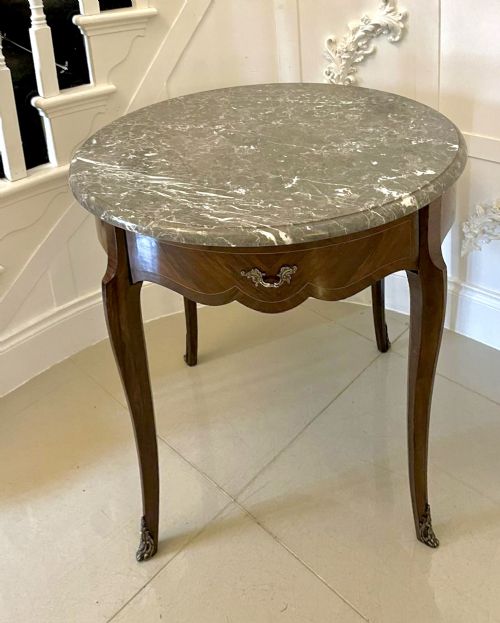
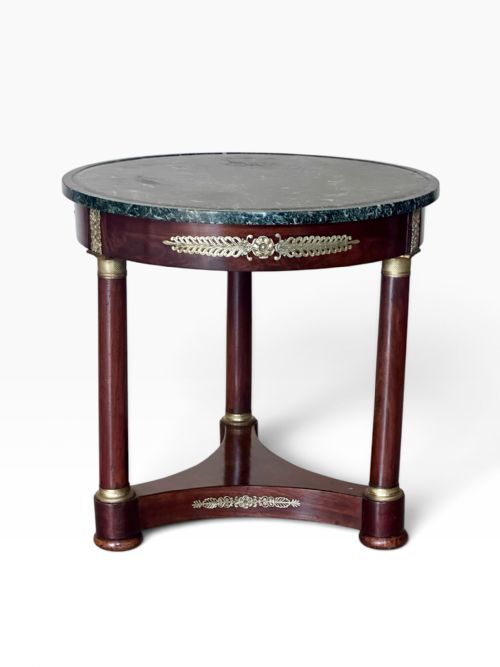
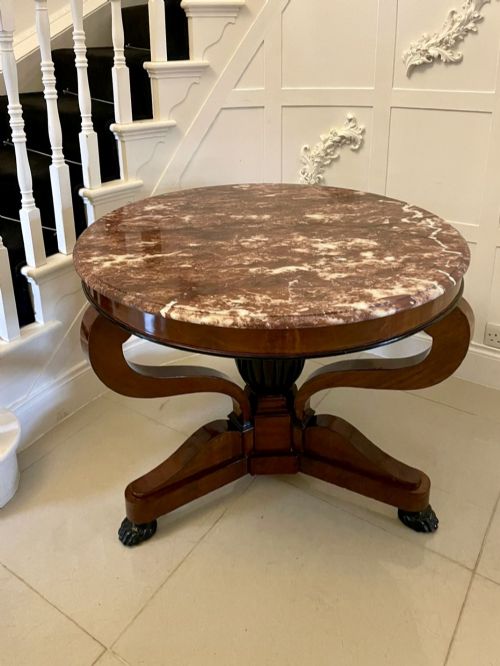
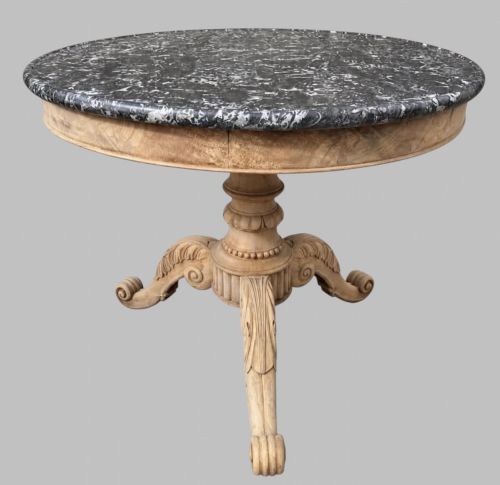
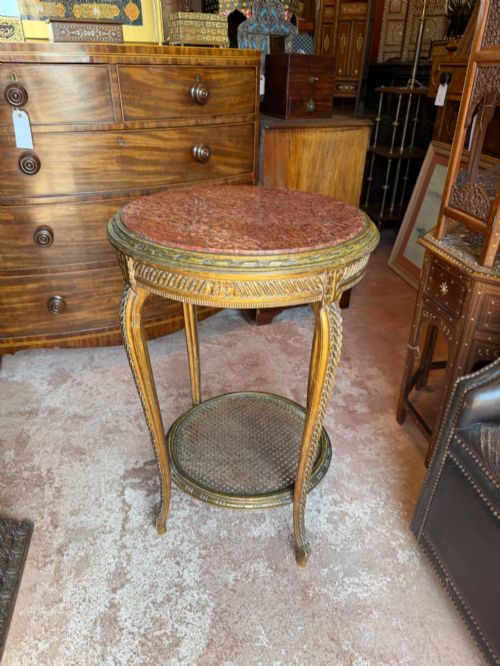
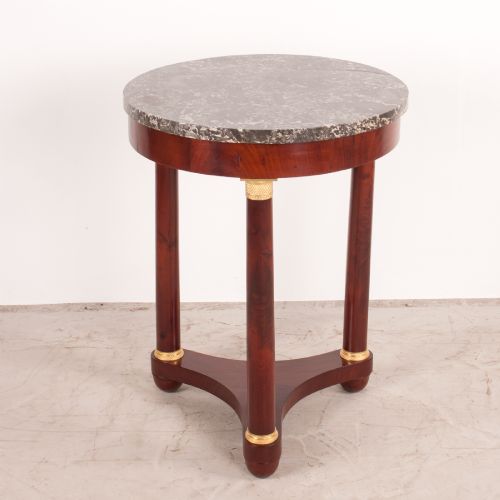
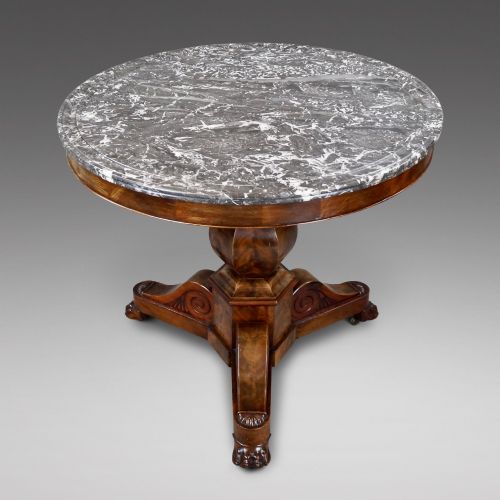
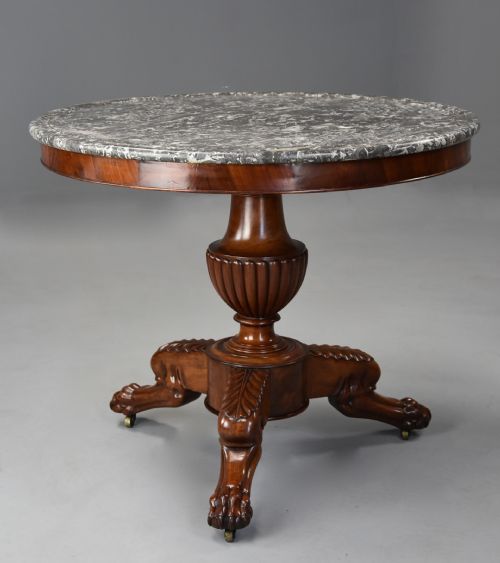
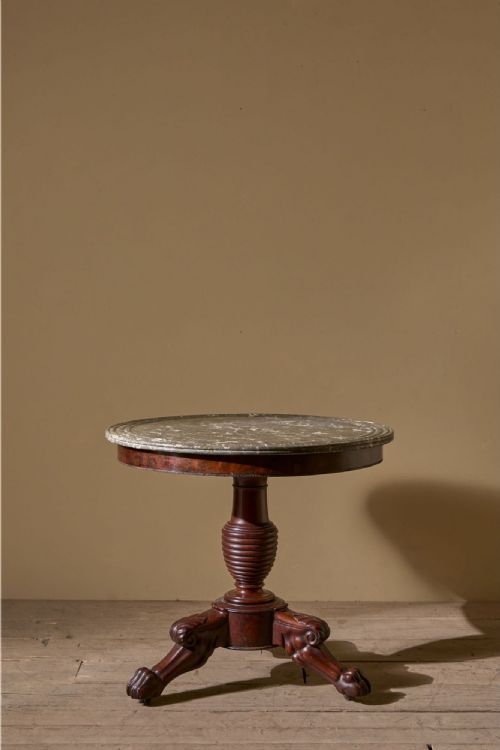
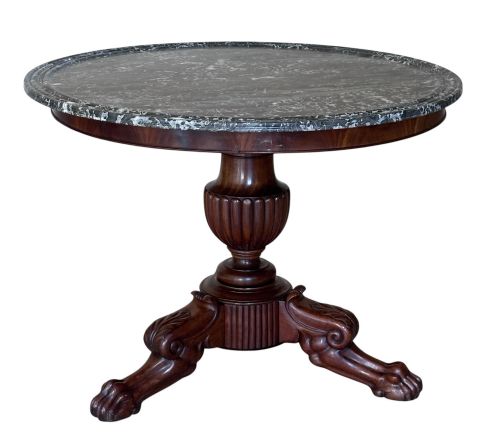
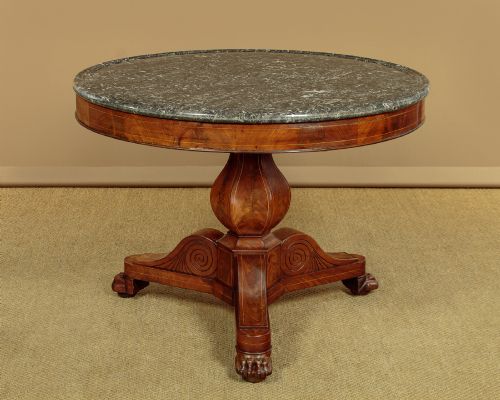
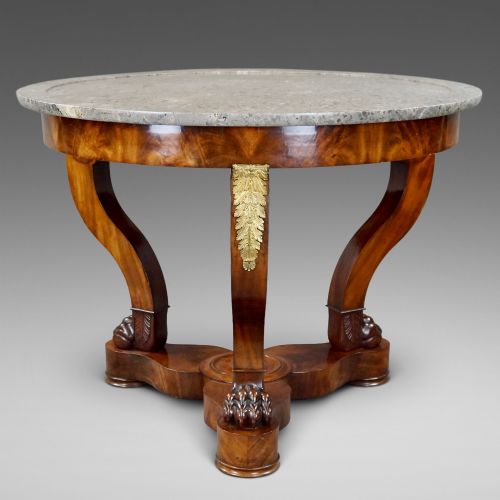
A French marble gueridon table is a round pedestal table originating primarily from nineteenth-century France, designed to stand freely in the middle of a room or function as a side and lamp table. When browsing this selection, you will frequently encounter mahogany and walnut examples featuring inset stone tops supported by a central column or tripod base.
The form spans various historical revivals and regional workshops, appearing under styles such as French Empire, Louis Philippe, and Louis XV. These pieces served diverse domestic roles in historical interiors, ranging from grand centre tables in reception rooms to smaller occasional tables and café or bistro furniture.
Makers and cabinetmakers produced these circular tables in multiple scales, from large centre tables down to compact lamp and wine tables. The defining characteristic across the selection remains the combination of a circular stone surface paired with a wooden or cast metal pedestal structure.
How they were made
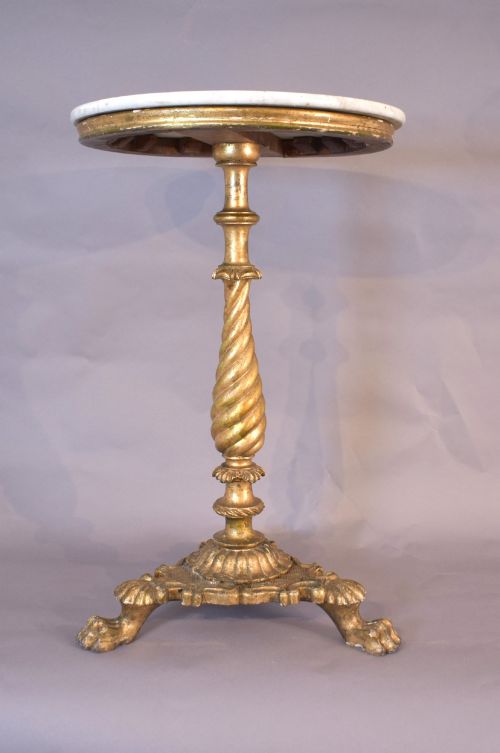
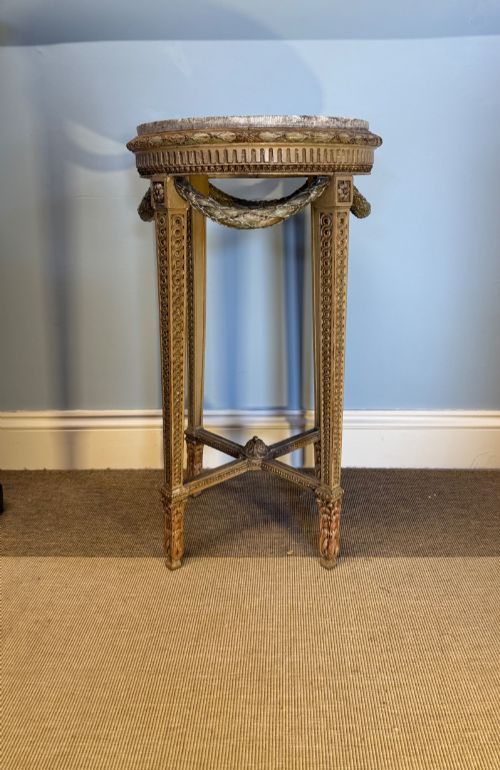
Makers constructed the primary frames of these circular tables using timber substrates such as mahogany, kingwood, walnut, and burr elm, often employing flame veneers to create figured grain patterns across the frieze and base. Turners shaped central wooden pedestals and tripod legs, sometimes incorporating carved details or applying giltwood finishes.
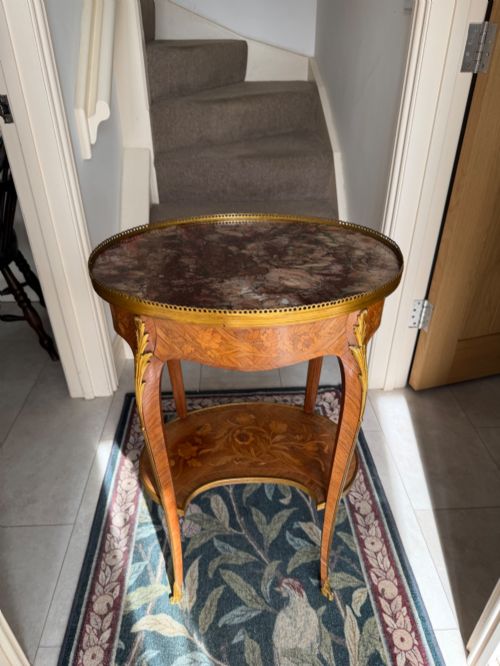
The defining stone surfaces consist of heavy slabs of marble, including white, grey, red, black, breccia, and veined varieties, precisely fitted into the wooden rims of the table tops. Metal components appear as cast brass, ormolu, and gilt bronze mounts, decorating collars, feet, and capitals with applied motifs like rams heads.
Listings feature mahogany, walnut, and kingwood timbers paired with marble tops across nineteenth-century French periods.
What varies in quality
The grade of the marble top significantly dictates the standing of the piece, with standard white or grey slabs sitting below richly figured, coloured, or specimen marble variants. The choice of underlying timber grain, such as highly figured flame mahogany or burr elm, marks out finer cabinetwork from plain utility pieces.
Execution of the cast brass and ormolu mounts separates standard production from exceptional examples attributed to noted workshops like that of François Linke. The stability and weight of the central pedestal and tripod base, alongside crispness in hand-carved wood elements, determine the overall integrity of the build.
François Linke·L.Martin of Paris·Adam Weisweiler
The French Marble Gueridon Table Glossary
- Gueridon
- A small French round table, typically supported by a single central pillar or column resting on a tripod base. These tables appeared across multiple nineteenth-century decorative styles.
- Ormolu
- Gilt bronze or brass mounts applied to furniture for decorative effect. Makers cast and chased these metal elements to enrich the wooden structure.
- Breccia marble
- A composite stone made of broken fragments cemented together in a fine-grained matrix. This material provides varied, multicoloured patterns on antique table tops.
- Frieze
- The horizontal band running directly beneath the marble top of the table. Cabinetmakers often veneered this section with figured mahogany or walnut.
- Tripod base
- A three-legged support system commonly found beneath the central column of a round pedestal table. This configuration ensures stability on uneven floors.
French Marble Gueridon Table: Frequently Asked Questions
What is a gueridon table?
A gueridon is a traditional French round table built on a central pedestal, frequently topped with marble. They were originally introduced in the seventeenth century and remained popular throughout the nineteenth century for domestic use.
These tables were designed to be freestanding rather than pushed against a wall. Their circular format made them suitable for placement in the centre of a room or beside seating.
Where did people use these tables?
Historical interiors utilised these tables in principal reception rooms as central display surfaces for lamps, vases, or decorative objects. Smaller versions served as wine tables or occasional furniture.
In hospitality settings, smaller cafe and bistro variations provided functional surfaces for dining and conversation. Their compact footprint allowed them to fit easily into various domestic layouts.
How do I care for a marble top?
Marble surfaces require cleaning with a damp cloth and neutral soap, avoiding acidic substances that can etch the polished stone. Using coasters prevents liquid rings from forming on vulnerable mineral surfaces.
Wooden bases benefit from occasional polishing with appropriate wax to maintain the finish of the timber. Keeping the table away from direct heat sources protects both the wood and the stone from thermal shock.
How can I tell the period?
Stylistic indicators help date the piece, such as the heavy neoclassical proportions of French Empire designs compared to the simpler curves of Louis Philippe furniture. The selection of wood veneers and the style of bronze mounts also reflect changing manufacturing decades.
Construction methods, including hand-cut screws and timber shrinkage patterns, offer further clues to age. Examining the underside often reveals the original assembly techniques used by period cabinetmakers.