


French Mantle Garniture
A french mantle garniture brings together a central clock and matching side pieces to anchor a room.
French Mantle Garniture
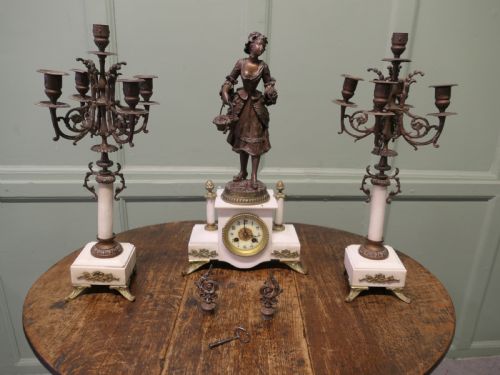
A french mantle garniture comprises a central clock accompanied by matching side pieces such as candelabras, urns, or vases designed to sit together on a fireplace mantel.
Most examples found here date from the nineteenth century, spanning Victorian periods, late nineteenth-century revivals, and occasional early twentieth-century Art Deco expressions.
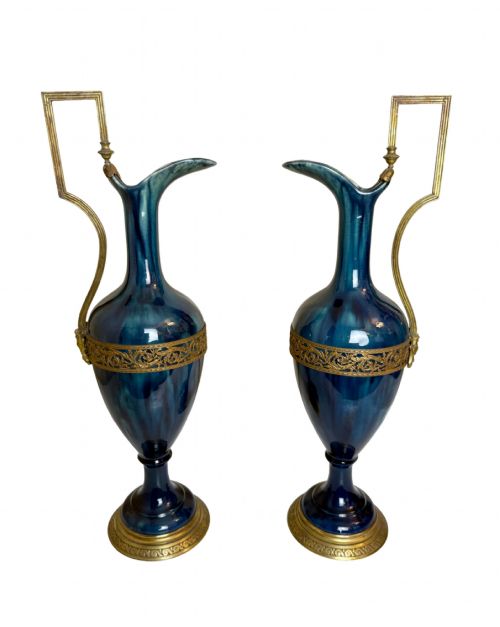
Sets often integrate paired decorative companions like porcelain ewers, crystal drop lustres, or bronze figures that echo the stylistic vocabulary of the main timepiece.
Materials and construction methods
Makers utilised heavy natural stones like marble, onyx, and alabaster for architectural bodies, pairing them with cast metals including ormolu, gilt bronze, brass, and spelter.
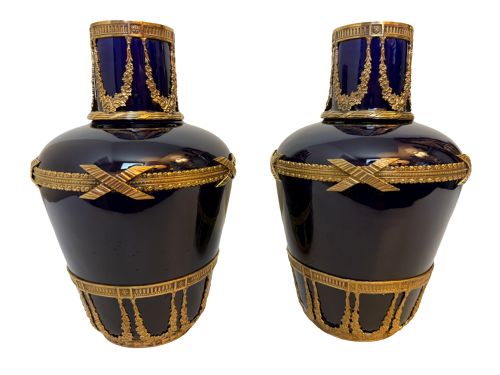
Surface decoration frequently incorporates hand-painted porcelain plaques, enamel dials, blue glass, and cloisonne work, reflecting Louis-style revivals and neoclassical tastes.
Assessing quality and execution
The sophistication of the metal casting and the crispness of chased details in ormolu and bronze distinguish finer garnitures from simpler commercial productions.
The integration of materials, such as heavy fitted marble bases matching the subsidiary garniture vases precisely, marks out superior assembly and design.
Finnigan Manchester·Ferdinand Barbedienne·Etienne Maurice Falconet·Meissen
The French Mantle Garniture Glossary
- Ormolu
- Gilt bronze mounted onto furniture or clocks through a mercury gilding process. This technique gives the metal a distinctive golden lustre.
- Garniture
- A set of matching ornamental objects designed for display together on a mantelpiece or sideboard. They typically consist of a central clock flanked by two vases or candelabras.
- Candelabra
- A branched candlestick holder designed to hold multiple taper candles. These frequently form the side pieces of a clock garniture set.
- Spelter
- An alloy of zinc and lead used as a cheaper alternative to bronze for sculptural figures. It takes patination and gilding well.
- Portico clock
- A architectural clock style featuring supporting columns reminiscent of classical buildings. They appear frequently in nineteenth-century marble garnitures.
French Mantle Garniture: Frequently Asked Questions
What is a french mantle garniture set?
A french mantle garniture set is an ensemble consisting of a mantel clock and two matching decorative side objects, such as urns or candelabras.
These pieces were created to be displayed together as a unified decorative scheme on a fireplace mantel or console table.
How do I wind the clock?
Most period clocks utilise an eight-day mechanical movement wound via a dedicated key inserted into the dial holes.
Care should be taken not to over-wind the mainspring to preserve the integrity of the antique movement.
Where were they displayed?
These decorative sets were placed prominently on the mantelpiece in the principal reception rooms of nineteenth-century homes.
The matching side pieces balanced the visual weight of the central clock against the fireplace opening.
How do I identify the period?
Period identification relies on examining the combination of materials, the style of the clock hands, and decorative motifs like cherubs or columns.
Nineteenth-century pieces often reflect specific revivals such as Louis XV, Louis XVI, or Art Deco styles.