


French Mahogany Centre Table
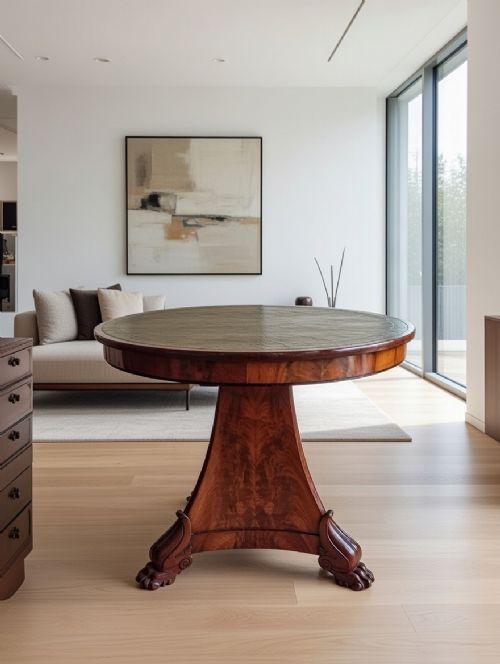
A french mahogany centre table anchors a room with classical proportion and rich timber figure, designed to sit freely in an interior.
French Mahogany Centre Table
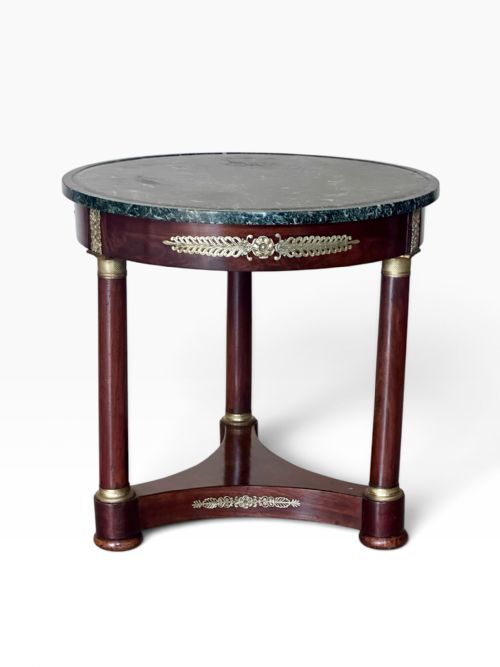
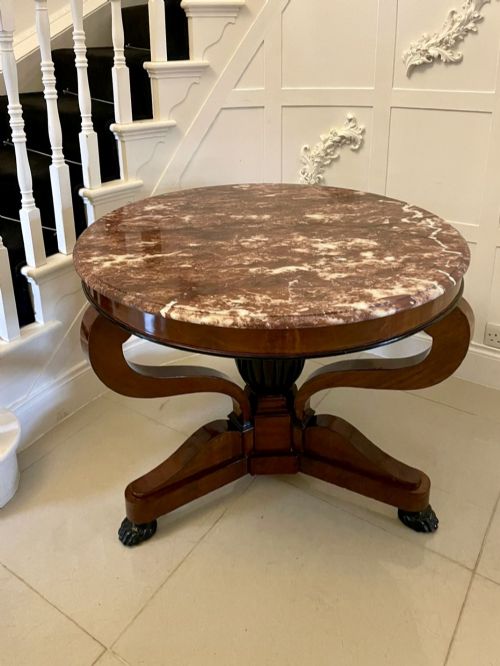
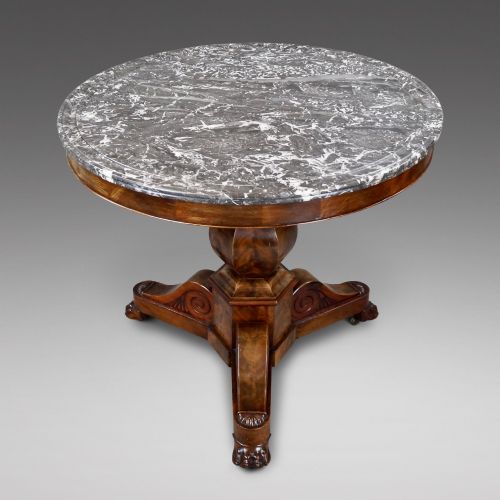
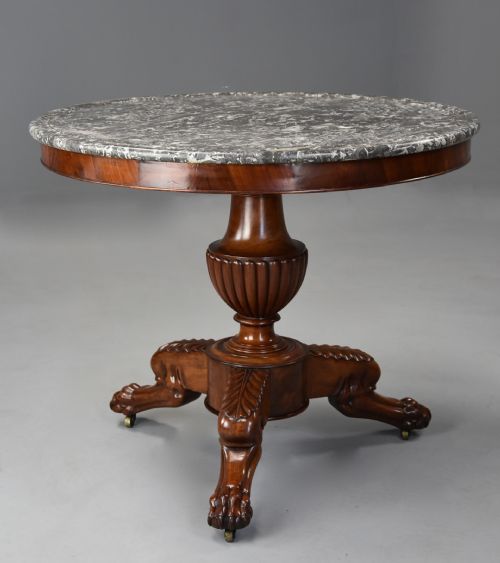
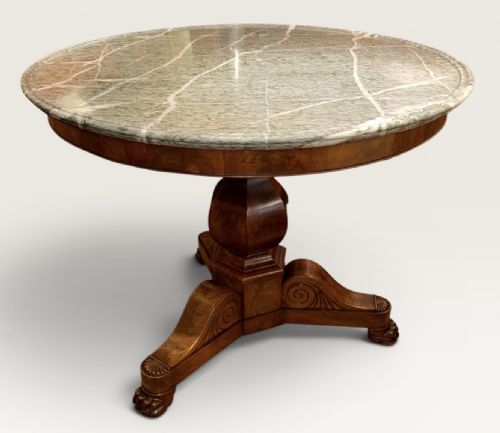
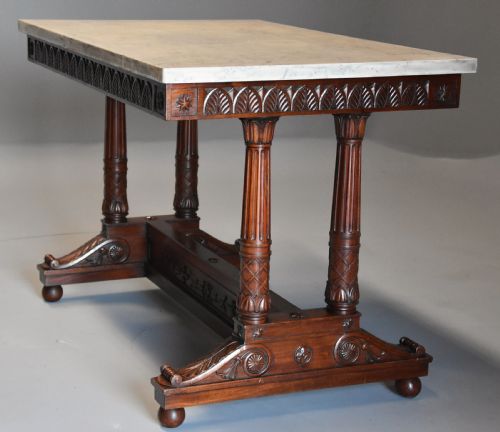
A french mahogany centre table stands independently in a room, traditionally placed in the middle of a hall or salon rather than against a wall. When searching for this phrase, buyers encounter round gueridon forms alongside occasional, side, coffee, and writing tables.
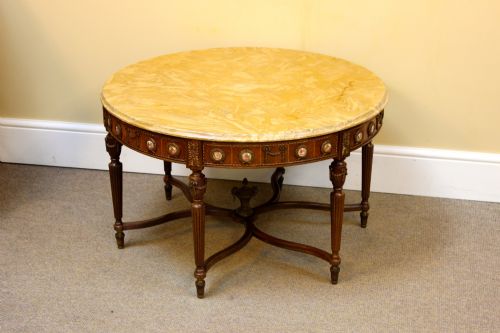
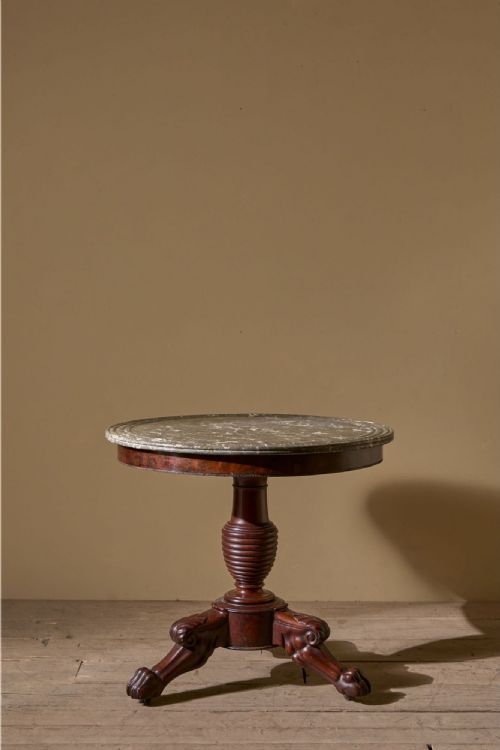
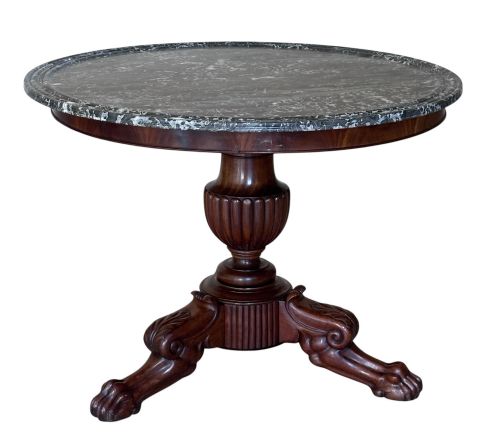
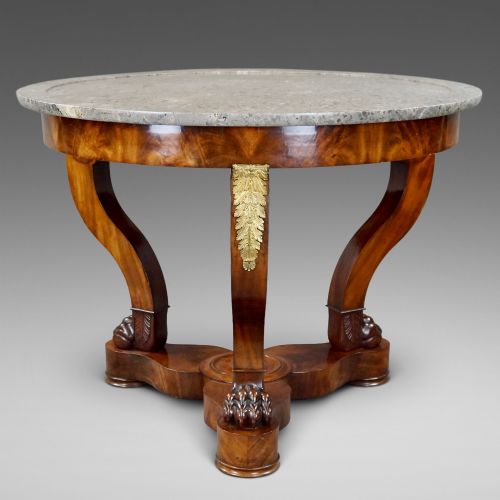
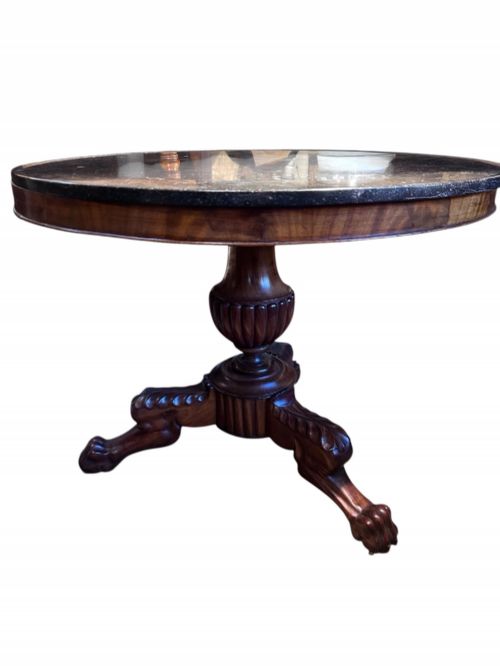
The pieces on this page span the nineteenth century, including Empire, Charles X, Louis Philippe, and Victorian periods, alongside later revival styles. Many examples feature circular marble tops set above pedestal bases or tripod legs.
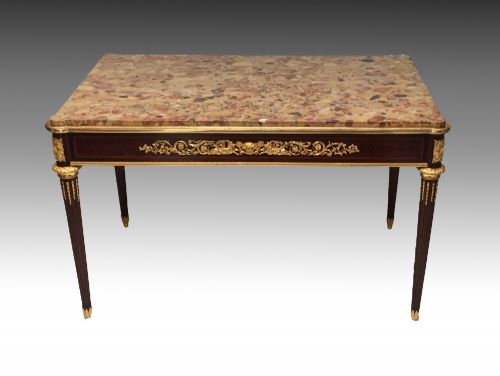
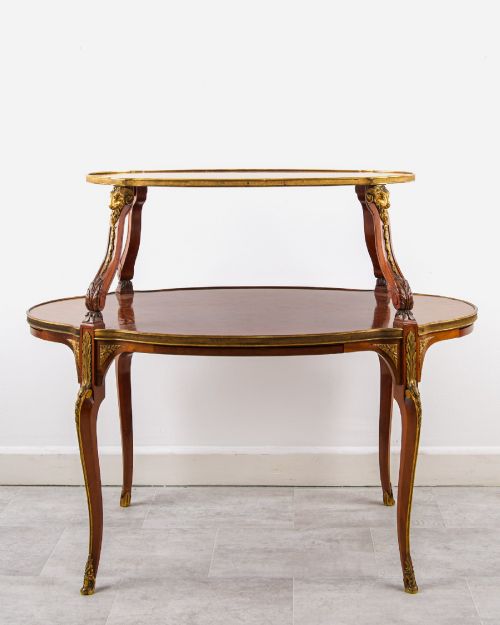
Makers and workshops utilised mahogany veneers, flame mahogany, and plum pudding mahogany to create surfaces designed to catch the light. Ormolu mounts, brass details, and gilt bronze often accent the timber framework.
How They Were Made
Cabinetmakers constructed these tables using solid mahogany frameworks and applied carefully selected mahogany veneers, including flame and plum pudding varieties, to tabletops and pedestal bases. Grain patterns were matched symmetrically across circular tops to create visual depth.
Heavy inset marble slabs, frequently in white, grey, or black, provided durable surfaces and substantial weight to the centre of gravity. Cast ormolu, gilt bronze, and brass mounts were secured to the timber to accentuate structural joints and feet.
Listings feature nineteenth-century pieces alongside Edwardian revivals, incorporating mahogany, marble, and ormolu.
What Varies in Quality
The calibre of a french mahogany centre table rests upon the selection of timber veneers and the precision of the cabinetwork. Tables featuring highly figured flame mahogany or plum pudding mahogany sit at the upper end of the range.
The refinement of the cast metal mounts separates standard production from exceptional pieces. Crisp chasing on ormolu mounts, original veined marble slabs, and sculptural elements like rams heads or swan details indicate superior workshop execution.
JACOB·Gervais Durand
The French Mahogany Centre Table Glossary
- Gueridon
- A small circular table on a central pillar and tripod base. This form dominates the selection of nineteenth-century pieces.
- Ormolu
- Gilt bronze mounted onto furniture surfaces. The technique involves applying a gold amalgam to bronze through heat.
- Flame mahogany
- Timber cut from the fork of the mahogany tree to produce a flickering, flame-like grain pattern. Cabinetmakers prized this veneer for tabletops.
- Charles X
- A French decorative arts period spanning the 1820s, bridging the Empire style and the later Louis Philippe aesthetic.
French Mahogany Centre Table: Frequently Asked Questions
Where should I place a centre table?
These tables are designed to stand in the middle of a room or a large hallway where people can walk around them entirely. They function well as decorative display surfaces or as focal points beneath a central ceiling rose.
Because the pieces are finished on all sides, they do not need to anchor against a wall. Ensure there is adequate clearance for movement around the perimeter of the base.
How do I care for a marble top?
Marble surfaces require regular dusting with a soft cloth and immediate wiping of acidic liquids like wine or citrus to prevent staining. Avoid harsh chemical cleaners that can dull the polished stone finish over time.
Applying a specialist wax can help protect the marble from minor marks. Lift the slab carefully only if necessary during moving, as original tops are often heavy and unattached.
What is the difference between Empire and Louis Philippe styles?
Empire tables, dating from the early nineteenth century, often display strong neoclassical motifs such as ormolu swans, rams heads, and dark mahogany surfaces. They convey a formal, monumental presence.
Louis Philippe pieces from subsequent decades lean toward simpler, more domestic silhouettes with warmer timber tones and restrained ornamentation. The emphasis shifts from military-inspired grandeur to comfortable bourgeois elegance.
Are these tables suitable for everyday use?
Nineteenth-century tables were built to withstand active household environments using solid timbers and robust pedestal constructions. They handle daily placement of lamps, books, and decorative objects with ease.
Care should be taken with moisture and extreme temperature fluctuations to protect the antique mahogany veneers and polish. Using coasters and felt pads helps preserve the timber surface.