




French Low Seat Chairs
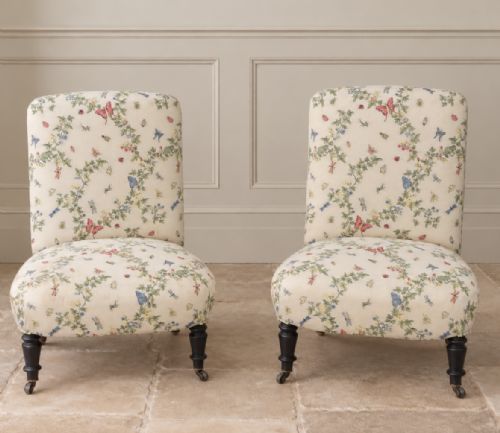
French low seat chairs bring intimate scale and deep-sprung comfort to a room, offering low-slung seating suited to boudoir and bedroom.
French Low Seat Chairs
When searching for french low seat chairs, you encounter intimate seating forms designed for relaxed posture and low-profile placement. The selection spans nineteenth century examples alongside Victorian interpretations and twentieth century pieces from the nineteen thirties.
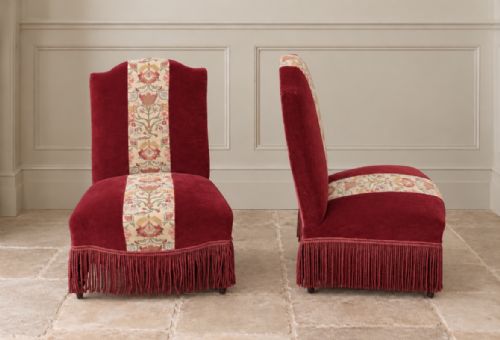
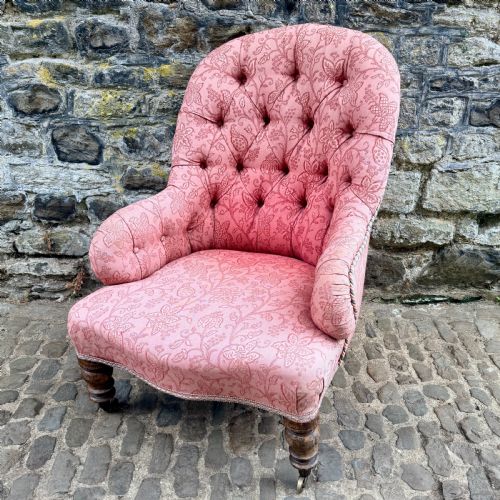
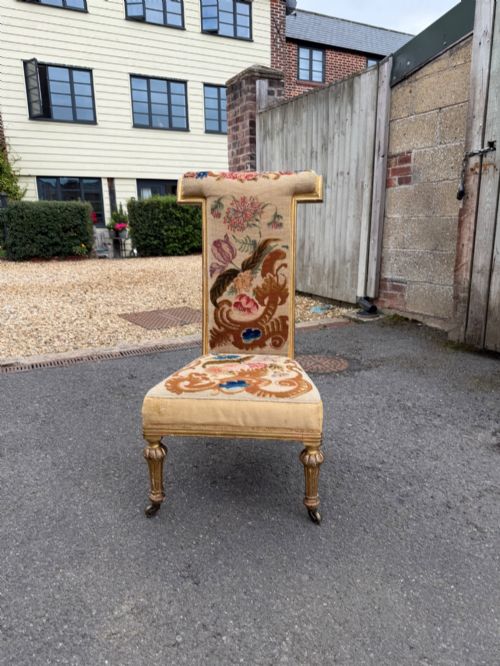
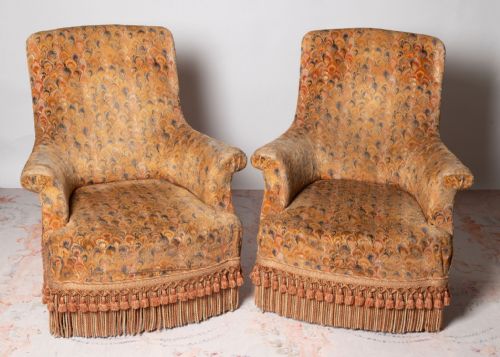
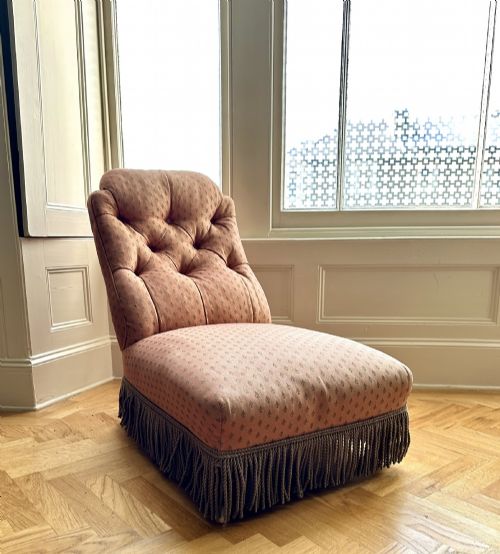
The dominant forms appearing here include slipper chairs, bedroom chairs, and boudoir seating alongside low armchairs and prie dieu chairs. These pieces originate primarily from nineteenth century France, often reflecting Napoleon III and chateau aesthetics.
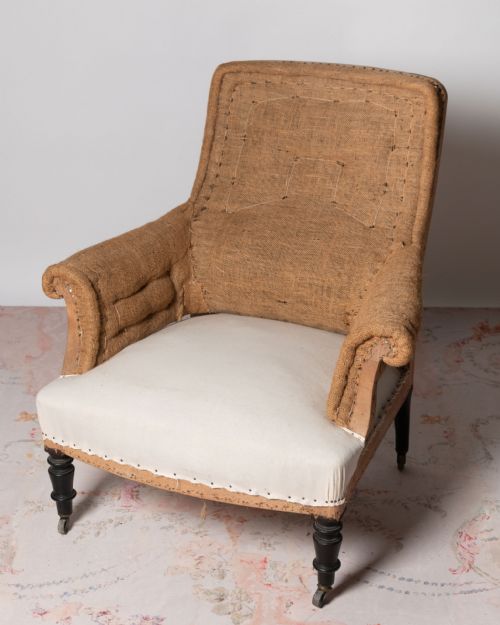
Makers and workshops of the period created these shorter frames for dressing rooms and private chambers, prioritising a relaxed recline over formal upright posture. Many survive in various states, from fully restored upholstery to bare frames awaiting fabric.
How they were made
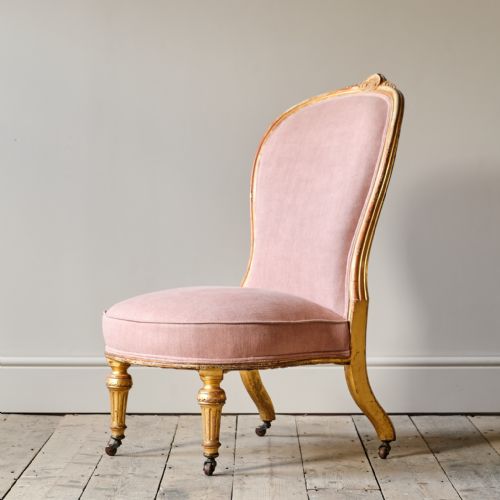
Construction relies on timber framing shaped from wood and giltwood, frequently incorporating ebonised finishes or brass details. Frames are built low to the floor to support the characteristic shortened proportions of boudoir and bedroom seating.
Upholstery techniques involve traditional textile work utilising velvet, Hessian, and various decorative fabrics. Trims such as fringe often finish the lower edges, while frames may be left exposed or entirely covered in fabric.
French Low Seat Chairs Retail Price Guide 2026
Typical asking prices for french low seat chairs among the pieces listed under this phrase on Sellingantiques today, from the lower quarter to the upper quarter. They describe what is for sale here now, not the wider market.
Some nineteenth century slipper chairs still sport their original fringing, proving that dramatic hemlines are not just for evening wear.
What varies in quality
The distinction between ordinary and exceptional pieces lies in the sculptural grace of the wooden frame and the integrity of the joinery. Superior examples exhibit finely turned or carved legs in giltwood or ebonised timber that retain their original structural firmness.
The underlying craftsmanship reveals itself in the spring configuration and edge-rolling of the seat platform, determining how well the chair holds its low profile over decades of use.
Lamb of Manchester
The French Low Seat Chairs Glossary
- Napoleon III
- A nineteenth century French design style characterised by eclectic revivalism, comfort, and ornate detailing. It frequently manifests in low upholstered chairs with exposed wooden frames.
- Slipper chair
- An upholstered chair with short legs designed for bedrooms and dressing rooms, allowing shoes to be put on with ease. These typically feature low seats and generous padding.
- Giltwood
- Wood that has been coated with gold leaf or a gold-coloured metallic finish. This decorative treatment appears on the frames of finer nineteenth century seating.
- Prie Dieu
- A devotional chair featuring a low seat and an upper shelf or rail for kneeling during prayer. Nineteenth century versions often double as decorative low seating.
- Bergere
- An enclosed armchair with upholstered back and sides, featuring wooden framework. Smaller antique variants provide compact low seating.
French Low Seat Chairs: Frequently Asked Questions
What is a french low seat chair used for?
These low-slung seats were historically designed for bedrooms, dressing rooms, and private boudoirs where relaxation and dressing took precedence over formal entertaining.
Today, they function well as accent seating in living spaces, reading corners, or guest bedrooms where a shorter profile helps maintain an open line of sight.
How do I identify a nineteenth century piece?
Look for traditional joinery methods, hand-carved wooden frames in materials like giltwood or ebonised timber, and classic nineteenth century proportions.
Periods such as the Napoleon III era often display distinctive decorative flourishes and sturdy wooden frames beneath the upholstery.
What does upholstery ready mean?
Chairs designated for upholstery are sold in their baseline structural form, usually retaining their original webbing or springs but lacking top fabric.
This allows you to select a textile that matches your interior scheme, whether choosing traditional velvet or simple Hessian.
Where should I place a low seat chair?
Their reduced height makes them ideal for positioning beneath windows, beside a low dressing table, or paired with a small side table in a bedroom.
They also work effectively in pairs facing a fireplace, creating an intimate conversation area without blocking views across the room.