





French Library Shelving
French library shelving brings architectural gravity and generous display to a room, offering sturdy open compartments built for serious collections.
French Library Shelving
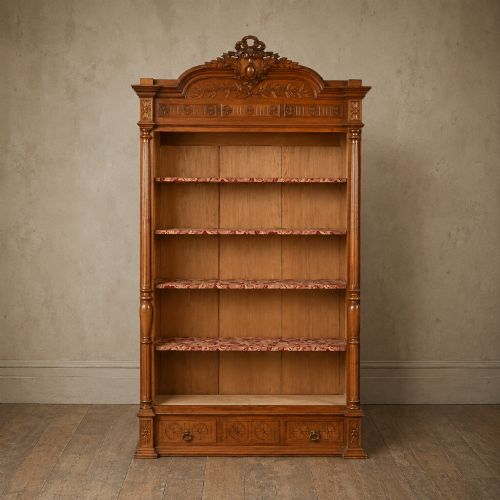
French library shelving comprises open bookcases and etageres designed to house substantial collections of books and decorative objects. When you search for french library shelving, you encounter pieces originating from the eighteenth century through to the early twentieth century.
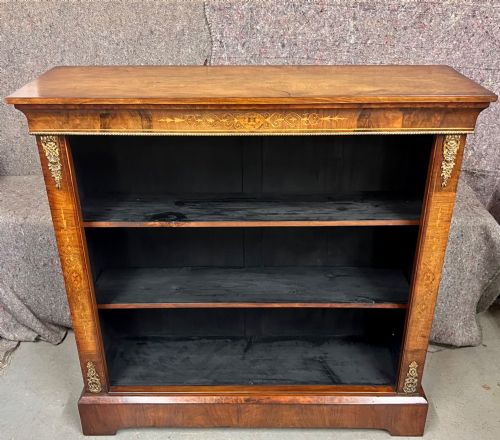
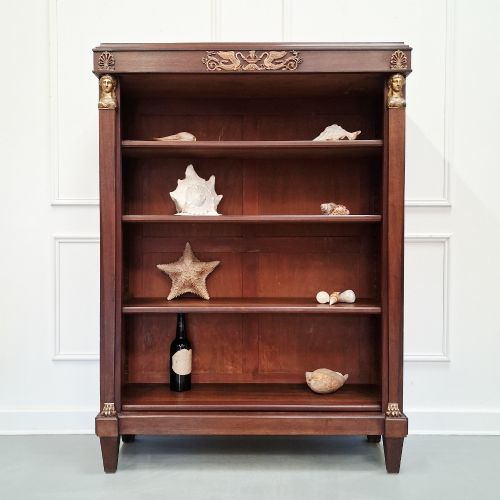
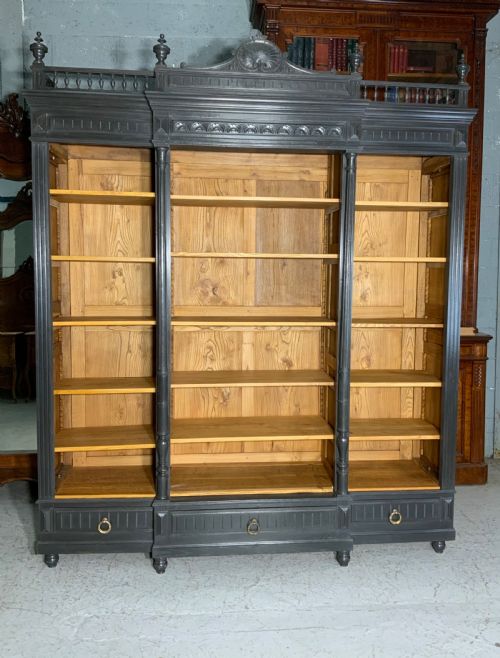
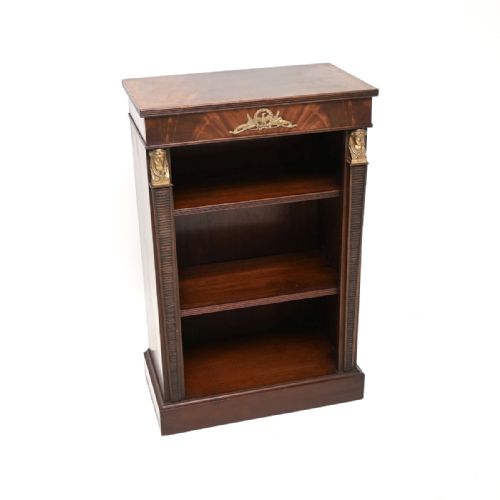
The pieces listed on this page span several distinct stylistic periods, including Napoleon III, French Empire, Neoclassical, and French Provincial. Large mahogany and walnut open bookcases dominate the selection, alongside diminutive etageres and solid wood Continental shelving.
Makers and craftsmen utilised varied approaches across these periods, creating everything from imposing nineteenth-century architectural cases to refined eighteenth-century bleached oak examples. Adjustable shelving appears among the offerings, providing practical utility alongside formal design.
Materials and construction
Carpenters constructed these bookcases primarily from solid hardwoods and select veneers, relying heavily on mahogany, walnut, satinwood, and bleached oak. Timber selection defined the formal weight of each piece, whether dealing with deep dark grains or lighter figured surfaces.
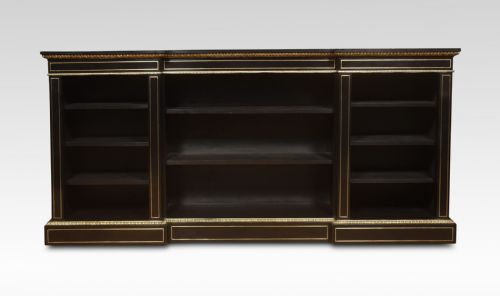
Metal mounts in brass, ormolu, and gilt metal frequently accent the woodwork, particularly within Empire and Napoleon III styles. Ebonised wood finishes also appear, providing stark contrast and sharp linear definition to the structure.
French Library Shelving Retail Price Guide 2026
Typical asking prices for french library shelving among the pieces listed under this phrase on Sellingantiques today, from the lower quarter to the upper quarter. They describe what is for sale here now, not the wider market.
The listings on this site encompass periods from the 18th century through to the 1930s, utilising materials including mahogany, walnut, satinwood, and ormolu.
Assessing quality and execution
Quality rests in the architectural proportion of the timber frame and the precision of applied mounts. Pieces featuring substantial solid wood construction and disciplined carving demonstrate superior workshop execution.
The refinement of secondary woods and the integration of functional elements, such as adjustable shelving systems, separate standard commercial output from finer bespoke library furniture.
The French Library Shelving Glossary
- Etagere
- An open set of tiered shelves used for displaying small objects or books. These pieces range from diminutive walnut constructions to larger architectural cases.
- Ormolu
- Gilded bronze mounts applied to furniture. This decorative technique characterises French Empire and Napoleon III pieces.
- Satinwood
- A durable hardwood with a lustrous, satin-like sheen used for fine cabinetmaking. It provides a pale, golden surface favoured in decorative nineteenth-century designs.
- Neoclassical
- A style drawing inspiration from classical antiquity, featuring restrained ornamentation and symmetrical proportions. It dominates several key nineteenth-century bookcases on this page.
- Bleached oak
- Timber treated to achieve a lighter, softened tone. This finish appears on eighteenth-century pieces to yield a less formal appearance.
French Library Shelving: Frequently Asked Questions
What is french library shelving?
French library shelving typically refers to open bookcases and etageres originating from continental workshops during the eighteenth and nineteenth centuries. These pieces were built to house substantial collections while serving as prominent architectural furniture in a room.
Designs range from imposing mahogany Empire cases to lighter satinwood and walnut examples. Their open format distinguishes them from traditional glazed cabinet furniture.
How do I date a piece?
Dating relies on examining the timber species, construction methods, and stylistic vocabulary evident in the carving and mounts. Pieces from the eighteenth century often feature bleached oak and simpler joinery, whereas nineteenth-century examples frequently incorporate rich mahogany, ebonised elements, or elaborate ormolu.
Stylistic markers like Napoleon III brass mounting or Neoclassical symmetry help narrow the era of production. Comparing the primary wood and decorative hardware provides the clearest chronological indicator.
Where were these pieces used?
These shelving units functioned primarily in domestic libraries, studies, and formal reception rooms of substantial European residences. They held working collections of literature, reference volumes, and decorative ornaments.
Their open construction ensured that heavy leather-bound volumes remained easily accessible for daily reading and study. Today, they serve a similar purpose in residential living spaces.
How do I style open shelving?
Open shelving allows you to combine rows of books with decorative objects, ceramics, and framed pieces. Varying the orientation of the books, from vertical stacks to horizontal piles, adds visual depth to the display.
Leaving small pockets of space around objects prevents the shelves from looking overcrowded. The architectural presence of the mahogany or walnut frame provides a strong visual anchor for your arrangement.