


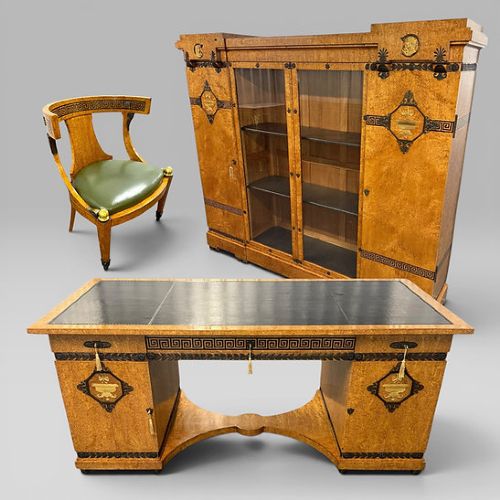


French Library Furniture
French library furniture brings grand architectural presence and refined writing surfaces into a room, spanning desks, bookcases, and tables.
French Library Furniture
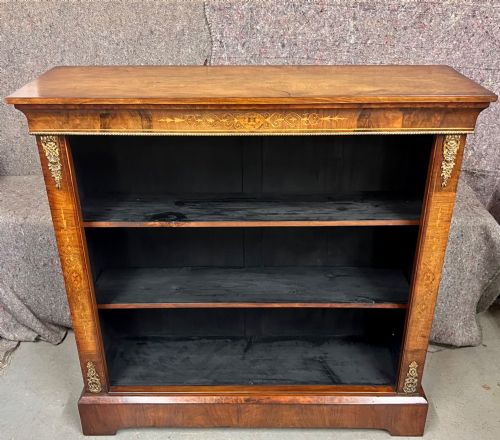
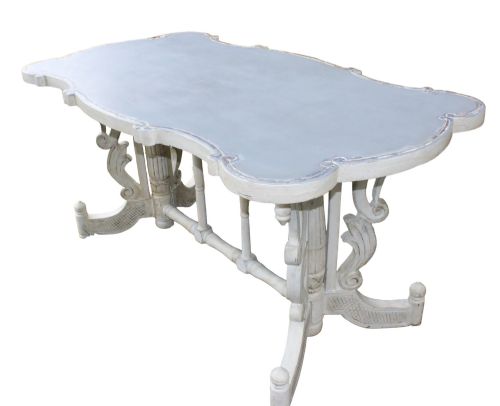
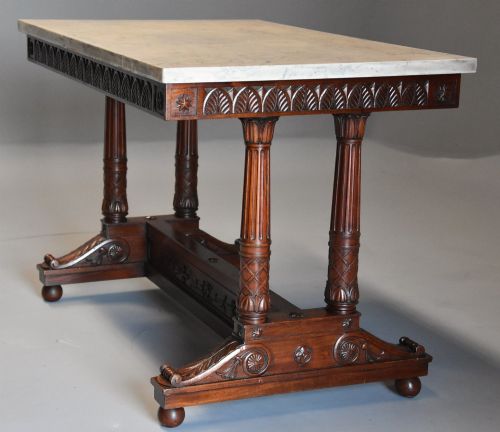
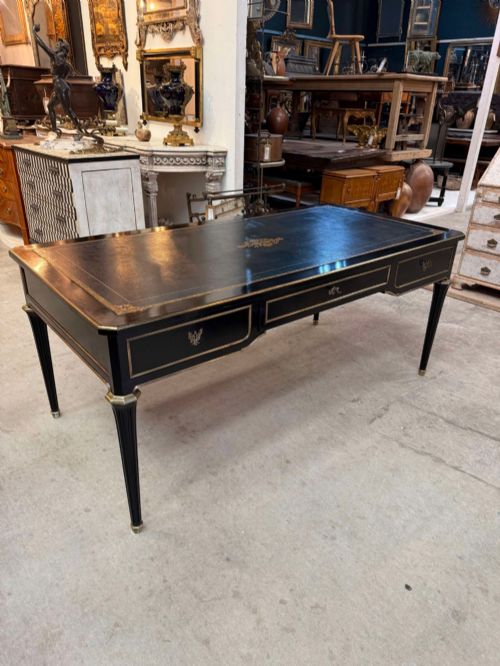
When buyers search for french library furniture, they encounter a range of stately forms designed for study and display, including large bureau plat writing desks, tall glazed bookcases, and centre tables. These pieces originate from periods such as the nineteenth century, the Victorian era, and the Edwardian period, reflecting diverse aesthetics from French Empire to Louis XVI Style.
The objects available on this page include practical pieces like library carts and office sets alongside elaborate walnut etageres and rotating bookcases. Makers such as Paul Sormani and Maison Millet contribute to the selection of refined writing desks and cabinetry mounted in bronze and brass.
Forms span from monumental Empire tables to diminutive walnut etageres, utilising woods like mahogany, kingwood, satinwood, and burr-walnut. These items served aristocratic and bourgeois studies alike, combining utilitarian function with decorative parquetry and marquetry.
How they were made
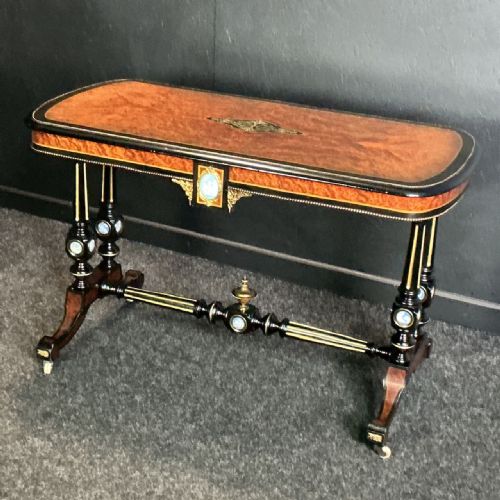
Cabinetmakers utilised dense hardwoods such as mahogany, rosewood, kingwood, and walnut as structural and decorative foundations, often applying intricate floral marquetry and parquetry patterns across table tops and cabinet doors. Secondary woods and framing supported these elaborate veneered surfaces.
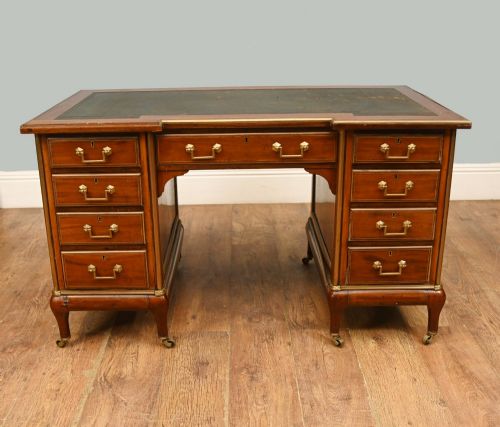
Gilding and cast metal mounts in ormolu and brass accent many desks, bookcases, and tables, highlighting corners, feet, and friezes. Leather inserts frequently top writing surfaces, complemented by tooled details.
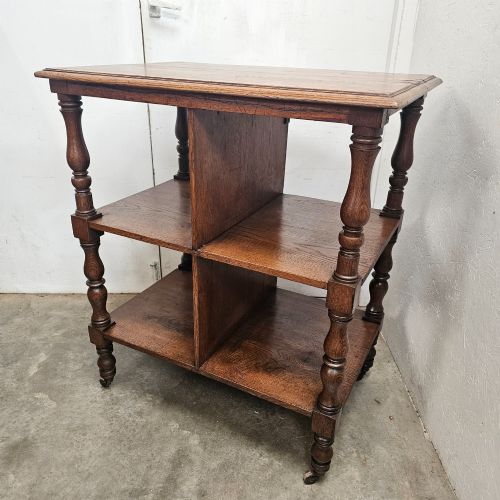
Glass panels are integrated into glazed bookcase doors, while turning and carving shape walnut and oak frames into Renaissance Revival or Neoclassical silhouettes.
French Library Furniture Retail Price Guide 2026
Typical asking prices for french library furniture among the pieces listed under this phrase on Sellingantiques today, from the lower quarter to the upper quarter. They describe what is for sale here now, not the wider market.
An early twentieth-century book-table combines a tooled leather book binding exterior with a hidden inset silk-work top.
What varies in quality
Quality rests in the precision of the cabinetwork, particularly the execution of marquetry, the neatness of parquetry joints, and the crispness of ormolu mounts. Finer pieces demonstrate seamless veneer matching and substantial bronze casting.
Mercier Frères·Donald Ross·Maison Millet·Paul Sormani
The French Library Furniture Glossary
- Bureau plat
- A freestanding double-sided writing desk, typically featuring multiple drawers in the frieze and mounted in ormolu.
- Ormolu
- Gilded bronze used for decorative mounts, feet, and handles on fine furniture.
- Marquetry
- Decorative veneer work forming pictorial or geometric patterns using various coloured woods.
- Parquetry
- Geometric mosaic woodwork arranged in patterns such as cubes or chequers on table tops and panels.
- Etagere
- An open tiered piece of furniture used for displaying small objects or books.
French Library Furniture: Frequently Asked Questions
What is a bureau plat?
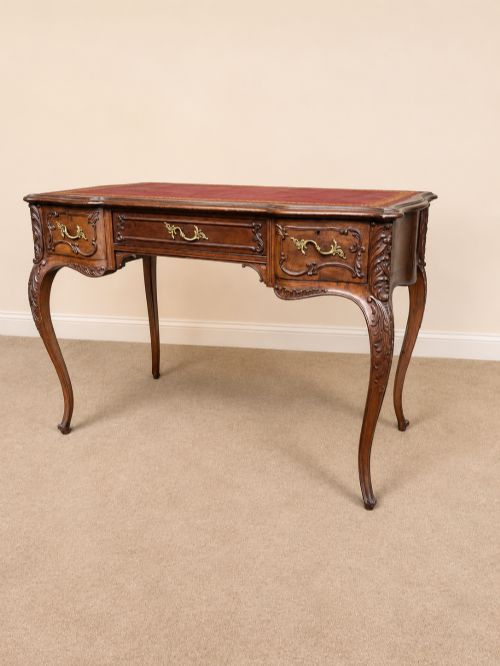
A bureau plat is a freestanding writing desk designed to sit in the middle of a room rather than against a wall. These desks typically feature drawers within the frieze and are finished on all sides.
Many examples from the nineteenth century incorporate ormolu mounts and leather-inset tops, serving as the centrepiece of a grand study or library.
How do I identify French Empire furniture?
French Empire pieces are characterised by monumental scale, classical architectural proportions, and prominent use of mahogany or dark woods. They frequently feature gilt bronze or ormolu mounts depicting classical motifs.
Bookcases and desks from this style project a sense of formal grandeur and structural severity compared to lighter Louis XVI designs.
What are ormolu mounts?
Ormolu refers to gilded bronze mounts applied to the corners, feet, and edges of cabinets, desks, and tables. They served a purely decorative purpose to highlight the contours of the timber.
On finer pieces, these mounts are finely chased and fire-gilded, adding a metallic brilliance against dark woods like kingwood and mahogany.
How do I care for antique leather desk tops?
Antique leather desk tops require gentle cleaning with a slightly damp cloth followed by specialised leather waxes or balms to prevent drying and cracking. Avoid harsh chemical cleaners and excessive moisture.
Keeping these surfaces out of direct sunlight helps preserve the original tooling and gilt borders found on nineteenth-century writing tables.