


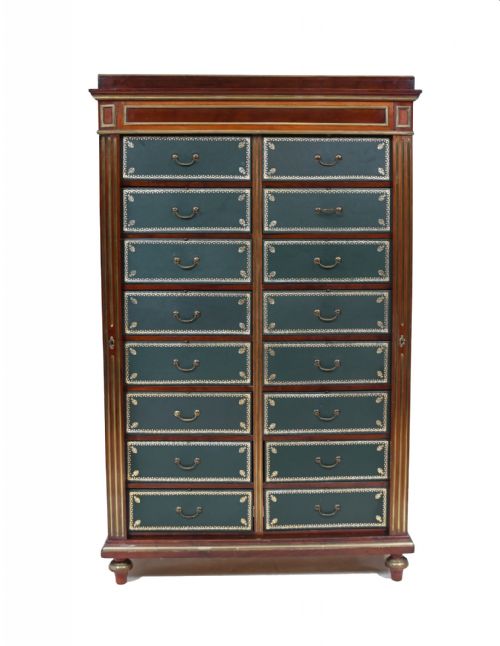


French Leather Furniture
French leather furniture brings warmth and substance to a room, offering desks and seating rooted in nineteenth-century and early twentieth-century traditions.
French Leather Furniture
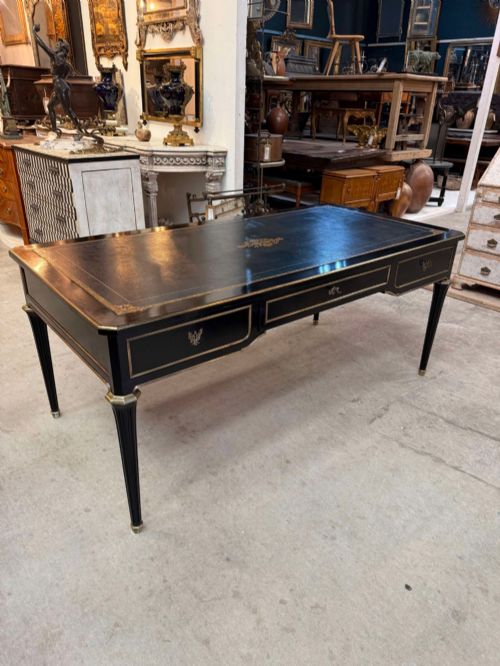
French leather furniture encompasses writing desks, bureau plats, cartonnier cabinets, and seating designed for study and reception rooms. These pieces originate predominantly from the nineteenth century, stretching from the Empire and Louis Philippe periods into Art Deco designs of the twentieth century.
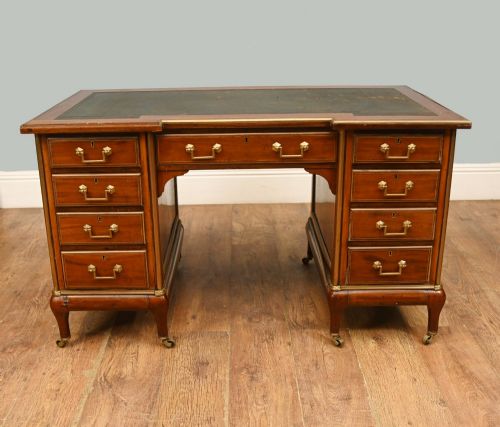
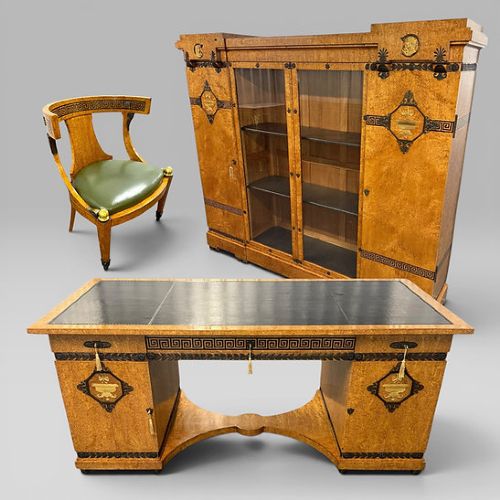
The writing desk remains the most common form found in this category, often paired with matching chairs, filing cabinets, or banquette sofas. Workshops employed rich timbers like kingwood, mahogany, walnut, and rosewood to frame the leather writing surfaces and upholstered areas.
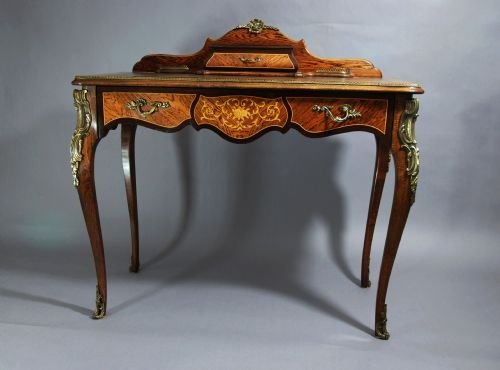
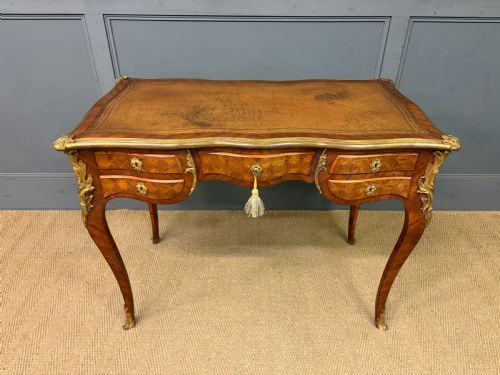
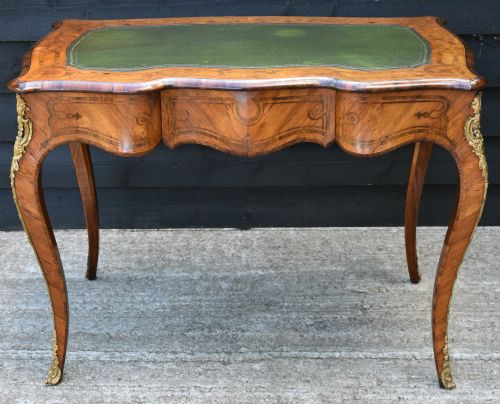
Stylistic influences range from French Rococo and Louis XV revivals to clean-lined Art Deco suites. Buyers encounter both grand monumental desks fitted with ormolu mounts and smaller ladies writing desks suited for intimate domestic spaces.
Materials and construction methods
Cabinet makers built these pieces using solid and veneered hardwoods, applying kingwood, mahogany, walnut, and rosewood over sturdy internal frames. Parquetry and floral marquetry patterns decorate many writing surfaces, requiring precise inlay techniques by skilled artisans.
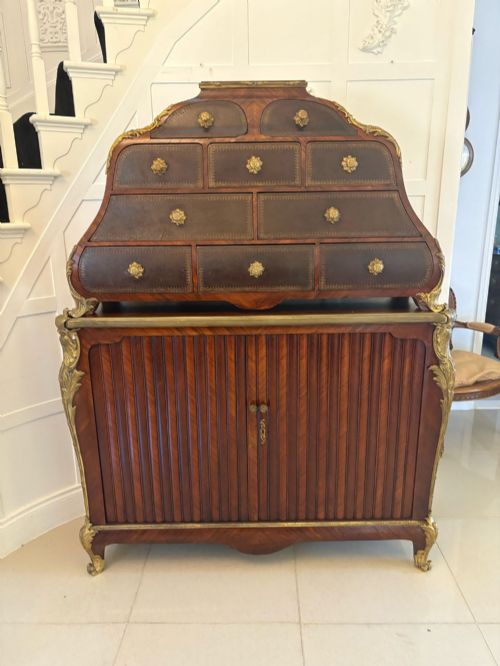
Ormolu mounts, brass details, and bronze accents cast in elaborate scrollwork or neoclassical motifs adorn the corners, legs, and aprons of desks and cabinets. Tooled leather inserts, often edged with gilt tooling, provide durable and tactile surfaces for writing and daily administration.
French Leather Furniture Retail Price Guide 2026
Typical asking prices for french leather furniture among the pieces listed under this phrase on Sellingantiques today, from the lower quarter to the upper quarter. They describe what is for sale here now, not the wider market.
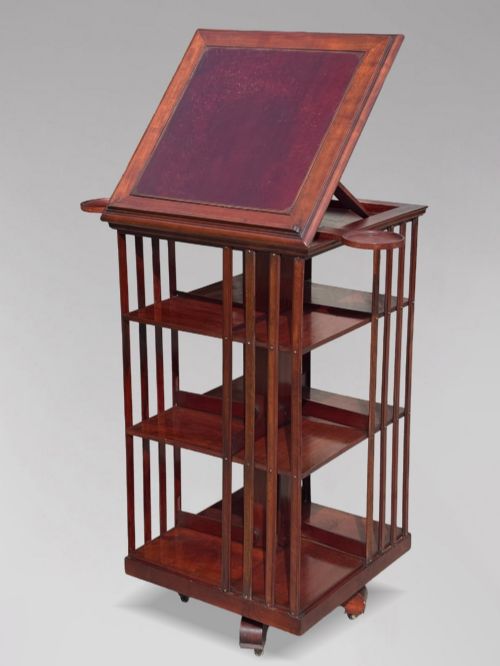
Several desks manage to conceal entire libraries within their frames, while one curious table sneaks in an inset silk-work top beside its leather.
Judgements of quality
The fineness of the bronze and ormolu mounts dictates much of the visual standard, with crisp, hand-chiseled details separating superior cabinetwork from simpler cast elements. Marquetry and parquetry demand exact alignment; the best examples maintain tight joints without gaps in the timber veneers.
The selection and treatment of the timber ground the overall execution, where richly figured walnut, kingwood, or mahogany displays depth and careful grain matching. Structural integrity in the drawers, leg joins, and the leather surface itself reflects the original workshop standards.
Mercier Frères·Victor Raulin
The French Leather Furniture Glossary
- Bureau plat
- A freestanding writing table, typically fitted with drawers in the frieze and a leather inset top. These desks were designed to stand away from walls in the centre of a room.
- Cartonnier
- A specialised cabinet fitted with upright compartments or drawers intended for sorting papers, letters, and documents. They frequently sit atop matching desks.
- Ormolu
- Gilt bronze mounted onto furniture as decorative hardware and trim. The technique involves applying a mercury and gold amalgam to cast bronze.
- Marquetry
- Decorative veneer work forming pictorial or geometric patterns using various coloured woods. Artisans cut thin pieces of timber and fit them tightly together.
- Parquetry
- Geometric wood inlay forming repeating patterns such as cubes or chequers. This technique provides durable decoration across desk surfaces and table tops.
French Leather Furniture: Frequently Asked Questions
What is a bureau plat?
A bureau plat is a traditional freestanding writing desk equipped with drawers along the frieze. Unlike wall desks, it is finished on all sides so it can stand prominently in the middle of a room.
The top surface is typically lined with tooled leather, providing a smooth, durable area for correspondence and administrative work.
How do I care for leather desk tops?
Leather surfaces benefit from regular dusting with a soft, dry cloth to prevent particles from settling into the grain. Conditioning balms formulated for antique leather help maintain suppleness and prevent cracking over time.
Direct sunlight and excessive heat should be avoided, as they dry out the material and fade the gilt tooling along the edges.
Where were these pieces used?
These furnishings populated the private studies, libraries, and grand reception rooms of nineteenth-century French homes and offices. Desks and cartonnier cabinets served administrative duties for professionals and nobility alike.
Seating suites and banquette sofas provided comfortable gathering spaces in drawing rooms and reading chambers.
How do I identify Louis XV revival style?
Louis XV revival pieces feature asymmetrical curves, flowing natural motifs, and cabriole legs ending in scroll or sabot feet. Ormolu mounts on these items often depict foliage, C-scrolls, and shell patterns.
Walnut and kingwood are frequently shaped with serpentine fronts and undulating edges characteristic of rococo design.