


French Kingwood Chest
A french kingwood chest brings sophisticated storage to a room, combining rich cabinet-making traditions with decorative marble and metal mounts.
French Kingwood Chest
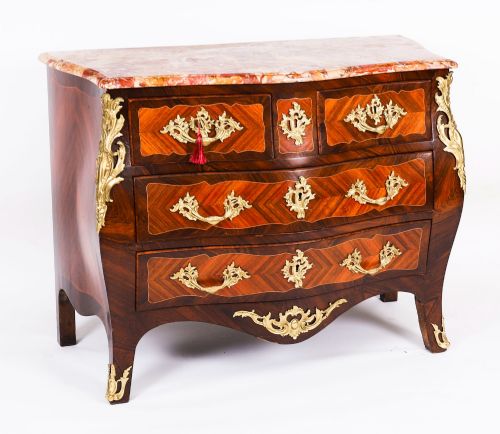
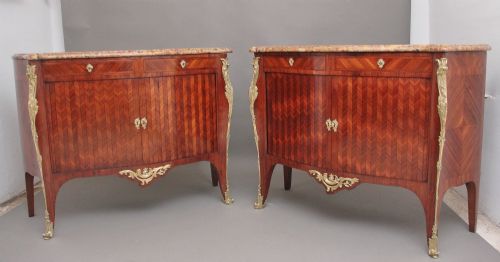
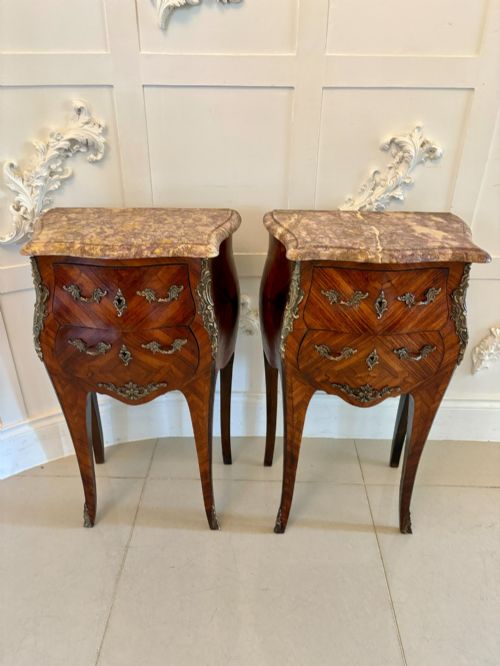
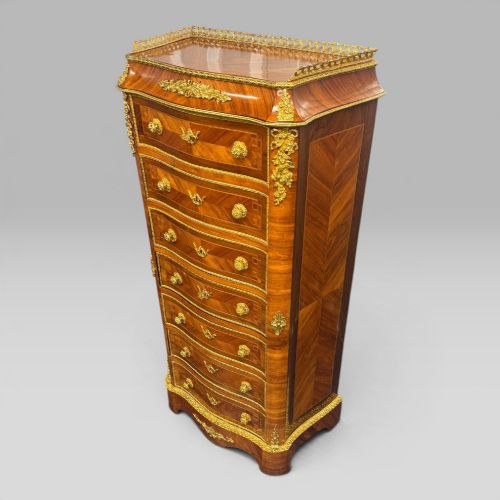
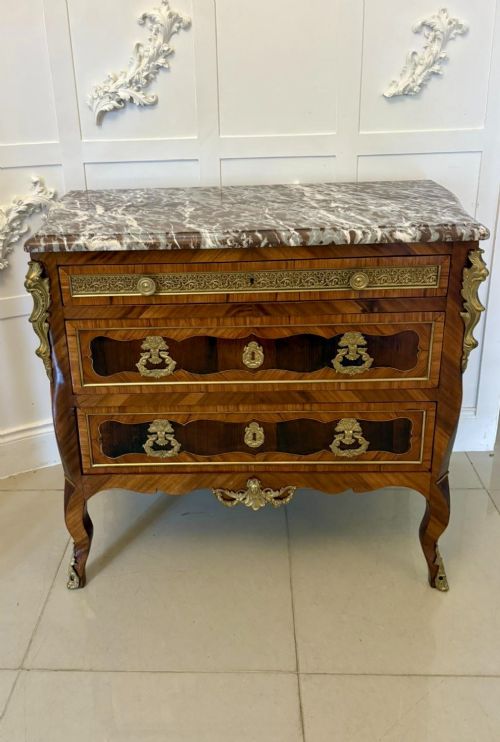
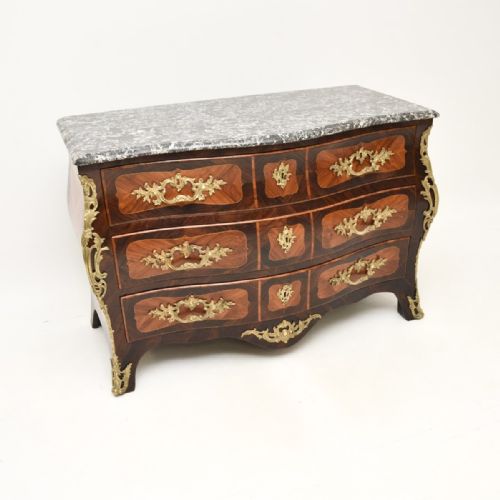
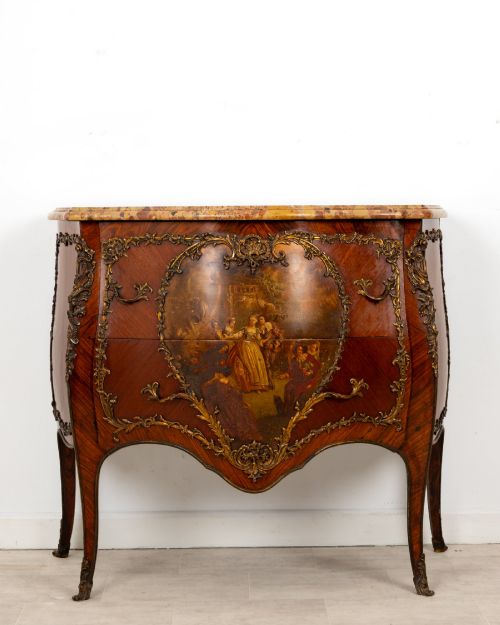
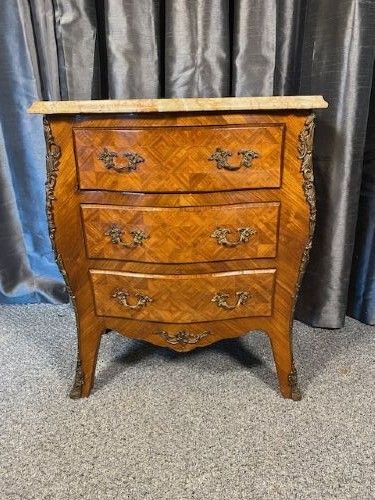
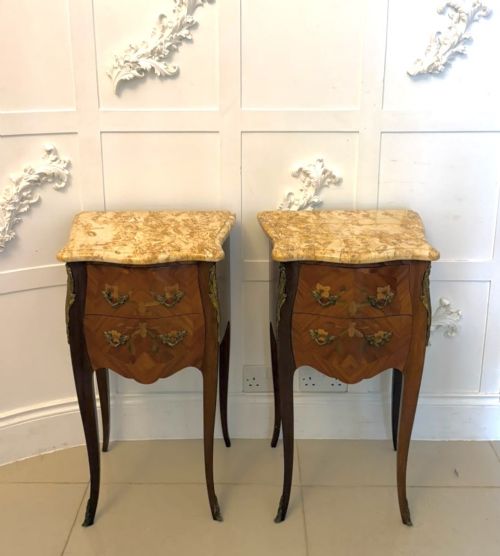
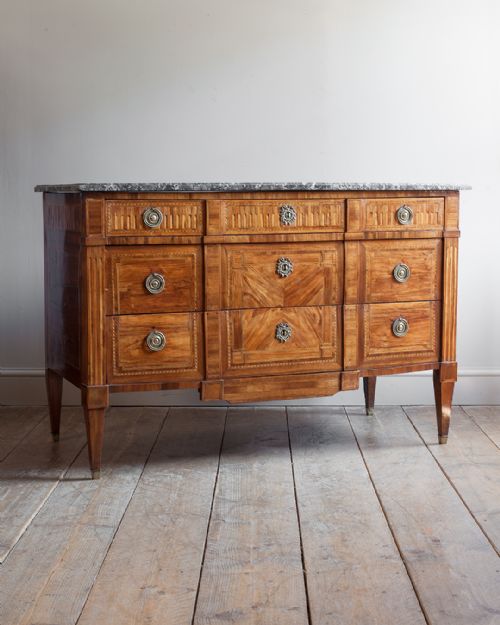
A french kingwood chest encompasses a variety of storage furniture forms, most commonly found as commodes, bedside cabinets, and secretaire chests dating from the eighteenth century through the early twentieth century. These items typically reflect classic French design movements, spanning Louis XV, Louis XVI, and later revival styles that favoured curved serpentine and bombé silhouettes.
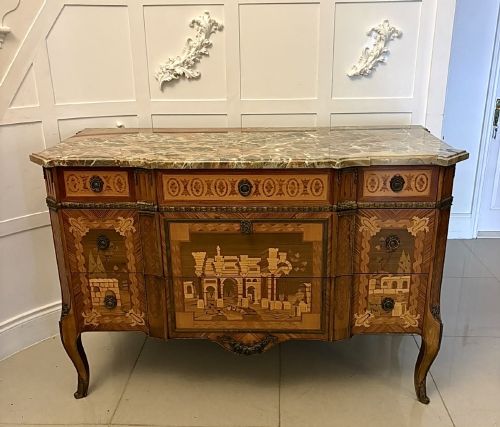
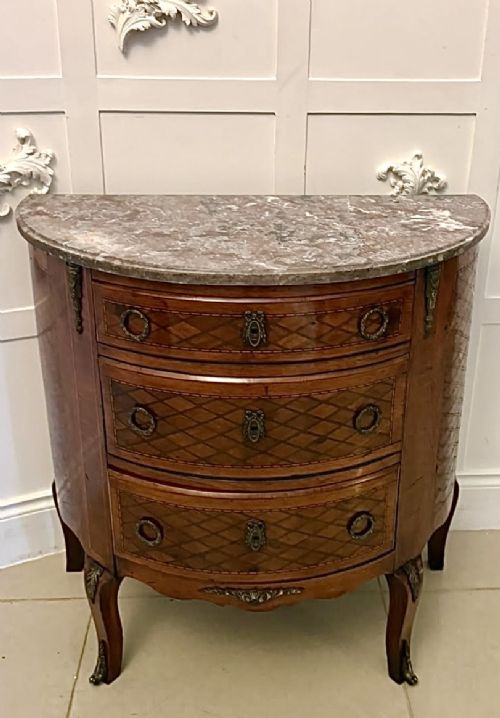
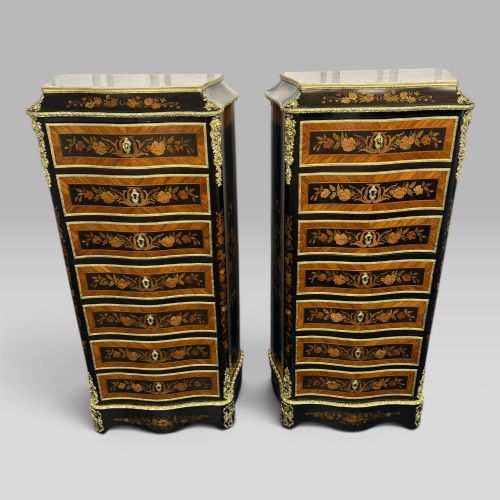
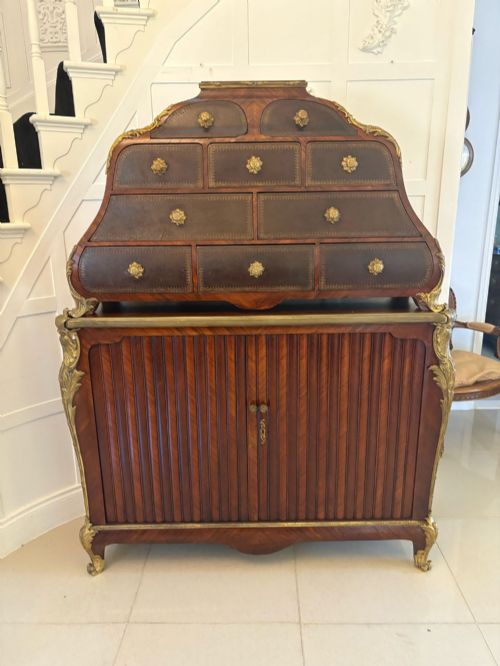
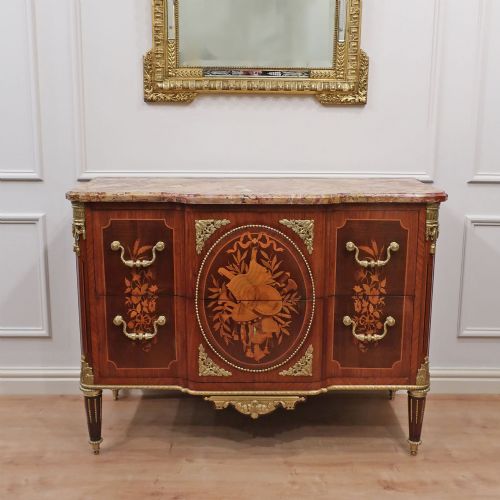
Buyers encountering this selection will frequently find nineteenth-century pieces alongside early twentieth-century examples featuring decorative marquetry, parquetry, and contrasting timber veneers such as rosewood and tulipwood. The forms range from grand marble-topped commodes designed for formal reception rooms down to compact bedside tables and specialised filing or cartonnier cabinets.
How they were made
Cabinet-makers constructed these pieces using native and exotic hardwoods, laying delicate veneers of kingwood, tulipwood, and rosewood in geometric parquetry patterns or pictorial marquetry designs over sturdier framing timbers. The resulting wooden surfaces were meticulously smoothed and polished to highlight the natural grain contrasts of the timber.
Structural embellishments relied heavily on cast and gilt metalwork, specifically ormolu and gilt bronze mounts, which were shaped into rococo scrolls and foliate motifs to accent the corners and handles. Heavy slab marble tops, cut to follow the serpentine or straight contours of the cabinet base, completed the construction.
French Kingwood Chest Retail Price Guide 2026
Typical asking prices for french kingwood chest among the pieces listed under this phrase on Sellingantiques today, from the lower quarter to the upper quarter. They describe what is for sale here now, not the wider market.
Some bedside cabinets secretly doubled as nightstands, proving that eighteenth-century aristocracy still appreciated a tidy bedside.
What varies in quality
The distinction between standard examples and finer works lies in the precision of the veneer work and the crispness of the bronze or ormolu mounts. Finer cabinets display intricate, hand-cut marquetry alignment and heavy, well-chased metal hardware rather than mass-produced, simplified castings.
Quality also shows in the selection of secondary timbers and the integrity of the marble tops, where thicker, richly veined stone fitted flush to the wooden carcass indicates a higher standard of original commission.
Jacques Bircklé·E. Kahn·Sormani
The French Kingwood Chest Glossary
- Kingwood
- A dense, richly grained Brazilian timber featuring dark violet and brown tones, extensively utilised for high-end French veneer work.
- Ormolu
- Gilded bronze ornamentation applied to furniture corners, feet, and drawer fronts for decorative enhancement.
- Bombe
- A swelling, outward-curved furniture shape characteristic of mid-eighteenth-century French commodes and cabinets.
- Marquetry
- Decorative patterns formed by fitting small pieces of varied coloured veneers together onto a structural background.
- Vernis Martin
- A type of simulated Japanese lacquer developed in France, often found decorating eighteenth-century and revival panels.
French Kingwood Chest: Frequently Asked Questions
How do I spot a revival piece?
Revival items from the nineteenth or early twentieth century often employ machine-cut veneers and standardised hardware compared to eighteenth-century originals.
Examining the secondary woods inside the drawers and the construction joins helps clarify the actual period of manufacture.
Where should I place a commode?
These decorative chests suit hallways, drawing rooms, or bedrooms where their marble tops and gilt mounts can catch the light.
Because many feature finished backs or sides, certain models work well freestanding rather than pushed flat against a wall.
How do I care for kingwood?
Keep wooden surfaces away from direct sunlight and excessive heat fluctuations to prevent the delicate veneer from lifting or fading.
Apply a gentle wax polish occasionally and avoid using harsh chemical sprays on either the timber or the metal mounts.
What is a secretaire chest?
A secretaire incorporates a drop-down writing flap concealing small drawers and pigeonholes behind a facade that mimics standard drawer fronts.
This dual-purpose design offered writing facilities without sacrificing the formal appearance of a traditional commode.