




French Jewellery Pendant
These pieces of french jewellery pendant encompass delicate religious medals, nature-inspired motifs and geometric charms designed to be worn close to the heart.
French Jewellery Pendant
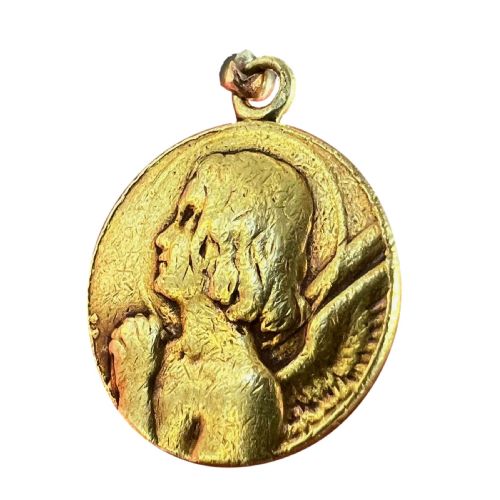
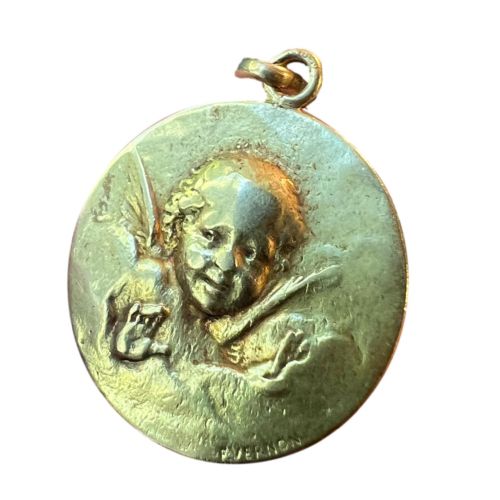
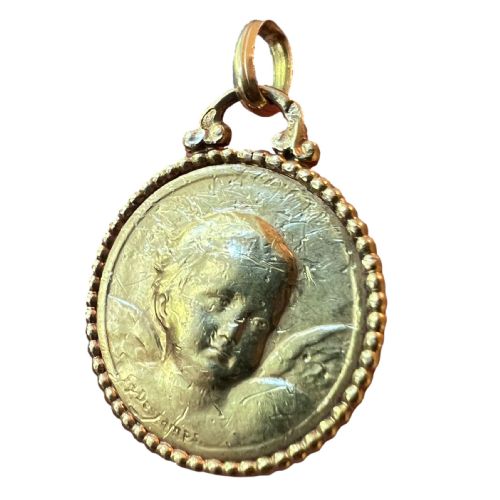
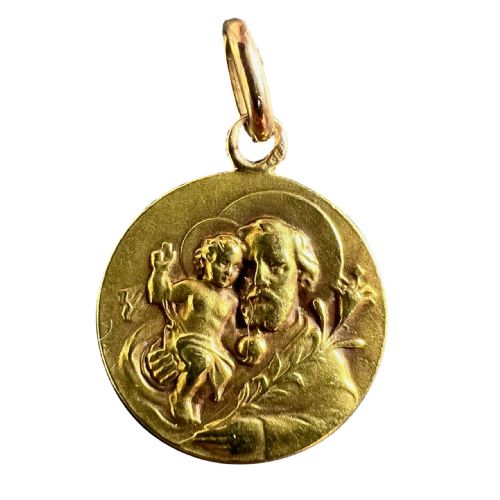
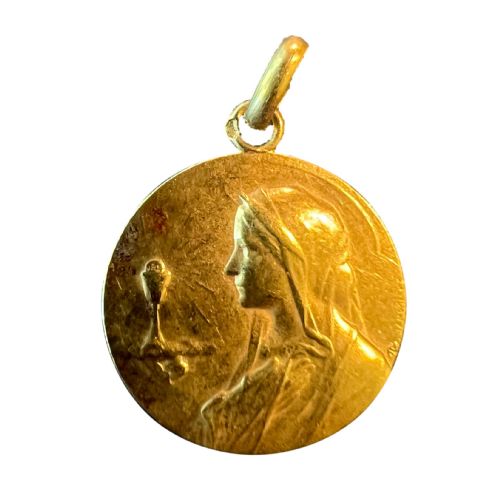
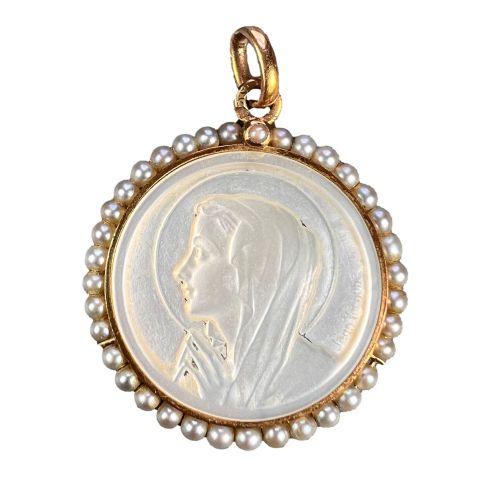
A french jewellery pendant takes many forms, most frequently appearing as religious medals, devotional charms and artistic creations spanning several decades. The selection includes works dedicated to the Virgin Mary, Jesus Christ and various saints, alongside zodiac signs and floral wreaths.
Makers produced these items in distinct periods, with significant representation from the early twentieth century, the Belle Epoque and the Art Deco era. Pieces range from simple gold discs to intricate designs incorporating symbolic imagery and personal inscriptions.
How They Were Made
Goldsmiths utilised 18ct yellow, rose and white gold to shape the frames and medal bases of a french jewellery pendant. Artisans employed techniques such as engraving, twisted wire framing and casting to build structured borders and relief portraits.
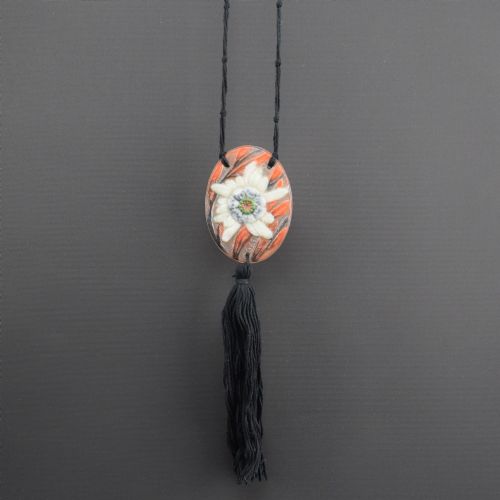
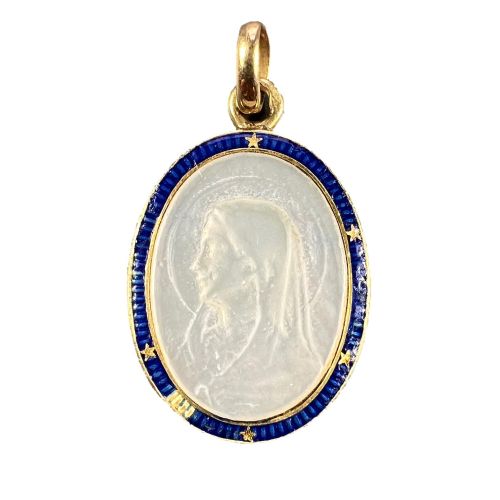
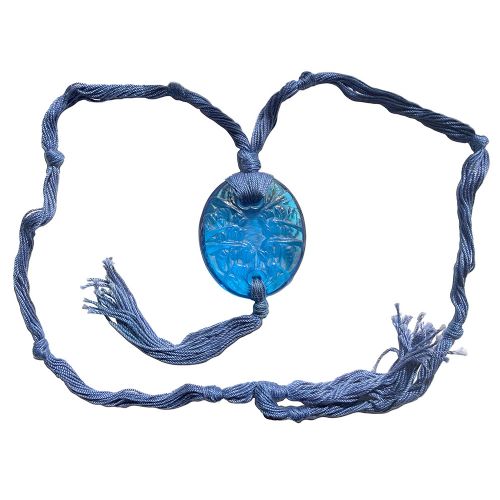
Colour entered the work through enamel, plique-a-jour, pate de verre and the inclusion of natural elements like river pearls and mother of pearl. These materials created translucent effects and surface contrast against the polished metal.
French Jewellery Pendant Retail Price Guide 2026
Typical asking prices for french jewellery pendant among the pieces listed under this phrase on Sellingantiques today, from the lower quarter to the upper quarter. They describe what is for sale here now, not the wider market.
A tiny lucky clover charm carries the inscription semper fidelis, proving that French jewellers knew how to lock eternal devotion into an 18K pocket.
What Varies in Quality
Material combination also distinguishes the range, particularly the precision found in plique-a-jour enamel cells or the clarity of coloured glass. Pieces with intact original enamelling and well-preserved surface textures represent the more accomplished end of production.
Henry Miault·Argy Rousseau·R Lalique·Emile Monier·Paul Brandt·Perroud·Mazzoni·Pageli Perriat·Dropsy·Guilbert·Sellier·Rasumny
The French Jewellery Pendant Glossary
- Plique-a-jour
- An enamelling technique where enamel is applied to open cells without a backing, allowing light to shine through the transparent colour like stained glass.
- Pate de verre
- A glass-working method involving crushed glass packed into a mould and fused in a kiln, producing a dense coloured object with a textured surface.
- Medal
- A flat piece of metal stamped or cast with commemorative imagery, commonly worn around the neck as a pendant.
- Mother of pearl
- The iridescent inner layer of mollusc shells, carved into flat plates or backgrounds for engraved depictions.
- Art Deco
- A design style from the early decades of the twentieth century favouring geometric lines, stylised motifs and modern forms.
French Jewellery Pendant: Frequently Asked Questions
What periods do these pendants come from?
The pieces span multiple eras, with strong representation from the late nineteenth century and the early decades of the twentieth century. Styles shift from ornate floral designs to geometric Art Deco creations and mid-century forms.
Dates often correlate with specific artistic movements such as Art Nouveau or the Belle Epoque, reflecting the changing tastes of French workshops.
What materials were used to make them?
Gold in 18ct yellow, rose and white variations forms the primary structural material for the majority of these items. Workshops frequently paired the metal with enamel, mother of pearl and pearls.
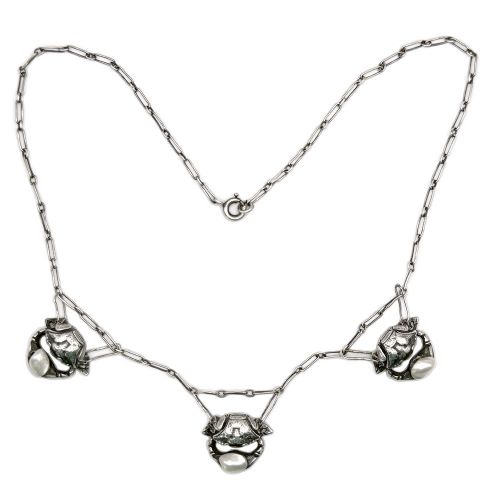
Alternative substances such as silver, pate de verre and coloured glass also appear in specific artistic and regional pieces within the selection.
Are most of these items religious?
A substantial portion of the listings consists of religious medals and devotional pieces depicting the Virgin Mary, Jesus Christ, saints and sacred hearts. These items often bear inscriptions or specific French devotional titles.
Other examples focus on secular subjects, including zodiac signs, hunting horns, floral wreaths and love tokens.
How are these pendants usually worn?
These items function as neck pendants and charms, suspended from chains or cords. Many feature integrated jump rings or larger loops designed to accommodate various thicknesses of neckwear.
They appear as standalone central ornaments or combined with other charms on a single chain.