


French Iron Garden Furniture
French iron garden furniture brings outdoor charm to terraces and lawns through enduring metalwork.
French Iron Garden Furniture
French iron garden furniture spans practical outdoor seating and dining pieces originating from the nineteenth and early twentieth centuries. When searching for french iron garden furniture, buyers encounter everything from modest bistro sets to elaborate garden benches and console tables.
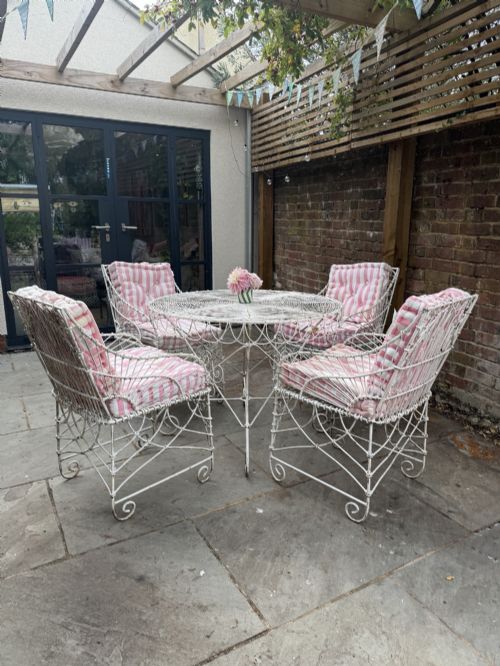
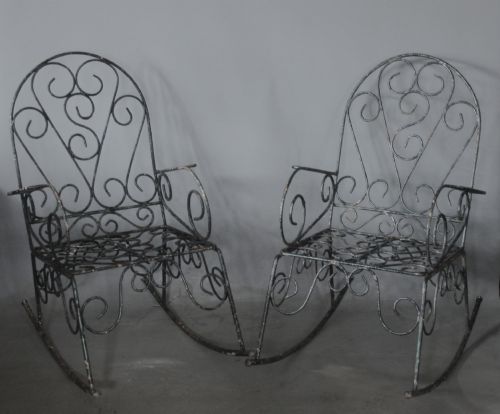
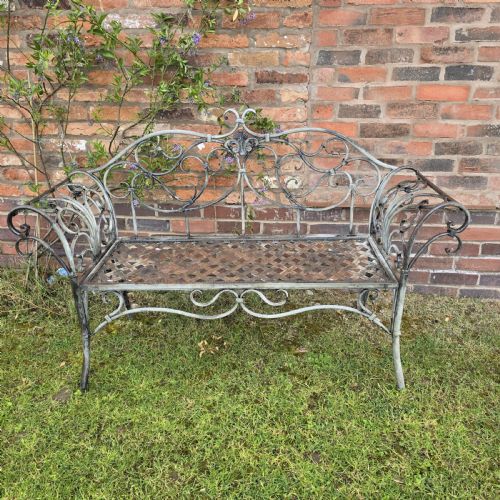
The selections on this page showcase distinct stylistic influences including Victorian wirework, French Country, and French Gothic Revival. Tables and chairs frequently appear in matched dining sets, whilst benches and rocking chairs provide standalone focal points for lawns and conservatories.
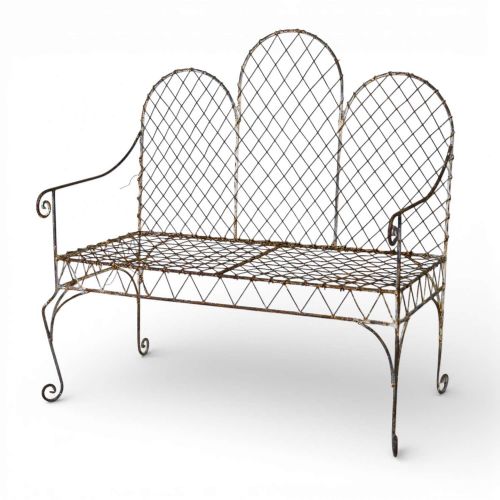
Dated examples trace across the Victorian era into the nineteen-twenties and nineteen-forties, maintaining utilitarian yet decorative forms. Materials range from traditional cast and wrought iron to steel and wirework, often retaining remnants of old paint.
Construction and Materials
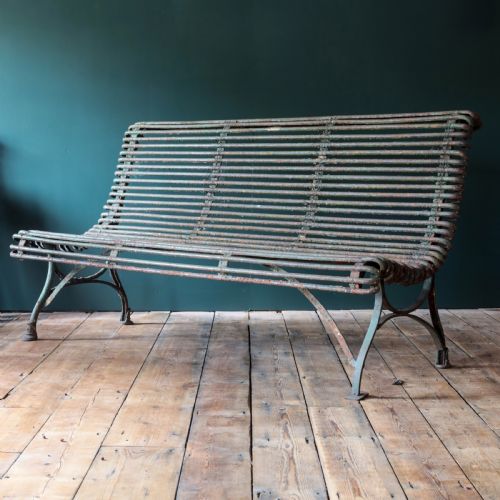
Manufacturers utilised cast iron, wrought iron, and steel to build sturdy frames capable of withstanding outdoor conditions. Metal components were shaped through forging, casting, and wirework techniques to create both delicate curves and robust structural supports.
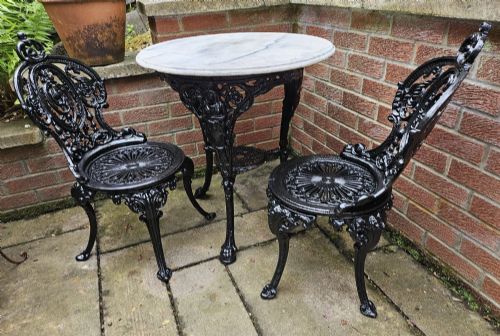
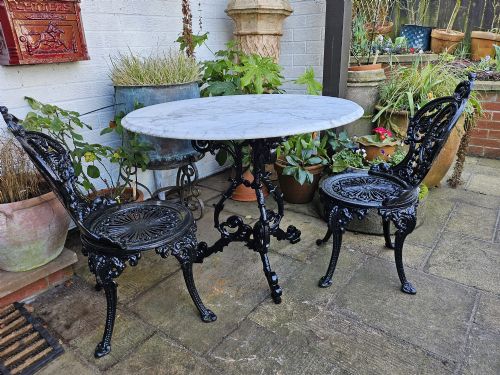
Many pieces incorporate contrasting elements, such as marble tops fitted to cast-iron bistro tables or wooden slats paired with iron frames. Protective layers of paint were traditionally applied to deter rust and personalise the appearance of each item.
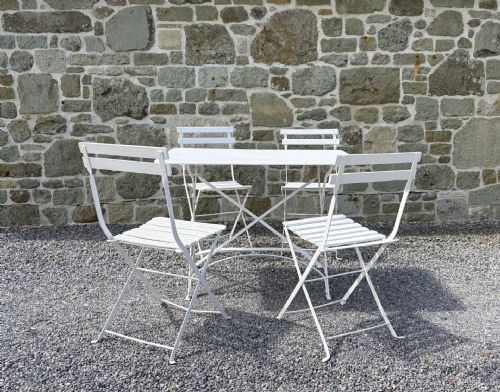
Specialised designs like strapp work and folding mechanisms required precise metalworking skills from period artisans. These construction methods ensured the furniture remained functional and portable for use in gardens and courtyards.
Listings feature items spanning the nineteenth century through the nineteen-forties, utilising iron, steel, wirework, and marble.
Evaluating Quality and Design
Superior examples display crisp casting details and sophisticated decorative motifs, particularly in pieces influenced by Gothic Revival or Regency styles. Heavier gauge metalwork and well-proportioned frames indicate higher standards of period manufacture.
The integrity of integrated materials, such as undamaged marble table tops and original wooden elements, elevates the standing of an item. Fine craftsmanship shows in the balanced execution of complex wirework and secure joints.
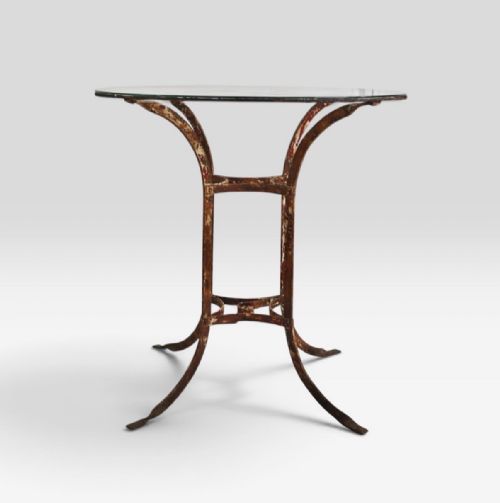
The character of aged surface patination and weathered paint contributes to the visual appeal of older pieces. Items retaining their original matching sets or bearing specific foundry designs represent the upper echelon of surviving outdoor wares.
Val D Osne
The French Iron Garden Furniture Glossary
- Wrought iron
- Iron that is heated and hammered into shape by hand. This material offers superior tensile strength and flexibility compared to cast iron.
- Cast iron
- Molten iron poured into a mould to create intricate shapes. It provides rigidity and weight suitable for stable garden benches and tables.
- Wirework
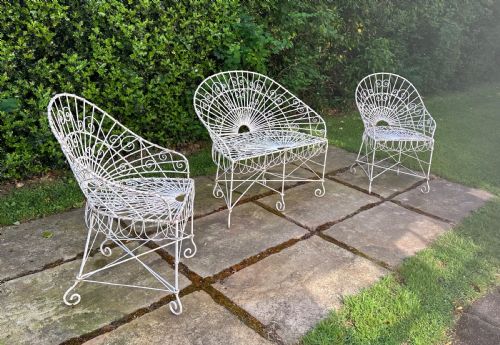
- Metal strands bent and woven into open patterns. This technique creates lightweight yet resilient chairs, tables, and plant stands.
- Strapp work
- Decorative metal banding applied in geometric or strap-like configurations. It adds structural reinforcement and ornamentation to table tops.
- Bistro set
- A small table accompanied by two or four matching chairs. These compact sets were originally designed for pavement cafes and small courtyards.
French Iron Garden Furniture: Frequently Asked Questions
How do I protect iron furniture outdoors?
Apply a suitable metal primer and protective paint coating to guard against moisture and rust formation.
Store pieces under cover or indoors during harsh winter months to preserve the material integrity.
How do I identify a nineteenth-century piece?
Examine the casting marks, construction joints, and weathering patterns typical of earlier manufacturing methods.
Heavier construction and specific stylistic cues like Gothic or Regency detailing often point to nineteenth-century origins.
Can I leave marble tops outside?
Marble surfaces benefit from being sheltered during freezing temperatures to prevent cracking from trapped moisture.
Regular sealing helps protect the stone from staining and weathering in outdoor environments.