



French Iron Console
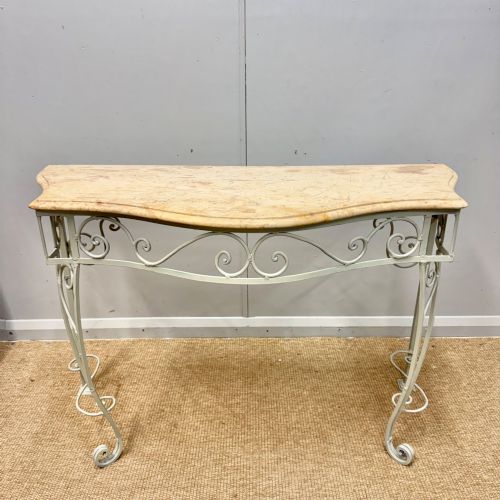
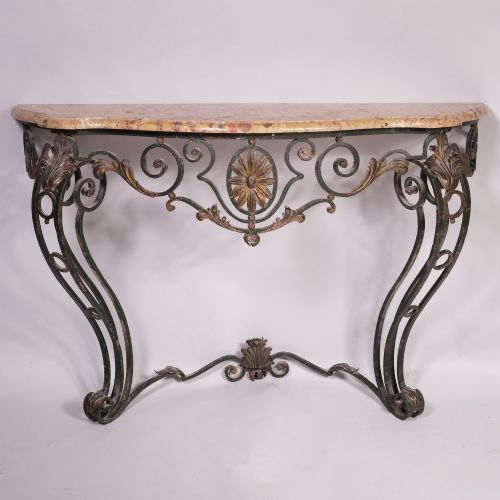
A french iron console brings industrial weight and cool stone into a hallway, pairing metalwork with heavy marble tops.
French Iron Console
A french iron console combines a metal base with a stone or timber top, built for utility in narrow spaces like hallways and reception rooms. These surfaces range from simple side tables to grander serving pieces designed for display.
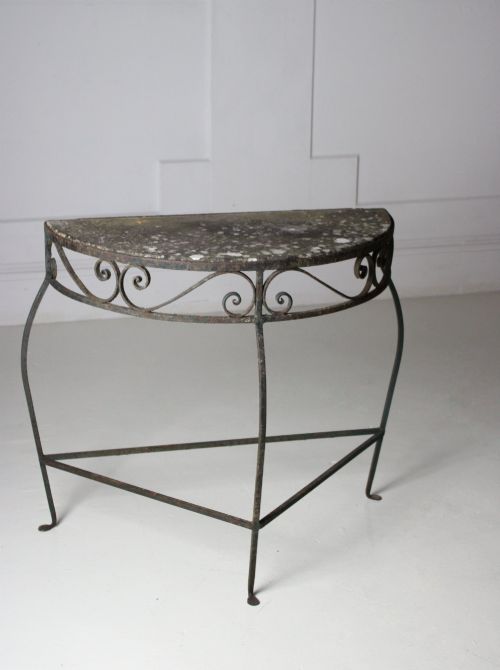
The most common versions on this page pair wrought or cast iron frames with marble tops, originating from nineteenth-century interiors, patisseries, and gardens. Examples span from rustic farmhouse variants to serpentine shapes associated with chateau settings.
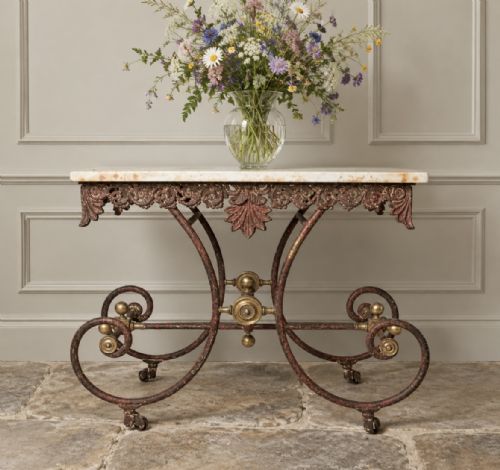
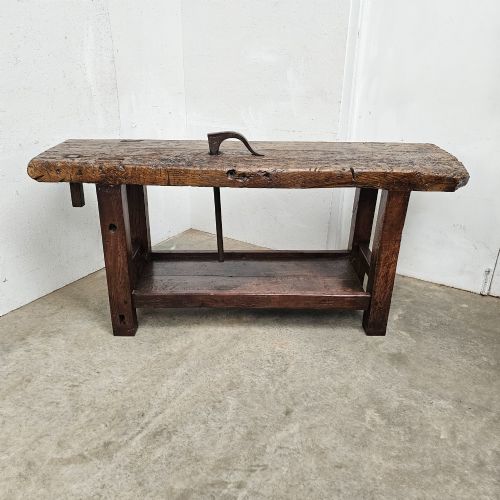
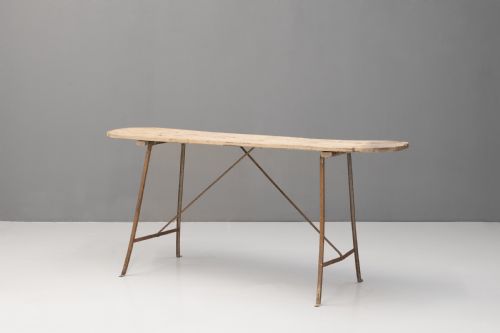
Beyond standard console tables, the category extends to workbenches, patisserie tables, and wall-mounted shelves sharing the same core iron and stone vocabulary. Their proportions suit corridors or living areas where depth is limited.
Materials and construction
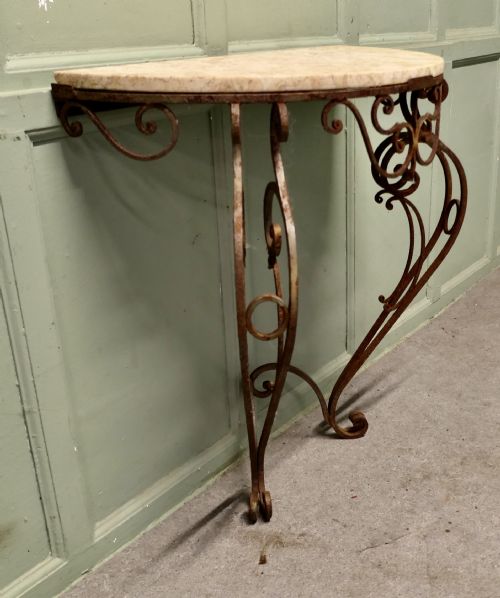
The heavy frames rely on forged wrought iron or poured cast iron, sometimes accented with brass fittings or finished in green paint and gold leaf. These metals provide the structural integrity needed to support thick slabs of stone.
Tops are predominantly fashioned from solid marble, though some pieces utilise oak, walnut, steel, or glass depending on their domestic or workshop origins. Joinery and assembly reflect nineteenth-century practices, utilising heavy bolts, clamps, and braces.
French Iron Console Retail Price Guide 2026
Typical asking prices for french iron console among the pieces listed under this phrase on Sellingantiques today, from the lower quarter to the upper quarter. They describe what is for sale here now, not the wider market.
Several heavy iron tables on this page spent their early working lives covered in flour and pastry dough.
Distinctions in quality
Quality rests in the fluidity of the ironwork and the thickness of the marble slab, distinguishing robust workshop pieces from lighter decorative iterations. Hand-forged wrought iron displays individual hammer marks and curvilinear detail that standard cast variants lack.
The integrity of the structural frame determines longevity, with heavier bases providing better support for substantial stone tops. Finer examples integrate complementary materials like brass or retain original surface finishes such as aged paint or gilding.
The French Iron Console Glossary
- Wrought iron
- Iron beaten and shaped by hand while hot, yielding fibrous structures and subtle irregularities. This material allows for slender, curved supports.
- Cast iron
- Molten iron poured into a mould to set, producing repeating patterns and heavier structural components. It is commonly found in nineteenth-century garden and console tables.
- Serpentine marble
- Stone cut with a wavy, undulating front edge rather than a straight line. This profile signals finer cabinetwork and decorative ambition.
- Patisserie table
- A functional work table featuring a marble surface suited to rolling dough, adapted here into domestic console use. These pieces often show robust industrial framing.
- Console table
- A table designed to stand against a wall, frequently secured with brackets or balanced on heavy legs. They occupy minimal floor space in hallways and reception rooms.
French Iron Console: Frequently Asked Questions
How were these consoles used originally?
Many served as functional furniture in commercial patisseries, kitchens, or workshops where stone tops provided cool, durable workspaces.
Over time, their decorative qualities led to domestic adoption in hallways, gardens, and reception rooms as display surfaces.
Are marble tops removable?
On many designs, the heavy marble slab simply rests on top of the iron frame under its own weight, allowing for easier transport.
Some variants secure the stone with brackets or mortar, requiring caution if disassembly is attempted during placement.
Can these tables go outside?
Iron and stone garden tables withstand outdoor environments well, provided the metal is monitored for weathering and rust.
Indoor console variants with polished marble or delicate brass elements benefit from protection against moisture and frost.
How do I distinguish wrought iron from cast iron?
Wrought iron exhibits fibrous textures and handmade irregularities from the forging process, often featuring graceful, bent curves.
Cast iron displays uniform thickness and crisp mould lines, resulting from liquid metal poured into a prepared form.