
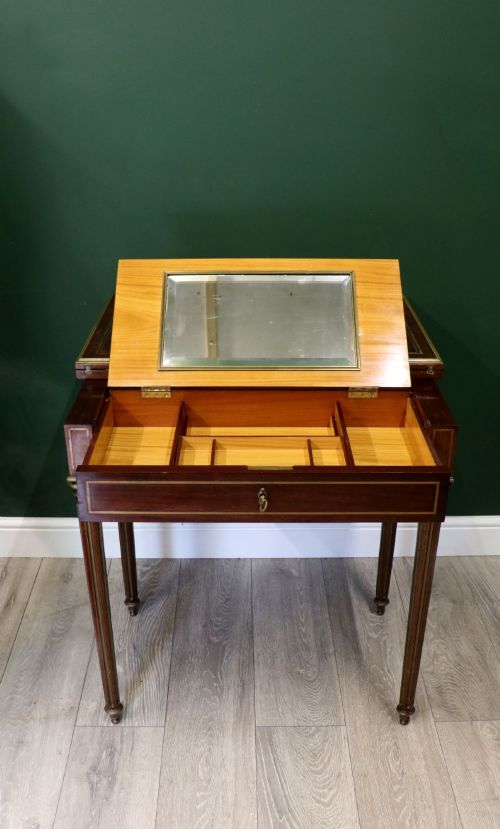
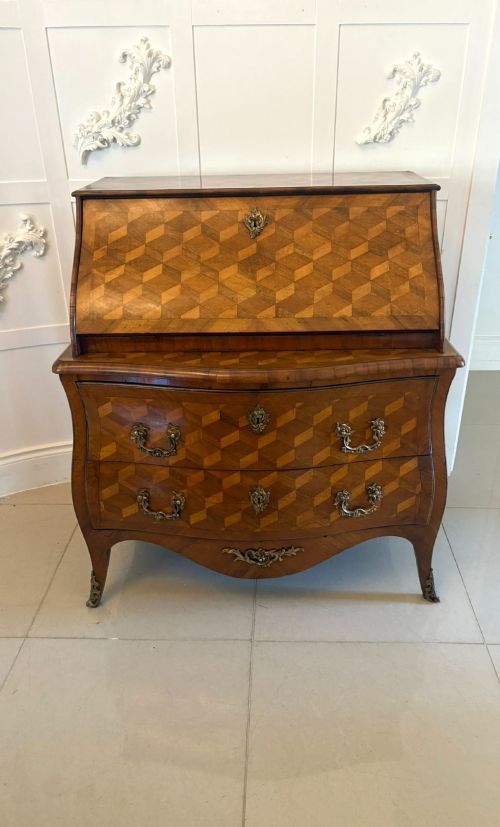
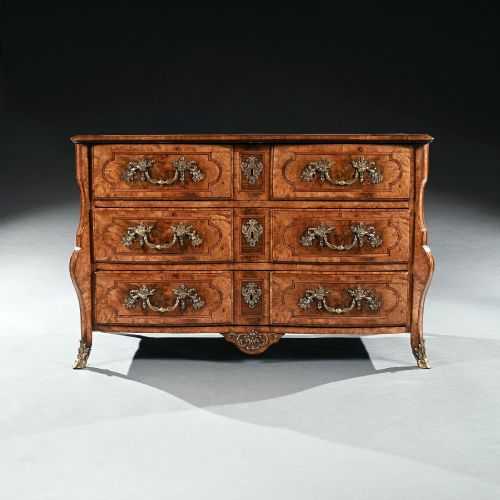
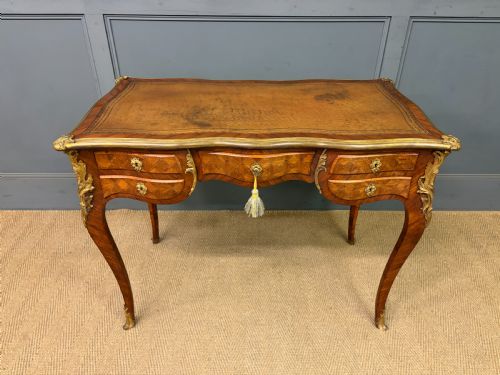
French Inlaid Furniture
French inlaid furniture comprises decorative tables, commodes and cabinets formed from exotic timbers and mounted in bronze.
French Inlaid Furniture
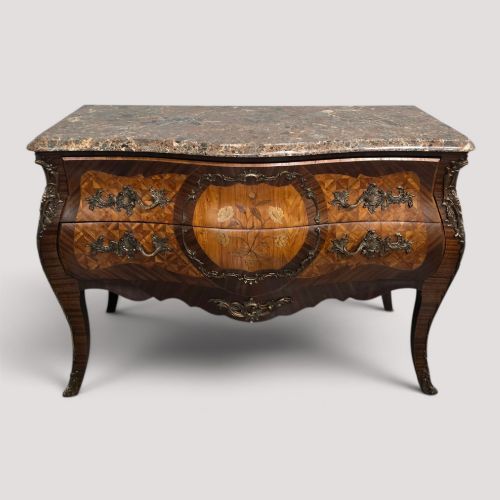
French inlaid furniture covers a range of decorative items built from timbers such as kingwood, rosewood, walnut and satinwood, often decorated with intricate wood patterns or metalwork. The selections here centre on pieces from the nineteenth century, alongside examples from the eighteenth and early twentieth centuries.
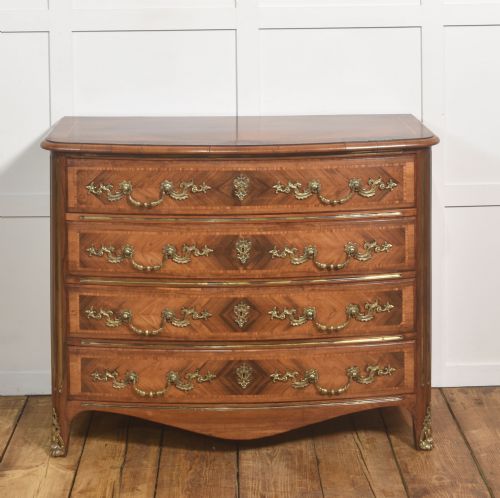
Common forms span practical domestic items including side tables, chests of drawers, commodes, bedside cabinets and display pieces. Many incorporate marble tops and brass mounts, reflecting revival styles of the period.
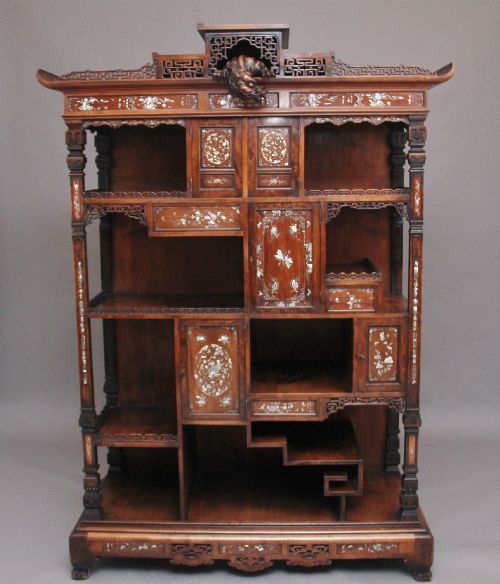
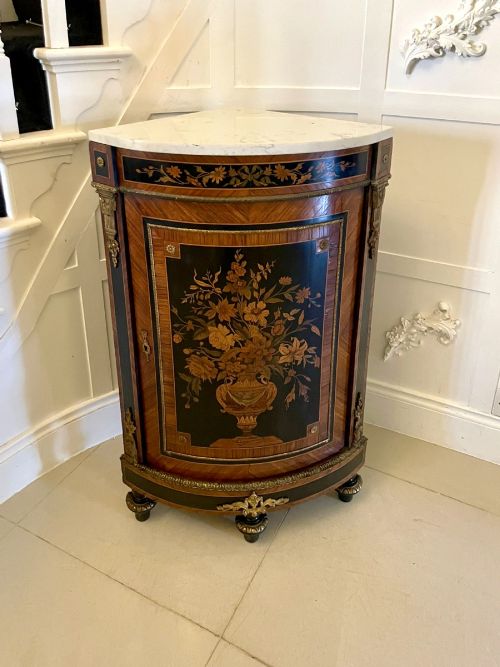
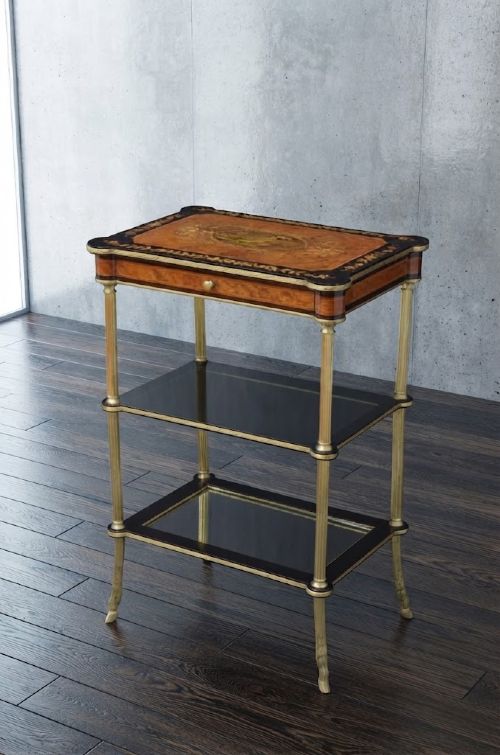
The aesthetic draws heavily on historical Louis XV and Louis XVI designs, alongside Napoleon III and Art Deco interpretations. Buyers encounter everything from serpentine chests to mirrored etageres and corner cabinets.
How they were made
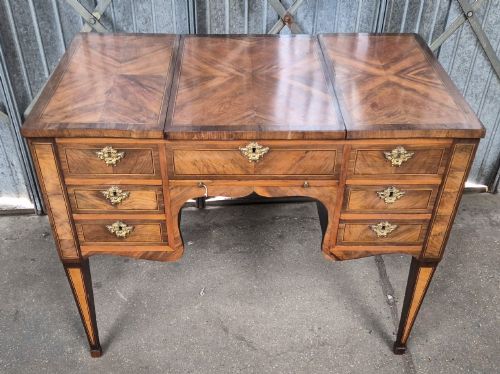
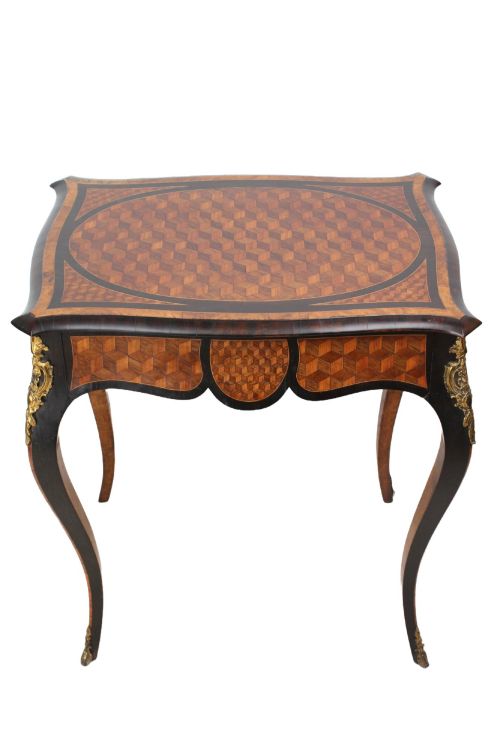
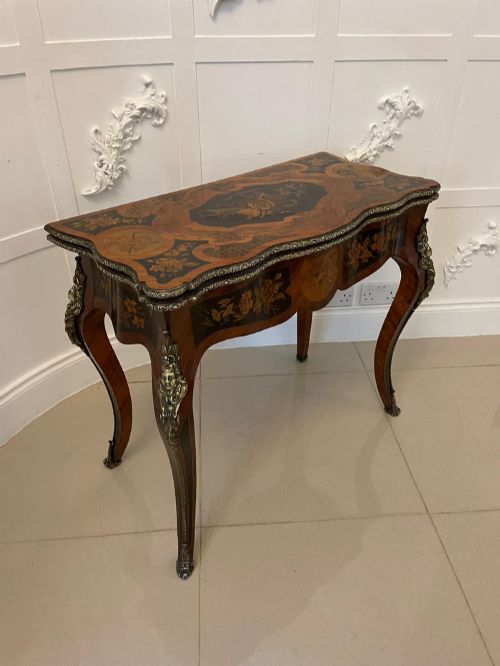
Construction relies on timber carcases veneered with fine woods cut into geometric parquetry patterns or pictorial marquetry designs. Cabinetmakers combined walnut, kingwood, rosewood and mahogany with contrasting light and dark inserts.
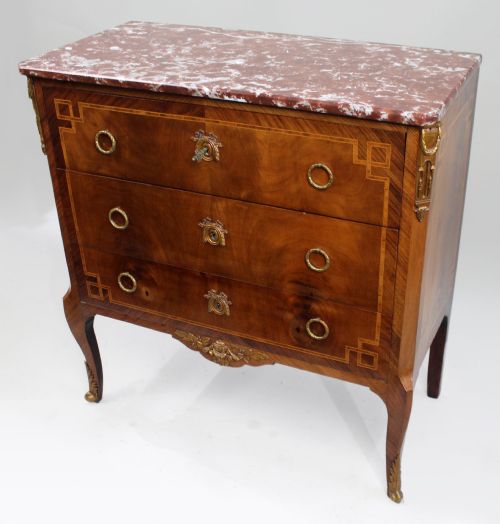
Metal enrichment forms a core part of the technique, utilising cast or chased ormolu mounts, brass stringing and Boulle work incorporating tortoiseshell. Marble slabs, including rouge varieties, complete the upper surfaces of many commodes and tables.
Listings feature nineteenth-century periods alongside eighteenth-century items, employing walnut, kingwood, rosewood, brass and marble.
What varies in quality
The standard of the piece rests upon the precision of the timber matching and the crispness of the floral or geometric marquetry. Hand-cut veneers fit together seamlessly without heavy filler in superior examples.
Mount quality dictates the finish of the work, with heavy, finely chased ormolu mounts showing sharper definition than cast metal alternatives. The selection of timber grain, such as burr walnut or figured kingwood, also distinguishes higher-grade items.
JAS Shoolbred·Maurice Jallot·Sormani·Millet·Edwards and Roberts
The French Inlaid Furniture Glossary
- Marquetry
- The art of applying cut pieces of veneer to a structure to form decorative pictorial designs. It uses varied coloured timbers to create scenes or floral motifs.
- Parquetry
- A geometric mosaic of wood pieces used for surface decoration, commonly seen on tabletops and commode fronts. Squares, triangles and cubes form repeating patterns.
- Ormolu
- Gilded bronze used for decorative mounts, feet and handles on nineteenth-century cabinets. It provides bright metallic contrast to dark woods.
- Boulle
- A form of marquetry inlay using tortoiseshell and brass, named after the cabinetmaker André-Charles Boulle. It creates a rich dark and metallic surface pattern.
- Commode
- A low chest of drawers or cabinet designed for domestic rooms, frequently topped with marble. Many French examples feature curved serpentine fronts.
French Inlaid Furniture: Frequently Asked Questions
How do I identify French Louis XV style?
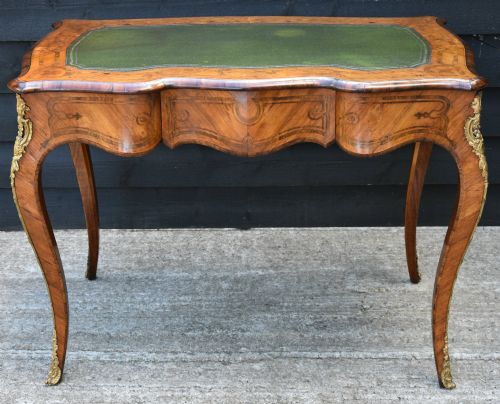
French Louis XV style pieces display characteristic curving lines, cabriole legs and asymmetrical floral marquetry. They favour serpentine fronts and delicate proportions over rigid symmetry.
Ormolu mounts frequently accent the corners and feet, highlighting the organic shapes typical of the Rococo revival seen in nineteenth-century interpretations.
What is a marble top commode used for?
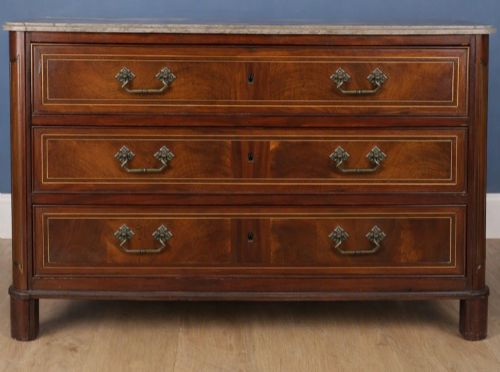
A commode serves as a decorative chest of drawers or side cabinet for storage in a principal room. The stone surface provided a durable finish for displaying objects.
Examples often feature rouge or white marble slabs fitted precisely to the top of walnut or kingwood carcases.
How do I care for inlaid wood surfaces?
Inlaid furniture requires stable indoor humidity and protection from direct sunlight to prevent the delicate veneers from lifting or fading. Periodic application of appropriate wax maintains the sheen of the timber.
Avoid placing wet items directly on antique wood or marble surfaces to protect the original polish and stone integrity.
What is the difference between parquetry and marquetry?
Parquetry uses geometric wood pieces to form repeating patterns like cubes or zigzags across a surface. It relies on architectural symmetry and regular shapes.
Marquetry arranges varied wood veneers into pictorial or floral compositions, creating flowing pictorial scenes rather than geometric grids.