



French Hound Figurine
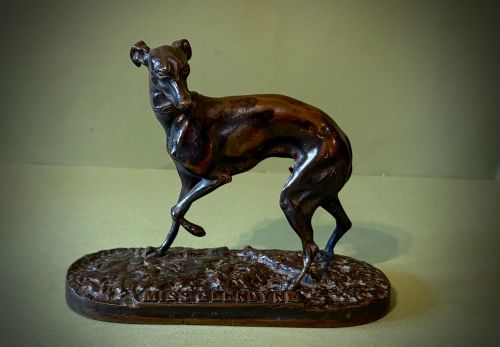
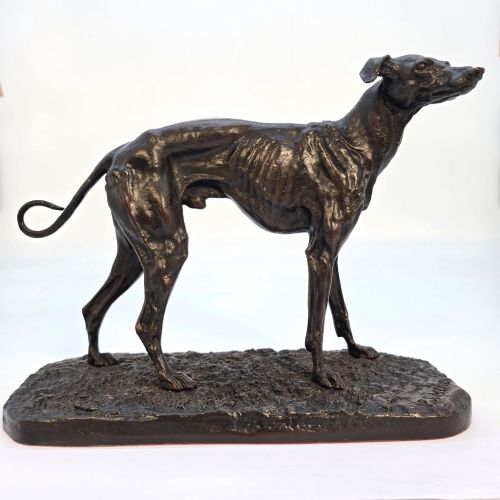
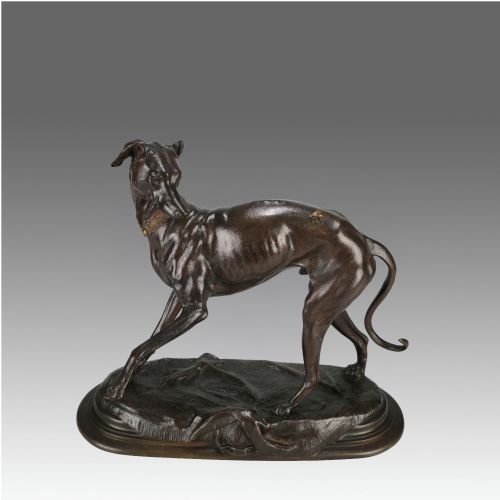
A French hound figurine captures the dynamic musculature and intense focus of the hunt, bringing vigour and elegance to any mantelpiece.
French Hound Figurine
A French hound figurine represents domestic and sporting dogs through various sculptural forms, ranging from single seated bassets to dynamic groups of hunting hounds in pursuit. These pieces span the nineteenth century and the Art Deco era, capturing breeds like greyhounds, setters, and basset hounds with striking anatomical precision.
The most common version encountered here is the nineteenth century animalier bronze, depicting realistic canine behaviour with high fidelity. Alongside these traditional patinated metal studies, buyers will find later Art Deco interpretations featuring stylised hounds paired with marble or onyx bases, and functional items such as night lights.
Originating primarily from French workshops and foundries, these sculptures vary from cabinet-sized table pieces to larger fireside statues. Their enduring appeal lies in the acute observation of canine posture, whether depicted resting, playing with a ball, or poised during the chase.
Sculptural Detail and Foundry Work
The distinction between tiers rests upon the sharpness of the casting and the sensitivity of the chisel work applied after the metal leaves the mould. Superior examples retain crisp muscular contours, clean facial expressions, and distinct texturing in the fur without losing subtlety to over-polishing.
The quality of the signature and the reputation of the casting foundry or artist heavily influence the standing of a piece. Finer works demonstrate careful attention to the natural weight and balance of the hound, whereas lesser items rely on simpler mass production techniques with softer surface transitions.
French Hound Figurine Retail Price Guide 2026
Typical asking prices for french hound figurine among the pieces listed under this phrase on Sellingantiques today, from the lower quarter to the upper quarter. They describe what is for sale here now, not the wider market.
Materials recorded on this page include bronze, spelter, cast iron, patinated metal, glass, marble, and onyx.
P. J. Mène·Alfred Dubucand·Alfred Barye·Auguste Nicholas Cain·Arthur Waagen·Geo Maxim·Antoine Louis Barye·Joseph Francois Victor Chemin·Christophe Fratin·L. Bureau
The French Hound Figurine Glossary
- Animalier
- A nineteenth-century artistic movement dedicated to the realistic portrayal of animals, particularly in sculpture. Practitioners focused on capturing creatures in motion or repose with strict anatomical accuracy.
- Spelter
- A zinc alloy commonly utilised as a cost-effective alternative to bronze for decorative figures. It accepts patination well but is softer and lighter than copper-based metals.
- Patination
- The surface coloration and treatment applied to metal sculptures over time or through chemical processes. It protects the material and defines the tonal depth of the piece.
- Foundry mark
- A stamp or signature identifying the workshop responsible for casting the metal. These stamps help verify the origin and production period of the sculpture.
French Hound Figurine: Frequently Asked Questions
How do I distinguish bronze from spelter?
Bronze is heavier, colder to the touch, and allows for much sharper chisel work and finer detail after casting. Spelter is a softer zinc alloy that feels lighter and tends to show a duller grain if the surface finish is worn.
Examining the underside or areas of hidden wear often reveals the lighter, greyish metal beneath a patinated surface if the piece is spelter rather than bronze.
What is an animalier sculpture?
An animalier sculpture is a nineteenth-century artwork that focuses primarily on the realistic representation of animals in their natural states. These works celebrate the physical power and posture of beasts without romanticising them.
Artists in this tradition spent hours observing animals in menageries and rural settings to capture accurate skeletal structures and muscular tension.
Where should I place a hound figurine?
These sculptures suit stable, level surfaces where their weight and material presence can be appreciated up close, such as a sturdy desk, a bookcase shelf, or a mantelpiece. Pairing them with traditional wooden furniture complements the darker patination of the metal.
Items mounted on marble or onyx require protection from direct impacts to prevent chipping the stone base.
How do Art Deco hounds differ from nineteenth-century ones?
Nineteenth-century hound figures prioritise strict anatomical realism and naturalistic textures, capturing the animal in authentic hunting or resting poses. Art Deco interpretations lean towards streamlined silhouettes, often incorporating geometric marble bases or human figures alongside the dogs.
The later twentieth-century pieces emphasise decorative flow and stylised movement rather than strict zoological accuracy.