

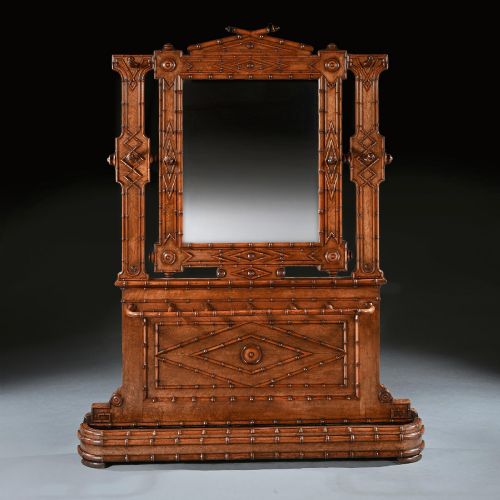
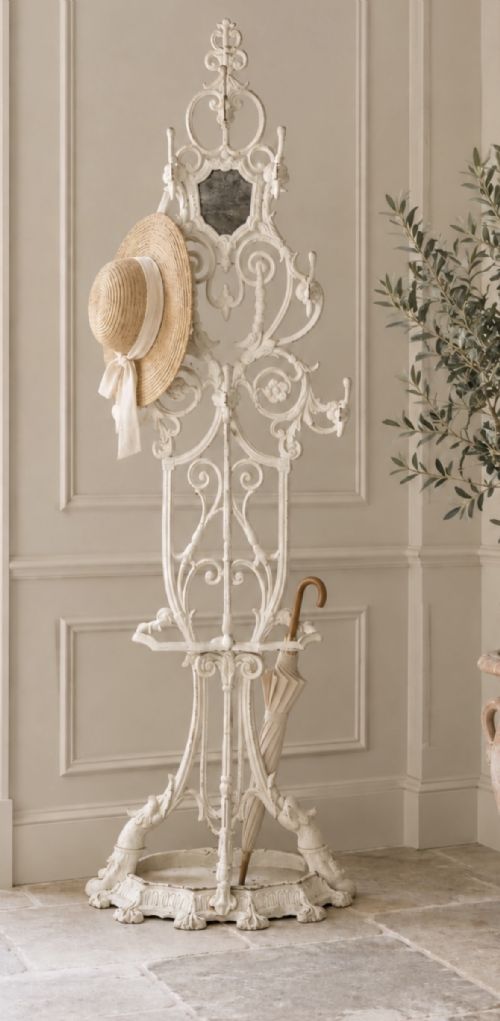


French Hat Stand
A french hat stand organises hallways with practical elegance, offering visitors a dedicated place for headwear and coats upon arrival.
French Hat Stand
A french hat stand encompasses hall furniture and wall-mounted racks designed for storing headwear alongside coats and umbrellas. These pieces range from narrow freestanding hallstands to long brass wall racks and fruitwood milliner display forms.
The selections span the late nineteenth century through to the Art Deco period, incorporating styles such as French Provincial, Aesthetic Movement, and industrial ironwork. Visitors to the hallway encountered everything from simple fruitwood blocks to elaborate mirrored portmanteaus.
Freestanding examples often combine coat hooks with umbrella wells and original mirror plates, while wall-mounted variants utilise brass, iron, or golden pine. Each piece reflects the interior sensibilities of its era, balancing utility with decorative presence.
How they were made
Construction relies heavily on diverse timbers such as birdseye maple, golden pine, ebonised wood, and fruitwood, often shaped into faux bamboo or structural hat blocks. Woodworkers utilised traditional joinery to build durable frames capable of supporting heavy garments.
Metal components introduce brass, cast iron, and wrought iron, forming robust brackets, scalloped hooks, and hanging rails. Industrial styles and Art Deco designs frequently integrate metal frames with mirrors and wooden shelving.
Decorative detailing incorporates glass mirror plates, carved elements, and specialised millinery forms shaped from wood. These varied materials allowed makers to produce functional hallway furnishings ranging from rustic country pieces to refined urban portmanteaus.
French Hat Stand Retail Price Guide 2026
Typical asking prices for french hat stand among the pieces listed under this phrase on Sellingantiques today, from the lower quarter to the upper quarter. They describe what is for sale here now, not the wider market.
One exceptional nineteenth-century hall stand is cleverly formed from three crossed wooden pikes.
What varies in quality
The integrity of the original components, such as glass mirror plates and brass brackets, distinguishes standard items from finer examples. Presence of original hardware and specialised forms elevates the piece.
Material selection and decorative execution play significant roles, with birdseye maple, ebonised finishes, and intricate wrought iron detailing showing superior craftsmanship. Simpler pine or basic metal variants serve more utilitarian functions.
Design ambition separates basic coat hooks from elaborate portmanteaus featuring combined umbrella stands, integrated shelving, and sculptural elements like crossed halberds.
The French Hat Stand Glossary
- Portmanteau
- A large freestanding hallway piece combining a mirror, coat hooks, and umbrella storage. It acts as a central organizational unit for an entrance hall.
- Faux bamboo
- Wood carved and painted to resemble natural bamboo stalks. This decorative technique appears frequently in Aesthetic Movement furniture.
- Milliner form
- A wooden block shaped like a head, used for making or displaying hats. These sculptural objects double as decorative fruitwood display stands.
- Japonisme
- The influence of Japanese art on Western design during the late nineteenth century. This aesthetic informed the decorative motifs of various hallstands.
French Hat Stand: Frequently Asked Questions
Where should a french hat stand be placed?
These pieces suit entrance halls, corridors, and bedrooms where guests and residents deposit outerwear. Freestanding portmanteaus require adequate floor space and a solid wall for stability.
Wall-mounted brass and iron racks fit well in narrower hallways above a bench or console table. Positioning them near the primary doorway ensures daily convenience.
How do I care for antique wood and metal?
Maintain wooden frames and fruitwood blocks with appropriate wax or polish to preserve the grain and finish. Avoid placing timber pieces in direct sunlight or damp areas.
Clean brass and iron components gently to retain their patina without stripping historical surfaces. Check wall fixings periodically on heavy mirrored items to ensure secure hanging.
What is the difference between a hallstand and a portmanteau?
A hallstand generally refers to a functional timber or iron structure for coats, hats, and sometimes umbrellas. They range from narrow wall racks to freestanding units.
A portmanteau is a grander, integrated piece usually featuring a prominent mirror plate, multiple rows of hooks, and dedicated umbrella wells. These larger items dominated formal nineteenth-century entranceways.
How can I date a piece?
Dating relies on stylistic clues, material choices, and construction methods associated with specific decades. Nineteenth-century examples often feature elaborate carving or faux bamboo, whilst 1920s pieces lean towards Art Deco ironwork and clean lines.
Original mirror plates, backboards, and mounting brackets also offer indicators of age. Comparing the form against documented period styles helps establish a reliable timeframe.