


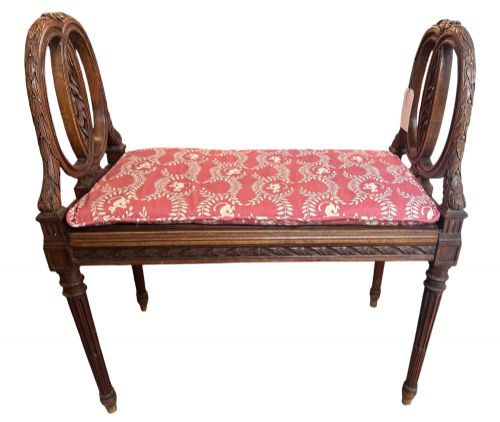


French Hall Bench
A french hall bench grounds an entrance with regional character, offering practical seating shaped by centuries of provincial craftsmanship.
French Hall Bench
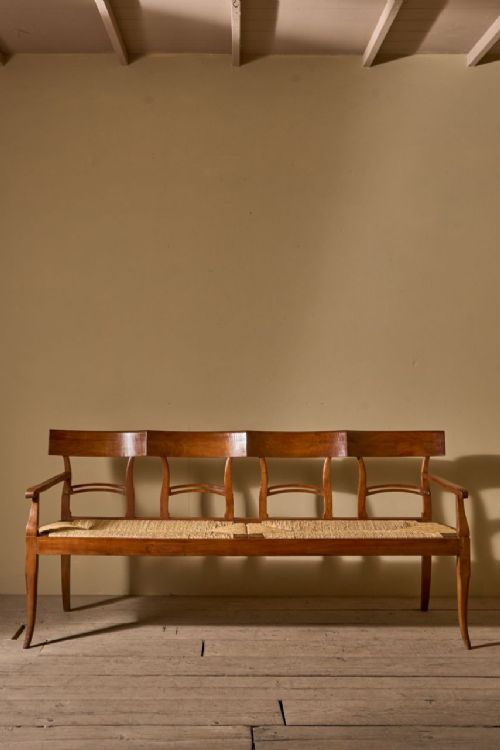
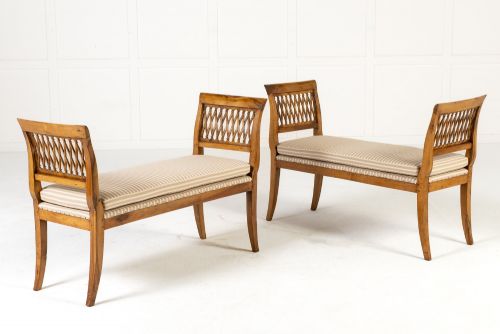
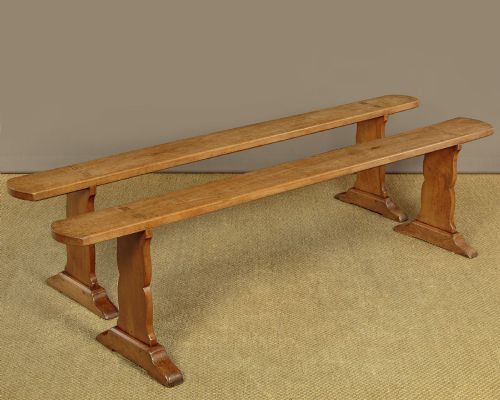
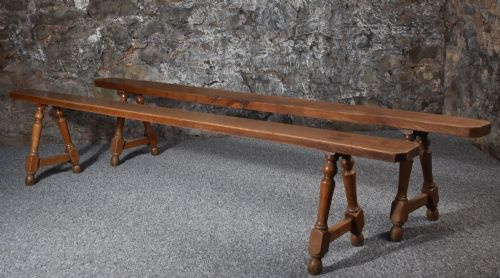
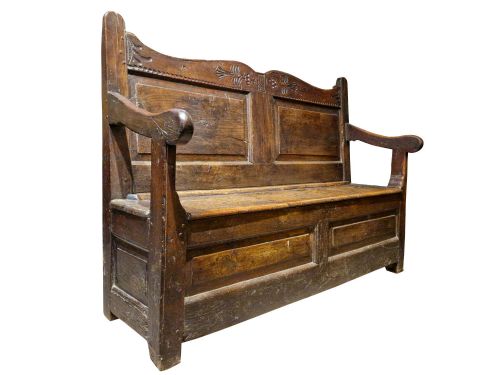
A french hall bench encompasses a variety of seating forms designed for corridors and entrance spaces, including settles, window seats, and banquettes. The selection ranges from robust 18th century oak box-seated settles to lighter 19th century cherrywood and walnut benches.
Buyers encounter examples spanning the 18th, 19th, and early 20th centuries, reflecting regional workshops and country houses. Simpler rustic pieces share space with refined neoclassical or Louis XVI-influenced seating.
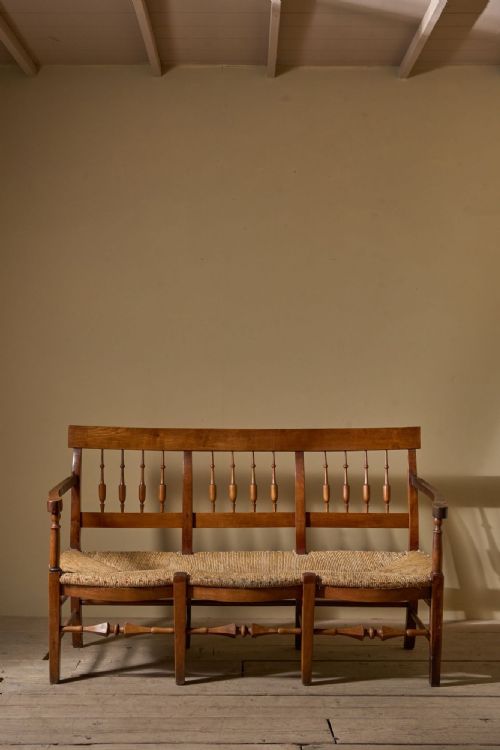
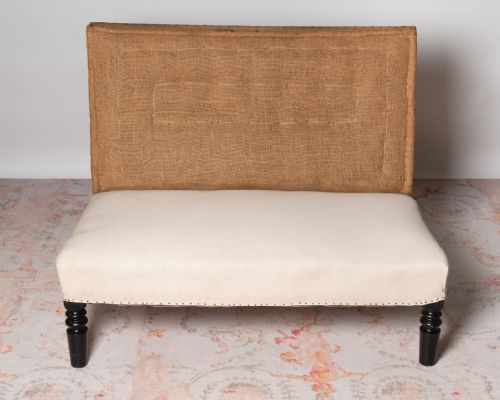
The inventory demonstrates distinct regional typologies, from Breton chestnut settles to French provincial rush and cane-seated benches. Structural variations include panelled backs, open armrests, and upholstered frames.
Materials and Construction
Carpenters utilised native hardwoods such as oak, walnut, cherrywood, elm, and fruitwood to build these seats. Timbers were often left in their natural state, scrubbed, or bleached to highlight the grain.
Seating surfaces frequently incorporated woven rush, cane, or fabric upholstery alongside solid timber planks. Frames display traditional joinery methods, including pegged mortise and tenon joints on older settles.
Carving appears on structural elements like crest rails and cabriole legs, ranging from simple geometric incisions to elaborate foliate motifs.
The listings on this page span the eighteenth, nineteenth, and early twentieth centuries, utilising native woods like walnut, cherrywood, and oak.
Assessing Quality and Character
Quality rests in the integrity of the timber and the honesty of the surface finish. Pieces retaining original scrubbed patination or early paint surfaces command greater interest than stripped or overly restored examples.
The refinement of the carving and the balance of proportions distinguish standard provincial output from finer workshop pieces. Subtle details in the turning of legs and the execution of joint work separate the ordinary from the exceptional.
The French Hall Bench Glossary
- Settle
- A wooden bench with a high back, solid arms, and often a box seat for storage. This form protected sitters from draughts in hallways.
- Rush
- Dried marsh grass twisted into cords and hand-woven to create supportive seat bases. It appears frequently on provincial chairs and benches.
- Banquette
- An upholstered long bench or settle designed for domestic seating. These often feature velvet or leather trim.
- Cabriole leg
- A furniture leg that curves outward and then tapers inward, mimicking an animal's leg. It is common in neoclassical and later revival styles.
- Trestle
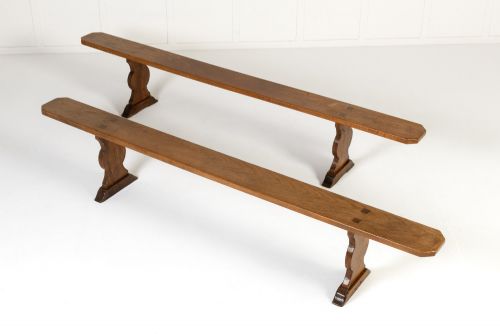
- A structural support consisting of a horizontal beam fixed to two splayed legs. Though typical of tables, this construction underpins related workshop furniture.
French Hall Bench: Frequently Asked Questions
Where should I place a French hall bench?
These benches suit entrance halls, corridors, and large landings where narrow profiles allow for passage. They provide functional seating without overwhelming the floor plan.
Living areas and bedrooms also accommodate window seats and banquettes, offering supplementary seating with distinct historical presence.
How do I care for rush and cane seats?
Rush and cane require gentle treatment and stable humidity to prevent the natural fibres from becoming brittle. Regular dusting with a soft brush maintains the material.
Avoid placing these benches in direct sunlight or near heat sources, which dry out the organic strands and weaken the weave.
Are these benches comfortable for daily use?
Many provincial benches were built for utility rather than lounging, featuring upright wooden backs and firm seats. Adding cushions improves comfort for prolonged sitting.
Upholstered banquettes and window seats offer softer support, depending on the padding and fabric condition specified in the individual piece.
How do I distinguish 18th-century pieces from later copies?
Eighteenth-century examples typically display hand-cut joinery, pegged framing, and deep patination acquired through generations of handling. Tool marks and irregular board thicknesses indicate older hand-tool methods.
Later 19th-century and revival pieces often feature more uniform machining and standardised hardware, reflecting industrial production shifts.