






French Gilt Statuettes
French gilt statuettes bring classical figures, animals and putti into rooms with the warm glow of gilded bronze and ormolu.
French Gilt Statuettes
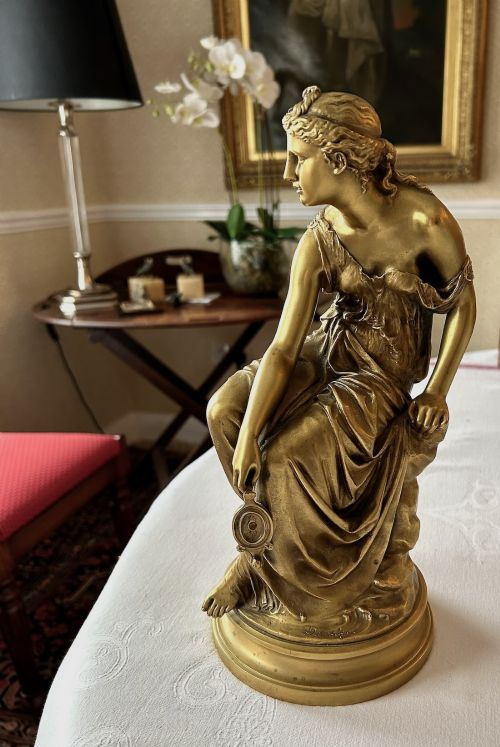
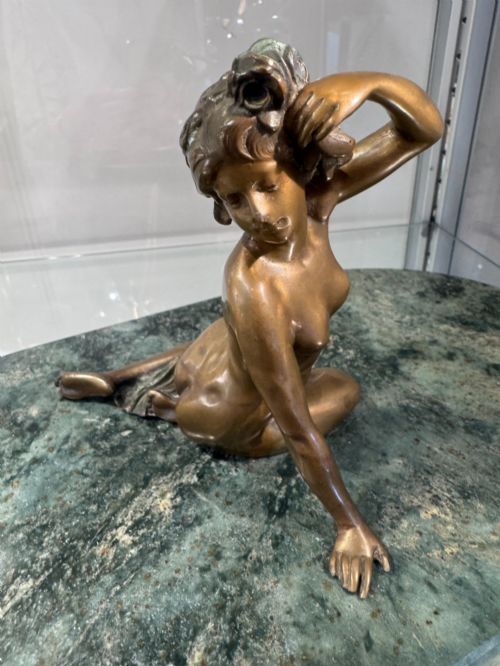
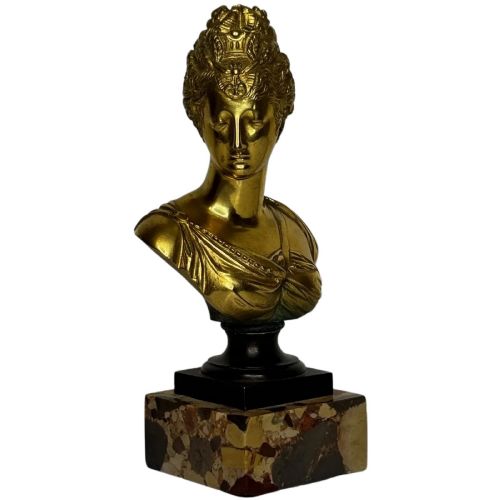
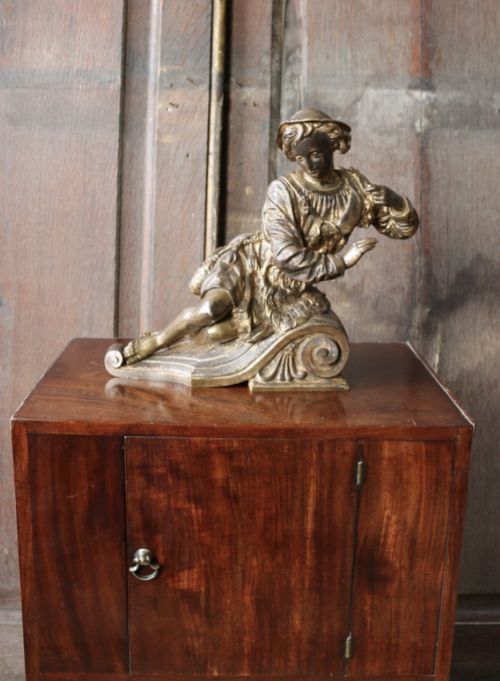
French gilt statuettes encompass small sculptural works cast in bronze, brass, or ormolu, often paired with marble bases or rendered as porcelain figurines. These pieces depict classical maidens, historical figures, mythological subjects, animals, and putti.
The selections span the eighteenth, nineteenth, and early twentieth centuries, reflecting movements from Rococo Revival and Neoclassical styles to Art Nouveau and Art Deco. Figures of historical personalities, allegorical subjects, and everyday provincial characters appear frequently across the range.
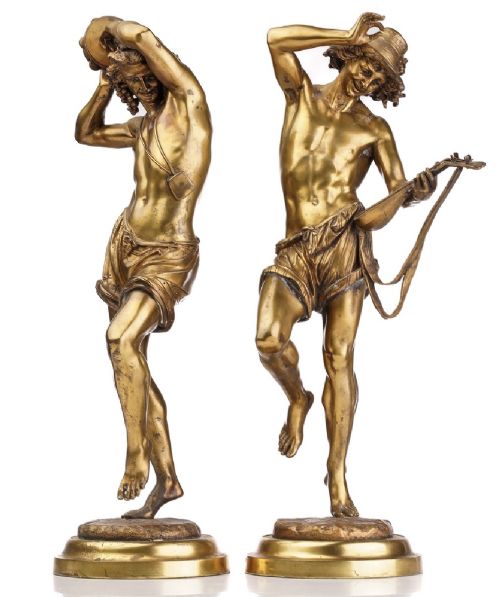
Many of these small sculptures served decorative purposes on mantelpieces and desks, while others were later adapted into table lamps or incorporated into inkwells. The forms vary from solitary busts and equestrian figures to paired dancers and musicians.
Materials and casting methods
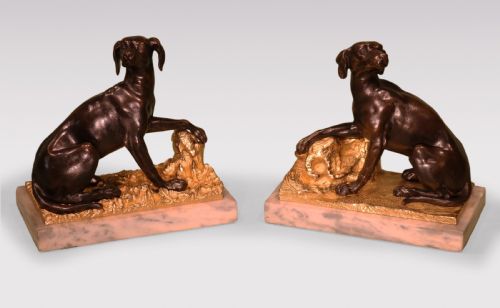
Foundries utilised bronze, cast brass, and ormolu, applying a gold gilt finish directly to the metal surface to achieve a lustrous appearance. Marble plinths frequently support the heavier metal sculptures, adding stability and contrast.
Porcelain variants, particularly those originating from Samson of Paris, relied on traditional ceramic potting and hand-painting techniques to emulate earlier English models. Artisans combined patinated bronze with gilded elements to create depth and textural variety within a single piece.
French Gilt Statuettes Retail Price Guide 2026
Typical asking prices for french gilt statuettes among the pieces listed under this phrase on Sellingantiques today, from the lower quarter to the upper quarter. They describe what is for sale here now, not the wider market.
Among the historical figures and classical maidens, a well-dressed dentist bear stands ready to tend to dental matters in solid bronze.
Distinctions in craftsmanship
The sharpness of the cast and the precision of the chasing separate standard foundry output from superior works. Finer statuettes display delicate facial expressions, well-defined drapery folds, and clean finishing on the reverse sides.
The quality of the gilding itself determines longevity and visual depth, with genuine mercury gilding or thick gold leaf retaining a warmer lustre than later chemical treatments. Furthermore, the integrity of the original marble base and the presence of clear foundry marks or signatures indicate higher atelier standards.
Etienne-Henri Dumaige·Emile-Coriolan Guillemin·Christophe Fratin·Samson Paris·A L Barye·Barbedienne·Charlotte Monginot·Albert Ernest Carrier-Belleuse·E Laurent
The French Gilt Statuettes Glossary
- Ormolu
- Finely ground high-carat gold applied to a bronze base using a mercury amalgamation process. This technique creates a distinctive, deep metallic sheen characteristic of eighteenth and nineteenth-century French metalwork.
- Patinated bronze
- Metal that has been treated with chemical solutions to produce a darkened, aged surface finish. This treatment is often contrasted with polished or gilded sections to highlight anatomical details.
- Bocage
- An ornamental background of carved or modeled foliage and flowers surrounding porcelain figures. It is frequently seen in pieces inspired by eighteenth-century English factories.
- Putto
- A plump, naked male child depicted in sculpture, often winged and resembling a cupid or cherub. These figures appear widely in neoclassical and revivalist decorative arts.
- Chasing
- The manual process of refining a metal cast using small punches and chisels to sharpen details and remove surface flaws. Superior chasing distinguishes master foundry work from mass production.
French Gilt Statuettes: Frequently Asked Questions
What are French gilt statuettes made of?
These pieces are primarily cast from bronze, brass, or ormolu, and many feature an applied gold gilt finish across the metal surface. Some examples incorporate contrasting marble bases, hand-painted porcelain, or fabric elements.
Foundries often combined gilded highlights with darker patinated bronze to accentuate the fine details of the clothing and anatomy.
How do I identify the period of a statuette?
Dating relies heavily on stylistic markers, such as the flowing organic lines characteristic of Art Nouveau or the rigid symmetry found in Neoclassical pieces. Signatures, foundry stamps, and the type of material used for the base also offer reliable clues to the era of production.
Examining the casting technique and the wear on the gilding helps narrow down whether a piece originates from the eighteenth, nineteenth, or early twentieth century.
Were these statuettes used as lamps originally?
Most of these sculptures were created as standalone decorative art objects for display on mantelpieces, desks, or cabinets. However, the durable nature of bronze made them popular candidates for conversion into table lamps during later decades.
When converted, the original sculptural integrity is sometimes altered to accommodate wiring, though many retain their primary form.
How should I clean a gilded bronze figure?
Maintenance requires only gentle dusting with a soft, dry brush to prevent the accumulation of particles in the crevices of the cast. Avoid abrasive cleaners, polishes, or harsh chemical solutions, as these can strip away the delicate gold gilt finish.
Keeping the statuette away from direct sunlight and excessive moisture will help preserve the metal and any associated marble or porcelain components.