



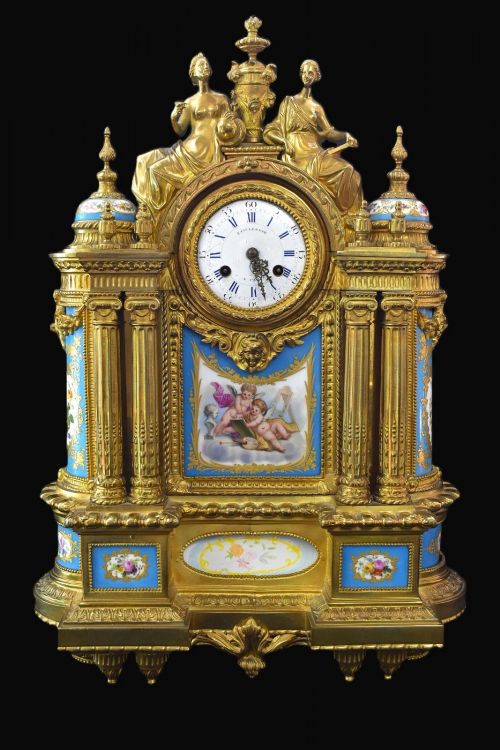
French Gilt Mantle Clock
A french gilt mantle clock brings domestic theatre to a room through cast bronze, marble and rhythmic escapements.
French Gilt Mantle Clock
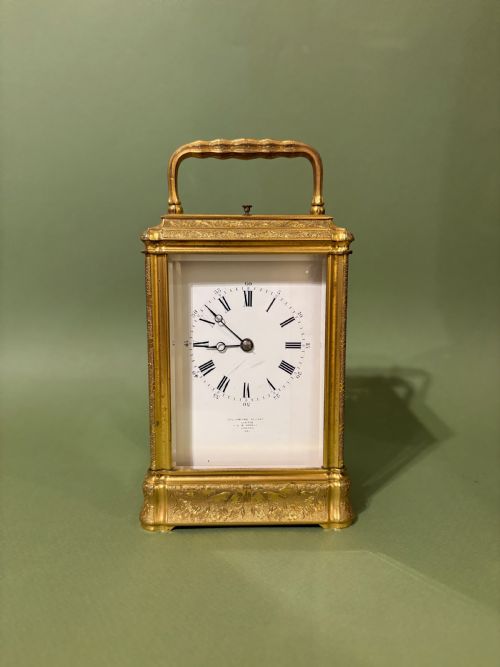
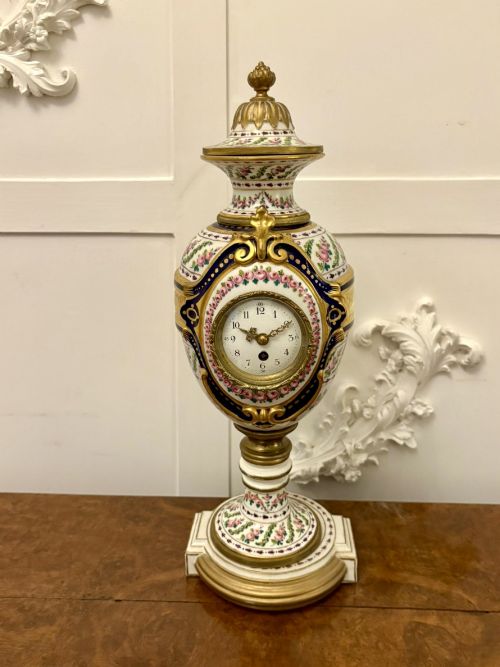
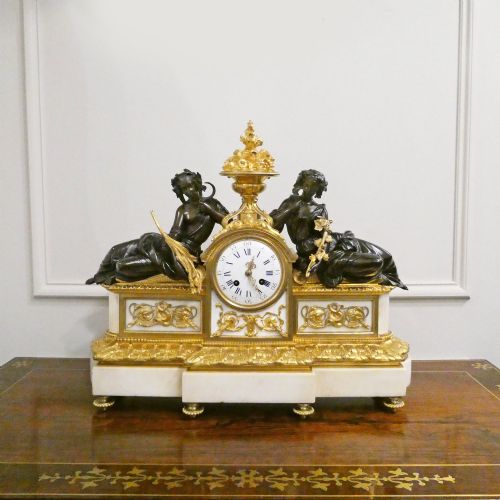
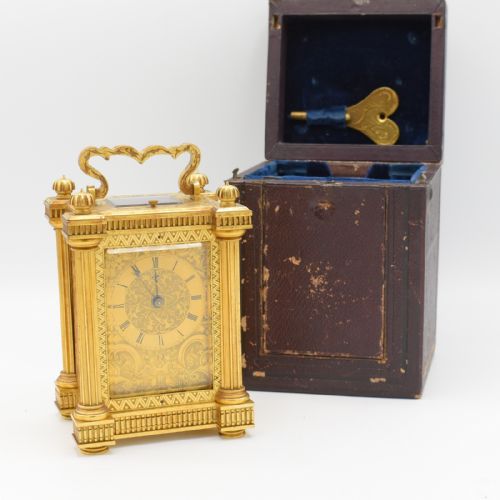
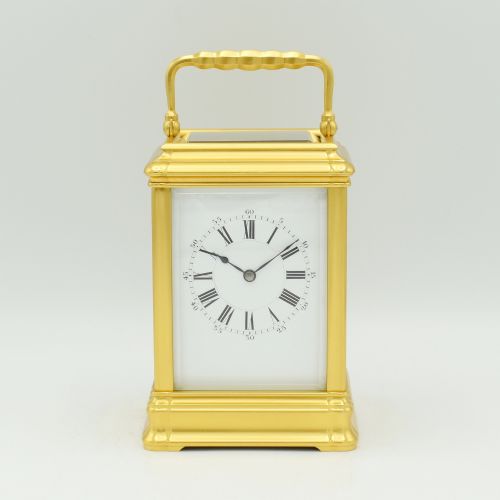
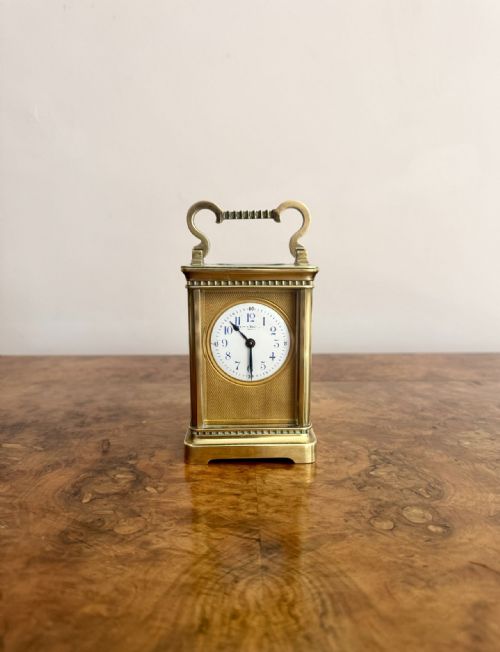
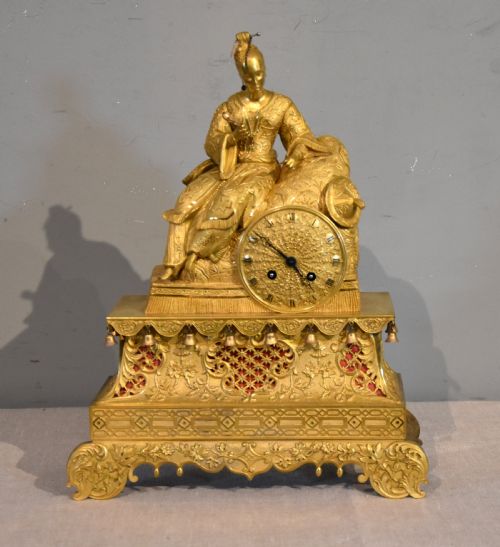
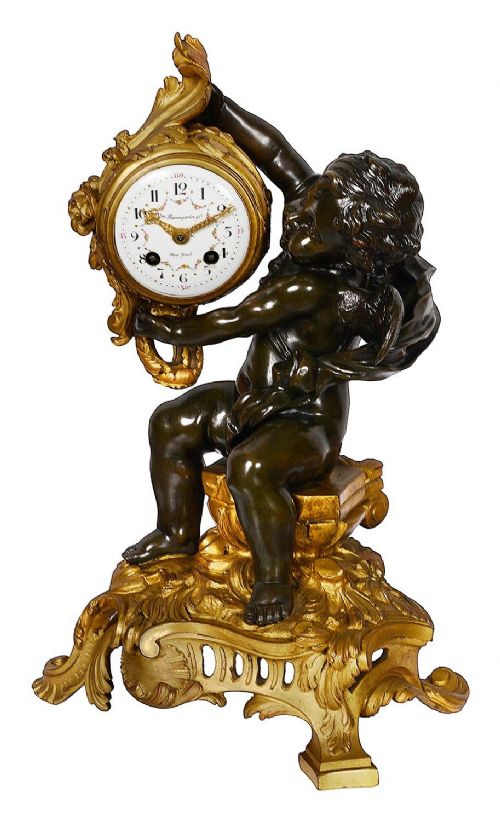
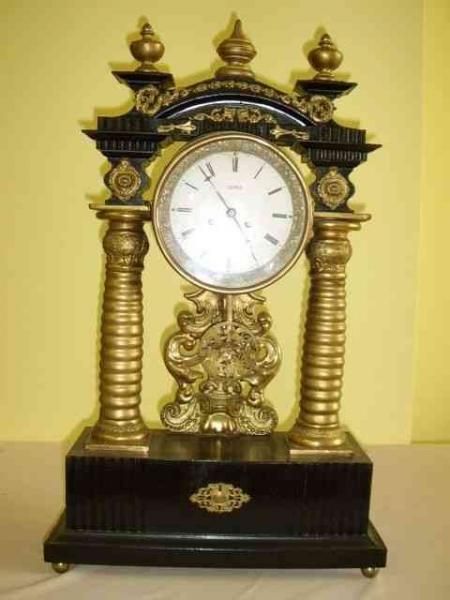
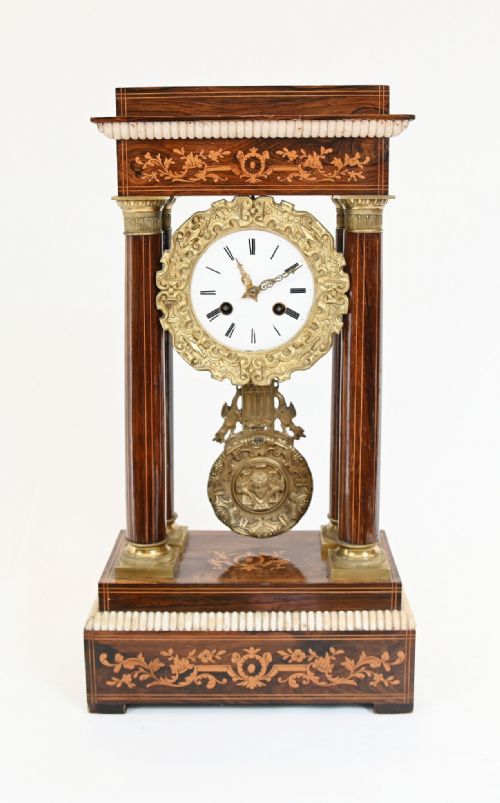
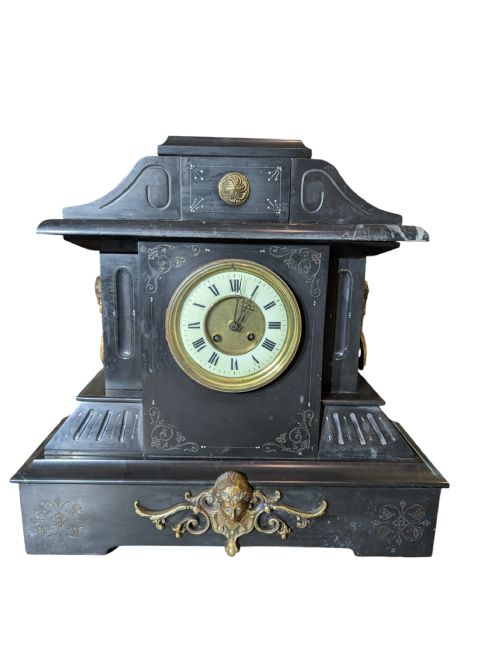
A french gilt mantle clock represents a broad group of ornamental timepieces produced across the nineteenth century, with strong representation from the Victorian period and earlier revival phases. These objects range from portico clocks and figural subjects to large porcelain-mounted garnitures and glass-cased carriage designs.
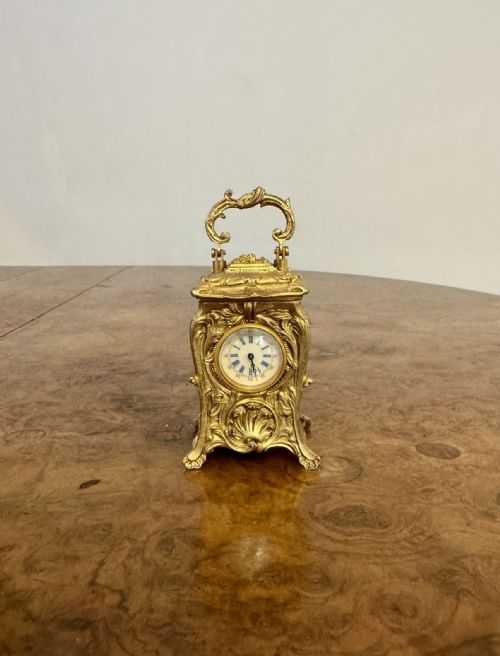
The version most commonly encountered on this page is the nineteenth-century mantel clock utilising ormolu, gilt brass or gilt bronze alongside white marble, enamel dials and hand-painted ceramic panels. Architectural portico forms and rococo revival styling appear frequently alongside more compact table clocks.
Makers and retailers such as Henri Jacot, Vincenti, Etienne Lenoir, Japy Freres and Tiffany are recorded in the evidence, showing that both specialist clockmakers and major luxury houses contributed to this category.
Materials and construction
Makers constructed the structural carcasses of these pieces from heavy white marble, brass, or carved wood covered with brass inlays, providing a stable foundation for the mechanical movements. Artisans then applied fire gilding or ormolu finishes to bronze and brass components to achieve a durable, warm metallic sheen.
Cases incorporate decorative elements including porcelain urns, enamel dial faces protected by glass, champleve enamelling, and figural sculptures cast in bronze. Movements typically rely on brass gear trains, often featuring eight-day striking capabilities and pendulum or silk suspension mechanisms.
Listings feature movements spanning the eighteenth to the late nineteenth centuries, including Empire period porticoes and Victorian marble designs.
Judging the range
Quality in these timepieces rests upon the crispness of the bronze casting and the depth of the mercury gilding or ormolu work, where sharper chisel-finishing separates superior examples from softer, commercial castings. The integration of materials also dictates standing: pieces combining matched Sevres-style porcelain panels, white marble plummets and fully signed, restored movements occupy the upper tier of the range.
The architectural balance of the case and the presence of specialised complications, such as repeater mechanisms or musical movements, further distinguish finer workshop output from standard domestic models.
Henri Jacot·Vincenti·Howell And James London·Etienne Lenoir·Philippes Paris·Brunelot·Japy Freres·Tiffany
The French Gilt Mantle Clock Glossary
- Ormolu
- A technique of applying finely ground high-carat gold amalgam to a bronze object, followed by firing to drive off the mercury. This produces a rich golden surface that resists tarnish.
- Garniture
- A set consisting of a central clock flanked by matching decorative objects such as vases, urns or candelabras. These sets were designed to display symmetrically on a mantelpiece.
- Portico clock
- A tall, architectural clock style featuring a dial suspended within a frame supported by four slender columns. They frequently date from the early nineteenth century.
- Champleve
- An enamelling technique where troughs or cells are hollowed out of the metal surface and filled with vitreous paste before firing. The metal partitions remain visible between the coloured enamel areas.
- Repeater
- A mechanical complication in a clock that chimes the hours and quarters upon demand when a lever or cord is activated. This allowed owners to check the time in the dark.
- Carriage clock
- A small, portable spring-driven timepiece with a carrying handle, originally designed for officers travelling on campaign. They often feature glass panels exposing the escapement.
French Gilt Mantle Clock: Frequently Asked Questions
How do I wind a french gilt mantle clock?
Use the appropriate winding key on the arbors located on the dial face, turning gently until you feel resistance. Avoid over-winding to protect the tension spring.
Ensure you do not force the hands backward past the hour, and consult the specific movement type before adjusting the pendulum.
Were these clocks used in bedrooms?
While carriage clocks were designed for travel and bedside use, larger portico and garniture models sat primarily in formal reception rooms and drawing rooms. Their striking mechanisms and substantial weight made them centrepieces for public display.
Smaller miniature carriage clocks offered portability for private chambers.
How do I tell an 1860 clock from an 1890 one?
Mid-nineteenth-century examples often lean towards classical architectural marble cases or heavy ormolu rococo revival forms. Later decades introduced champleve enamelling and four-glass brass cases with refined bevelled panes.
Signatures on the dial or movement backplate often provide definitive dating clues.
What is a clock garniture?
A clock garniture comprises a central timepiece accompanied by two matching side pieces, such as porcelain-mounted urns or candelabras. They were manufactured as cohesive decorative suites for mantelpieces.
Matching materials and cast motifs unify the three items.