
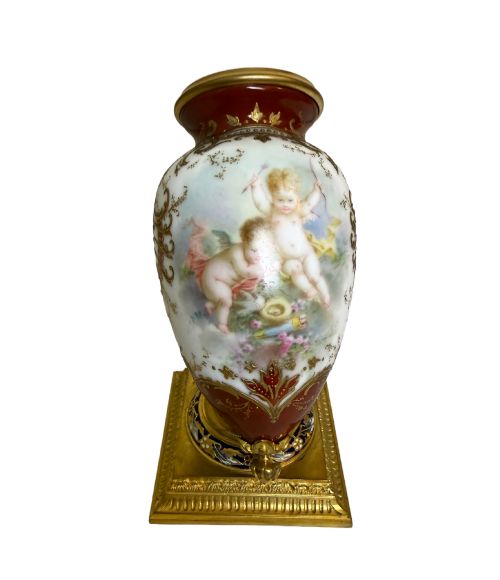

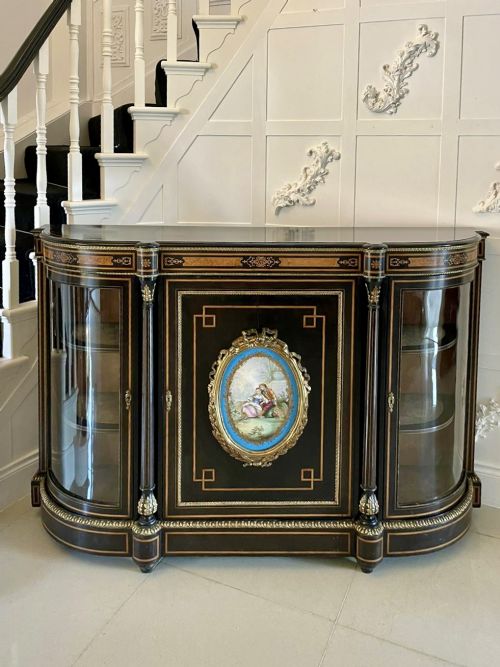
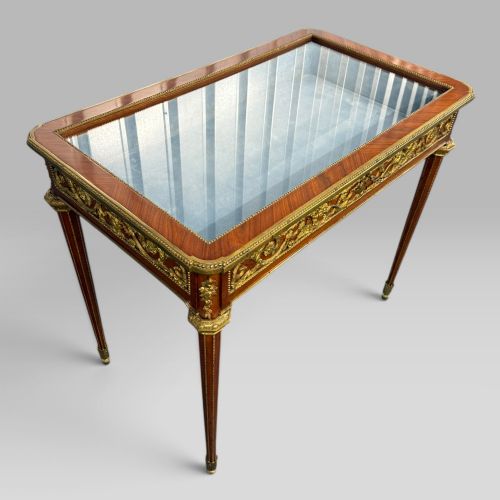
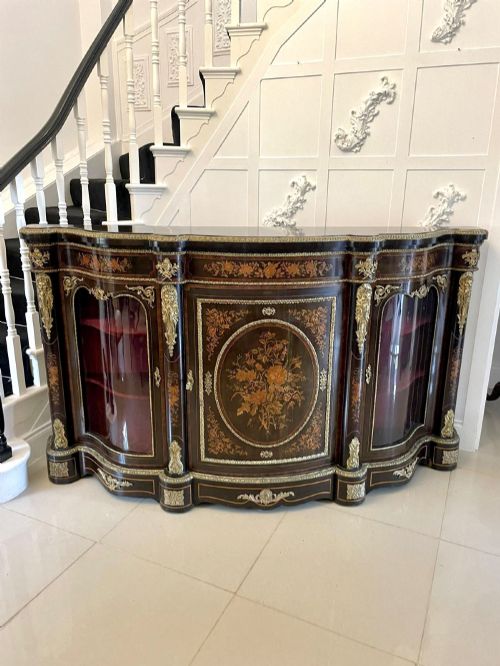
French Gilt Bronze Cabinet
A french gilt bronze cabinet brings continental opulence to a room, combining rich timber surfaces with heavy, chased metal mounts.
French Gilt Bronze Cabinet
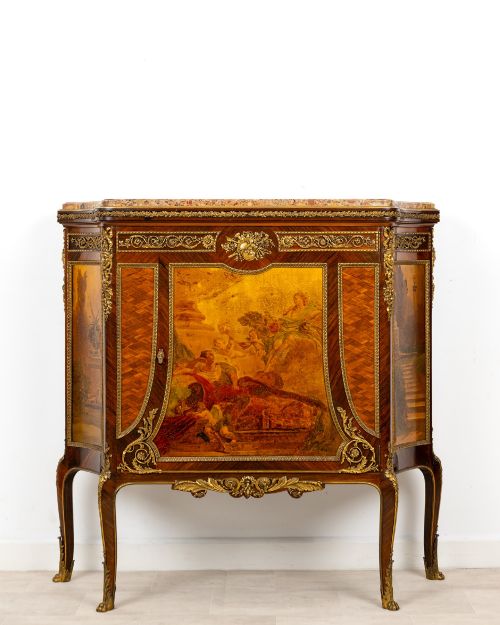
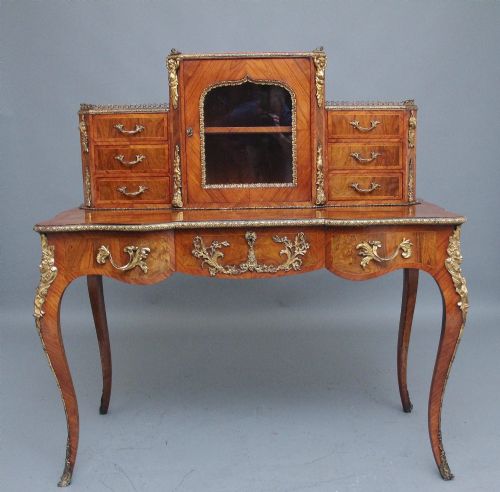
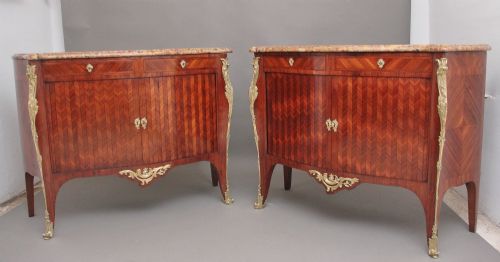
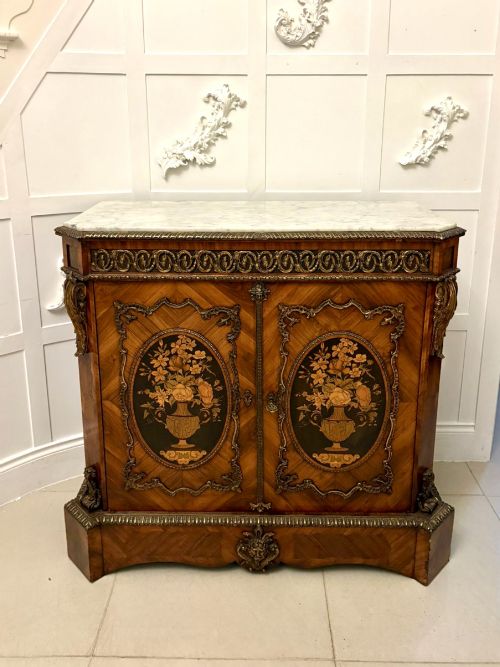
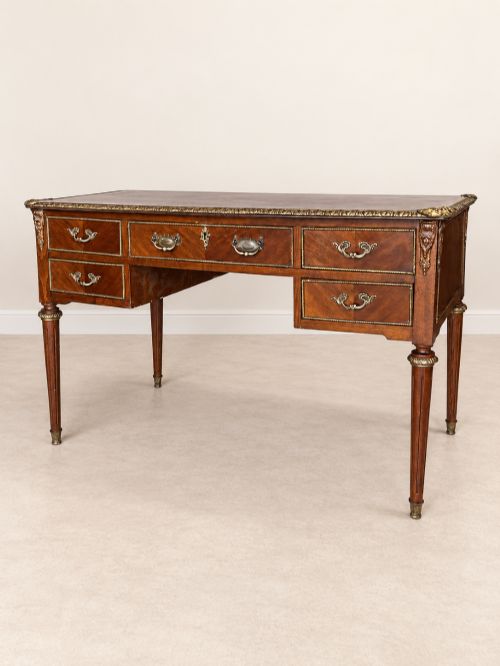
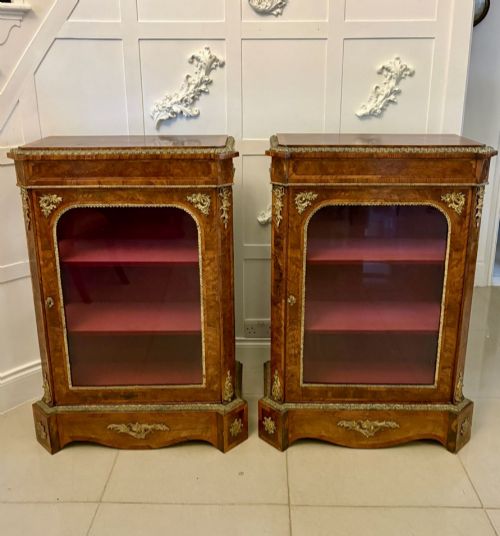
A french gilt bronze cabinet encompasses varied storage and display forms, predominantly taking shape as vitrines, credenzas, commodes, and bookcases dating from the nineteenth century. These pieces reflect historicism through pervasive revivals of Louis XV and Louis XVI styles, alongside Victorian interpretations.
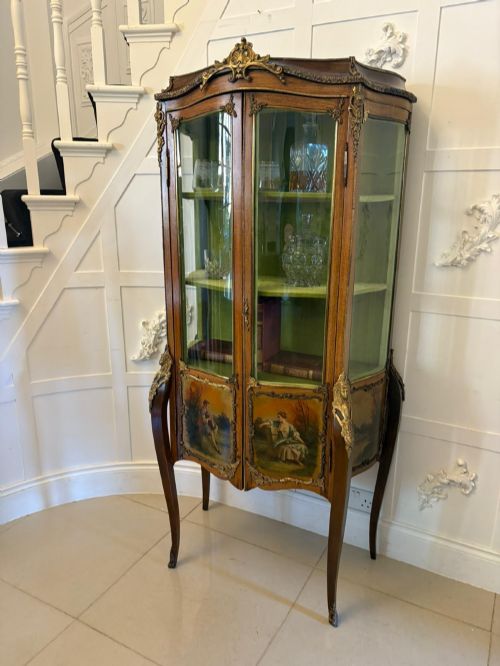
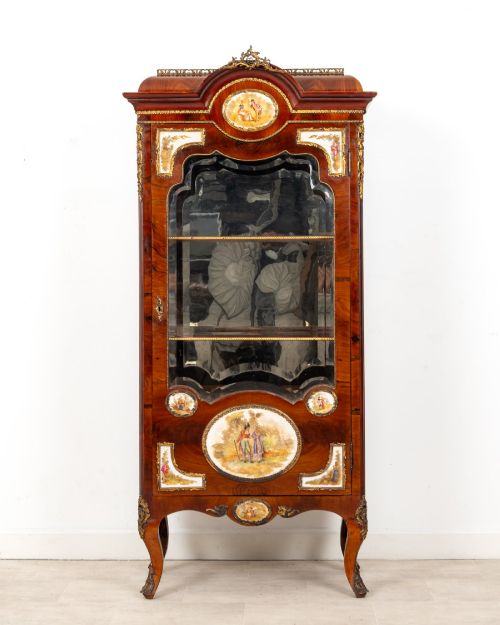
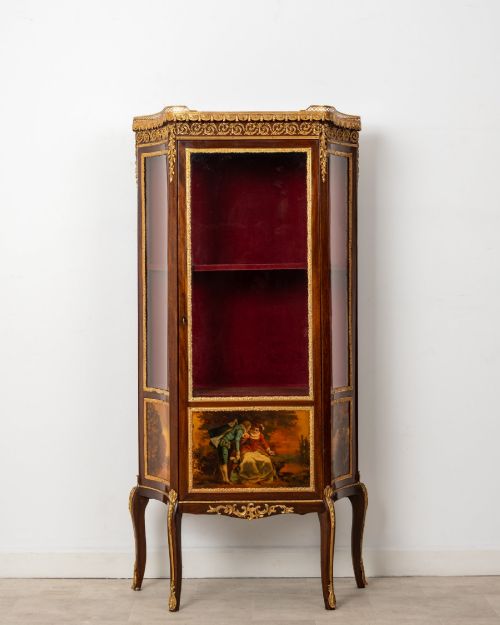
The version most commonly encountered on this page is the display cabinet or vitrine featuring glass panels, often paired with marble tops and decorative ormolu mounts. Makers utilised exotic timbers like kingwood, walnut, and mahogany as foundations for these elaborate mounts.
Materials and Construction
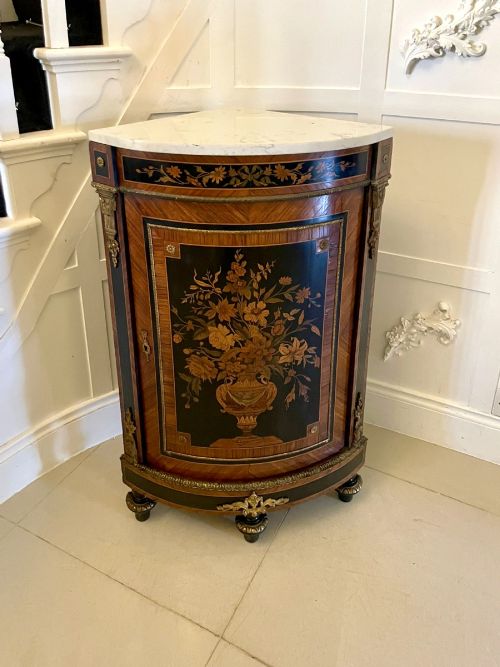
Makers built these pieces using structural carcases of oak, mahogany, or pine, veneered with decorative woods such as kingwood, amboyna, and burr walnut, frequently embellished with marquetry or parquetry patterns. Surfaces often incorporated Vernis Martin painted panels or tortoiseshell and brass boullework.
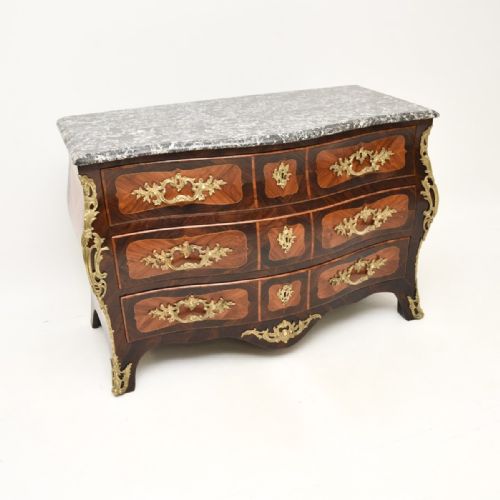
Gilt bronze, also known as ormolu, was cast, chased, and fire-gilded before being mechanically fixed to the corners, feet, and friezes of the cabinetry. Marble slabs, cut and polished with ogee or simple bevelled edges, were fitted to the tops of commodes and credenzas.
Some nineteenth-century makers hid secret drawers inside secretaire cabinets behind cunning spring-loaded false fronts designed to outwit curious guests.
Quality and Execution
The standard of a french gilt bronze cabinet depends heavily on the crispness and hand-chasing of the metal mounts, where sharper detail distinguishes better work from softer, mass-produced castings. The precision of the cabinetmaking, particularly in curved bombe or serpentine veneering, sets finer examples apart.
The choice of secondary timbers and the depth of the marquetry inlay further signal the tier of production. Master workshops employed superior gilt bronze work and thicker veneers that withstand age without significant lifting.
Jacques Bircklé·François Linke·H. J. Hatfield & Sons·Maison Krieger·Henry Dasson·Maison Gagneau·E. Kahn·Edward Holmes Baldock
The French Gilt Bronze Cabinet Glossary
- Ormolu
- Gilded bronze used for decorative mounts on furniture. The technique typically involved applying a mercury and gold amalgam to cast bronze before heating.
- Vernis Martin
- A simulated Japanese lacquer developed in eighteenth-century France by the Martin brothers. It uses multiple layers of varnish to create glossy painted panels.
- Boullework
- A form of marquetry consisting of tortoiseshell and brass inlaid in contrasting patterns. It was popularised by André-Charles Boulle during the reign of Louis XIV.
- Vitrine
- A glass-fronted cabinet designed for displaying porcelain, curiosities, or small objects. They frequently feature glazed sides to maximise light penetration.
- Bombe
- A swelling, convex furniture shape with outward-curving fronts and sides. It requires advanced woodworking skill to veneer accurately.
- Marquetry
- The art of applying small pieces of veneer to a structure to form decorative pictures or geometric patterns. Woods of contrasting natural colours are selected to create tone.
French Gilt Bronze Cabinet: Frequently Asked Questions
What is a french gilt bronze cabinet?
A french gilt bronze cabinet is a piece of case furniture decorated with cast and gilded bronze ornaments, typically originating from nineteenth-century revival periods.
These cabinets draw upon earlier eighteenth-century court aesthetics, featuring luxurious materials like kingwood veneers and marble tops designed for formal reception rooms.
How do I clean ormolu mounts?
Ormolu mounts should be dusted gently with a soft dry brush to prevent the accumulation of dirt in the chased recesses.
Avoid using harsh metal polishes or abrasive cloths, as these can strip away the original fire-gilt surface layer entirely.
Where were these cabinets placed?
These cabinets traditionally stood in formal drawing rooms, salons, or parlours to showcase valuable porcelain and decorative art objects.
Low credenzas and commodes functioned as serving surfaces or focal points against drawing-room walls beneath large mirrors.
How can I tell the period?
Dating relies on examining construction methods, timber choices, and the style of the bronze mounts, which evolved from strict nineteenth-century revivals into later interpretations.
Original backboards, hand-cut screws, and patination on the interior carcase help distinguish nineteenth-century production from twentieth-century revivals.