




French Genre Scene
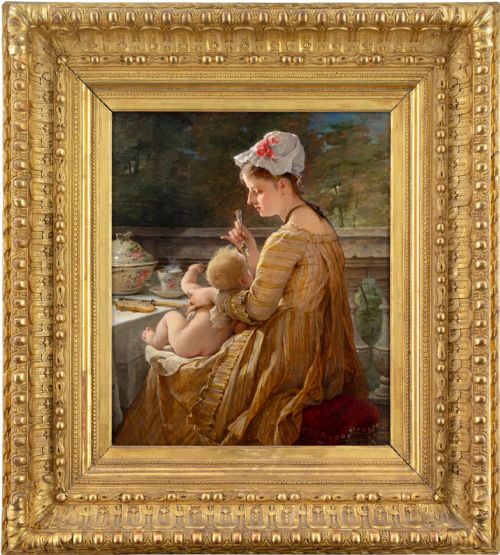
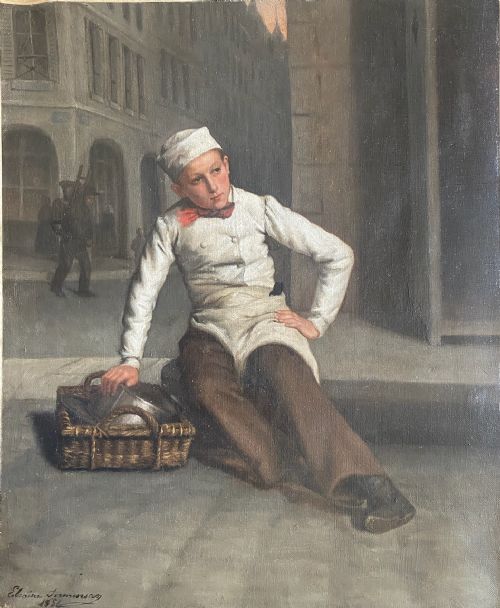
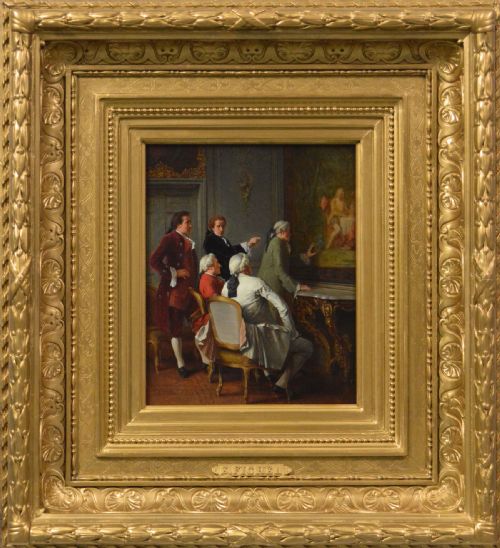
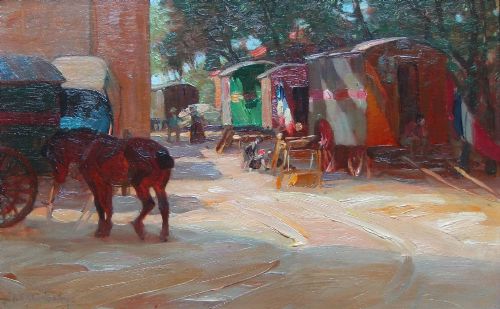
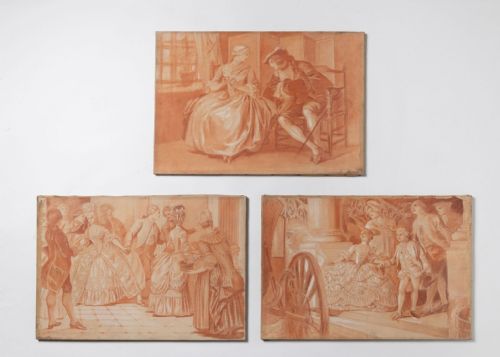
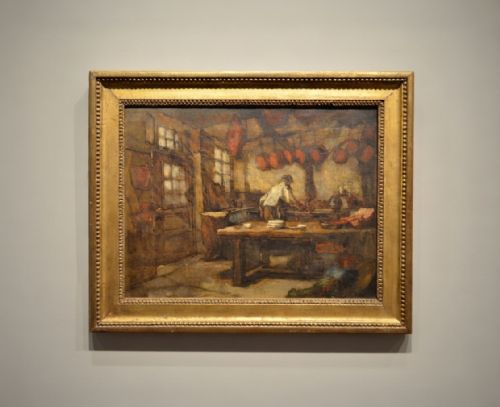
These pieces capture everyday life in a French genre scene, offering a glimpse into past domestic interiors, taverns, and historic palaces.
French Genre Scene
A french genre scene depicts everyday moments, domestic interiors, and social gatherings rather than grand historical or mythological subjects. The pieces on this page span several decades of the nineteenth and twentieth centuries, reflecting changing tastes in artistic representation across France.
Most examples take the form of oil paintings on canvas or panel, alongside watercolours, tapestries, and painted porcelain plates. Buyers encounter domestic scenes of mealtime and rest, alongside historical portrayals of courtiers in palatial settings.
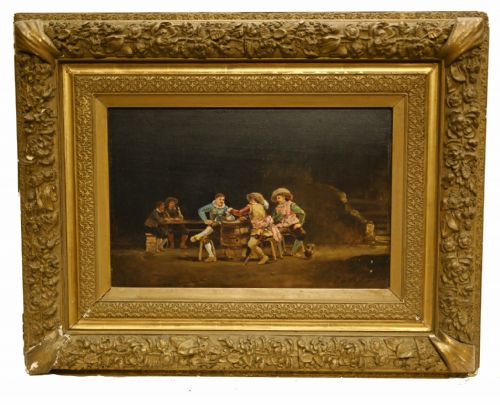
The works originate from varied contexts, including Paris salons, provincial villages, and grand interiors like the Versailles Palace. They capture figures ranging from tavern musketeers and apprentice cooks to aristocrats playing chess or taking afternoon tea.
Materials and methods
Artists relied primarily on oil paint applied to woven canvas or wood panels, building up layers to create depth in interior lighting and fabric textures. Watercolours on paper and painted porcelain plaques also appear among the listed works.
Frames typically consist of carved and gilded wood, known as giltwood, which complements the warm palettes and academic training visible in many of these compositions.
French Genre Scene Retail Price Guide 2026
Typical asking prices for french genre scene among the pieces listed under this phrase on Sellingantiques today, from the lower quarter to the upper quarter. They describe what is for sale here now, not the wider market.
Musketeers share wall space with cats and card players, proving nineteenth-century artists loved domestic drama just as much as we do.
Distinguishing quality
Quality rests on the precision of the brushwork, the expressiveness of the figures, and the handling of light, such as chiaroscuro effects in tavern interiors. Stronger pieces demonstrate a confident command of anatomy and spatial depth, bringing narrative clarity to the interaction between subjects.
The reputation of the artist and the documentation of exhibition history, such as participation in official Paris salons, elevate certain works above standard decorative examples. Original frames and careful preservation of the paint surface also influence the standing of a piece.
Adelaïde Salles-Wagner·Paul Ehrenberg·Albert Ludovici Jnr·Charles Zacharie Landelle·Léon Joseph Voirin·Thomas Couture·Théophile Emmanuel Duverger·Paul Viry·ROBERT MCGREGOR·Marcel Brunery·Edmund Alphonse Andre·Pauline Delacroix Garnier·JAMES BERTRAND·Leon Girardet·Jules Girardet·Pierre-Louis Bouchard
The French Genre Scene Glossary
- Genre painting
- Depiction of aspects of everyday life by portraying ordinary people engaged in common activities. This style gained significant prominence in nineteenth-century French academic art.
- Chiaroscuro
- The use of strong contrasts between light and dark, usually bold contrasts affecting a whole composition. Painters utilised this technique to create theatrical drama in indoor tavern scenes.
- Giltwood
- Wood that has been treated with gold leaf or a gold-coloured substance. Many nineteenth-century frames utilise this finish to enhance the presentation of oil paintings.
- Salon
- An official art exhibition held periodically in Paris, sponsored by the Académie des Beaux-Arts. Showing in these exhibitions established an artist's professional standing.
French Genre Scene: Frequently Asked Questions
What is a french genre scene?
It is an artwork depicting ordinary people in everyday situations, domestic interiors, or social pastimes. These pieces focus on human interaction and daily life rather than formal portraiture.
Subjects range from humble apprentices and rural villagers to aristocrats in lavish salons and palace interiors.
How do I date these paintings?
Dating relies on signatures, artist biographical dates, framing styles, and the clothing worn by the figures. Nineteenth-century works often reflect academic realism or romanticism.
Examining the canvas preparation and stretcher bars on the reverse can also provide clues to the period of creation.
Where were these pieces originally displayed?
Many works were created for private collectors, urban apartments, or country houses. Some larger canvases and salon pieces were exhibited in official public exhibitions in Paris.
Porcelain plates and plaques served as decorative arts for affluent domestic interiors.
How should I care for an oil painting?
Keep paintings away from direct sunlight, high humidity, and rapid temperature fluctuations to prevent cracking in the paint layer. Dust the canvas gently with a soft, dry brush without applying pressure.
Avoid using water or cleaning solutions on the paint surface.