
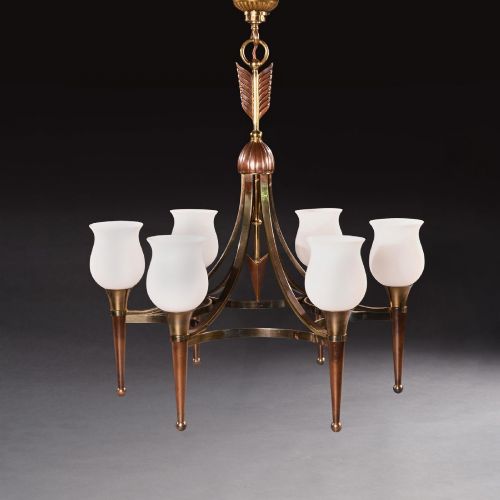
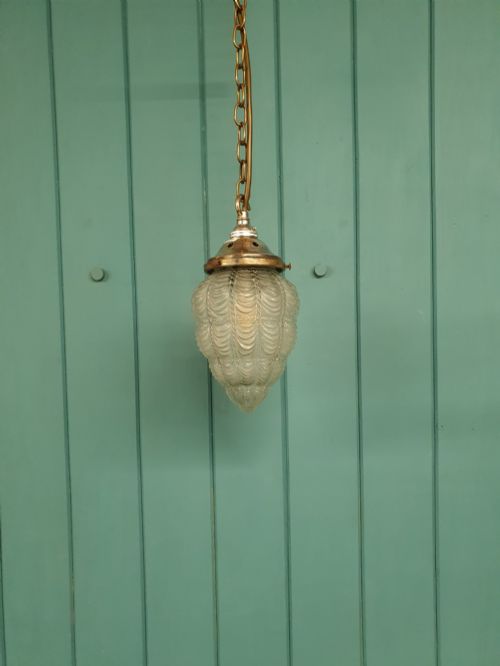


French Frosted Pendant
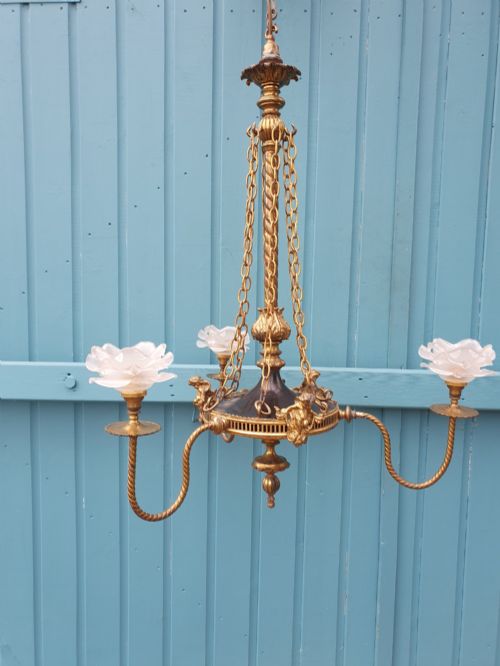
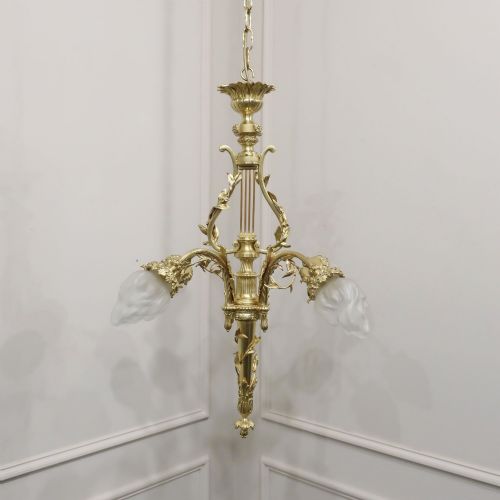
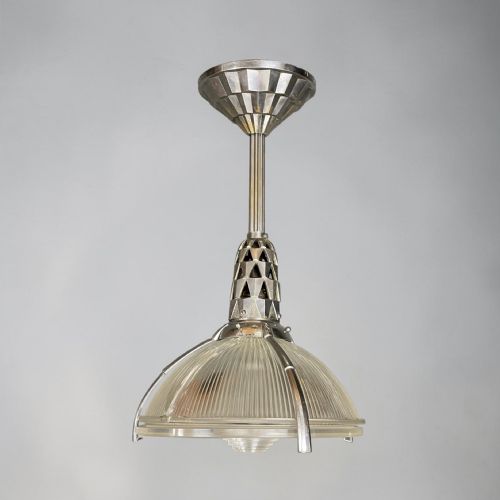
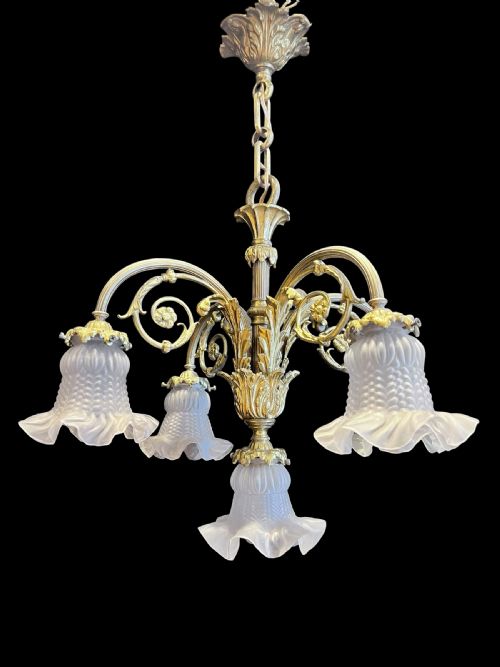
These French frosted pendant fixtures hang with decorated glass and metal, offering direct illumination shaped by early twentieth-century design.
French Frosted Pendant
A french frosted pendant brings together decorative glass shades and metal hanging mounts, most often encountered in styles spanning the Art Deco and Art Nouveau periods. These ceiling fixtures suspend from chains or cords, casting diffused light through patterned or acid-etched glass bowls and domes.
The selection ranges from early twentieth-century geometric Art Deco domes to sinuous Edwardian and 1930s pieces framed in brass, wrought iron, or copper. Buyers typically find hanging lanterns, plafonniers, and single-bulb bowl pendants originating from French workshops and makers.
Earlier nineteenth-century examples lean towards gilt bronze and neoclassical styles, while mid-century iterations feature cleaner lines in bronze and brass. Each form provides a specific quality of overhead illumination suited to hallways, living spaces, and dining rooms.
Assessing Quality
Quality rests in the weight and clarity of the glass moulding alongside the crispness of detail in the metal mounts. Finer pieces display deeply etched motifs and substantial cast bronze or brass frames rather than thin stamped metal.
The integrity of the original hanging mechanisms and the presence of signed glass work distinguish superior examples from standard production pieces. Harmony between the glass shade and its original metal suspension indicates a well-preserved fixture.
Listings feature frosted glass paired with brass, gilt bronze, and wrought iron across Edwardian, Art Nouveau, and Art Deco periods.
Émile-Jacques Ruhlmann·Maison Jansen·Argy Rousseau·Verrerie Des Vosges·Jean Gauthier
The French Frosted Pendant Glossary
- Plafonnier
- A ceiling-mounted glass bowl light that sits close to the surface without a long suspension chain. These fixtures distribute ambient light evenly across a room.
- Pate de verre
- A glass-making method involving crushed glass packed into a mould and fused in a kiln. This technique creates rich colouration and a dense, textured finish.
- Gilt bronze
- Metal cast in bronze and treated with a gold wash or mercury gilding. It provides a durable, lustrous surface finish popular in nineteenth-century French lighting.
- Etched glass
- Glass treated with acid to dissolve parts of the surface and create opaque decorative patterns. The process allows for precise linear and floral designs.
French Frosted Pendant: Frequently Asked Questions
How do I hang a heavy pendant?
These fixtures require secure anchoring into ceiling joists using appropriate metal hooks and brackets to bear the combined weight of the glass and metal frame. A professional electrician should assess the ceiling structure and wiring capacity before installation.
The suspension height depends on ceiling clearance and room function, with dining table placements generally sitting lower than hallway installations. Ensure the weight is supported entirely by the structural hardware rather than the electrical cord.
What bulbs should I use?
Low-heat LED bulbs work best inside frosted glass shades to prevent thermal stress while providing adequate illumination. Warm white colour temperatures complement the vintage glass tones.
Avoid high-wattage incandescent bulbs that generate excessive heat and risk damaging antique glass or drying out original internal wiring. Check the clearance inside the bowl before fitting modern lamps.
How do I date these lights?
Dating relies on stylistic markers such as the geometric symmetry of 1930s Art Deco pieces versus the organic floral motifs of 1910s Art Nouveau designs. Materials like wrought iron and copper often point towards specific interwar aesthetics.
Maker signatures etched into the glass or stamped onto the metal frame provide definitive chronological evidence. Comparing construction techniques with documented period pieces confirms the manufacturing era.