



French Folding Mirror
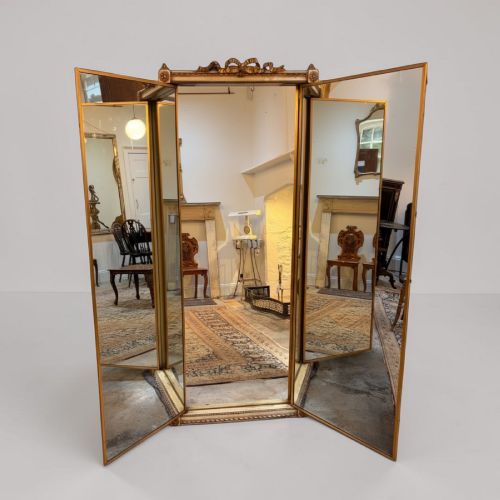
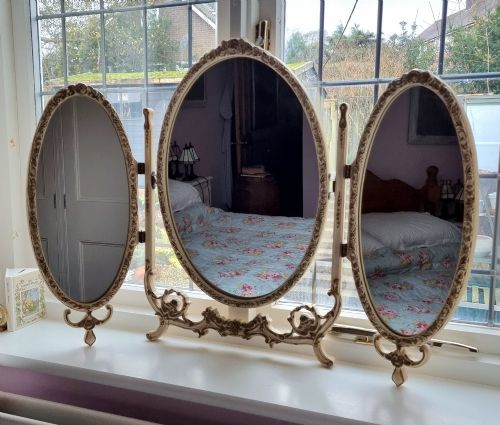
These French folding mirror examples bring functional elegance to a dressing space, offering adjustable angled reflections through hinged side plates.
French Folding Mirror
A French folding mirror brings together adjustable tripartite glass panels designed for vanity use on dressing tables or washstands. These pieces belong predominantly to the early twentieth century, spanning decades from eighteen ninety through nineteen thirty.
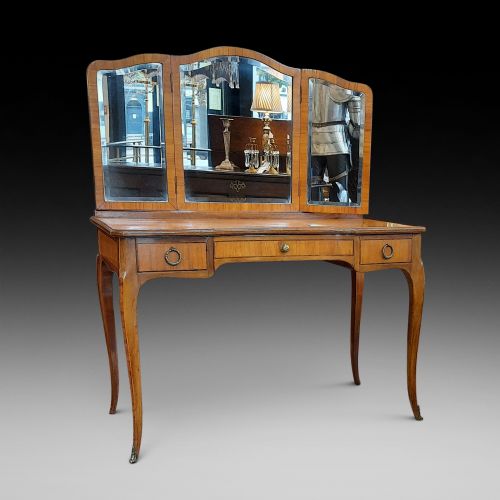
The selections here most frequently take the form of triple dressing table mirrors and dressing mirrors constructed to sit upon furniture. They draw on styles such as French Neoclassical, French Rococo Revival, Art Deco, and French Provincial.
Makers integrated these folding designs into larger bedroom furnishings like dressing tables and washstands, or created standalone triptych and trio mirrors. The overarching form serves to catch light from multiple angles while grooming.
Materials and construction methods
Makers utilised solid woods and veneers including oak, mahogany, walnut, kingwood, and rosewood, often pairing them with brass hinges and embellishments. Giltwood and gesso also appear, alongside marble tops incorporated into larger washstand and dressing table structures.
The frames rely on traditional carving and joinery techniques suited to supporting heavy glass plates on folding hinges. Painted finishes, such as plummet grey, provide alternative surfaces to the polished wood grains.
French Folding Mirror Retail Price Guide 2026
Typical asking prices for french folding mirror among the pieces listed under this phrase on Sellingantiques today, from the lower quarter to the upper quarter. They describe what is for sale here now, not the wider market.
Current listings feature materials such as glass, brass, giltwood, oak, marble, wood, gesso, and paint across various early twentieth century dates.
Judging quality in folding mirrors
Quality rests on the integrity of the timber selection, the crispness of any carved ornamentation, and the robustness of the folding mechanism. Superior examples display refined crossbanding and harmonious proportions across the hinged side plates.
The execution of the brass mounts and the clarity of the bevelling on the glass panes distinguish the finer workshops from standard production. Construction stability in the hinges ensures the side mirrors hold their intended angles securely.
The French Folding Mirror Glossary
- Triptych mirror
- A three-panelled mirror where the two outer hinged wings fold inwards over the central plate. This configuration allows the user to view side profiles during dressing.
- Crossbanding
- A decorative border technique where strips of veneer are laid across the grain of the primary wood. It frames the central panels on finer table pieces.
- Gesso
- A plaster-based mixture applied to wood surfaces and carved or moulded before gilding or painting. It provides a smooth base for ornamental details.
- Kingwood
- A dense, richly figured exotic timber utilised in French cabinet making. Its dark grain patterns add visual depth to dressing furniture.
French Folding Mirror: Frequently Asked Questions
What is a french folding mirror?
A french folding mirror is an adjustable looking glass featuring a central plate flanked by hinged wings that angle inward. These pieces were designed primarily for dressing tables and vanity setups.
They allow the user to check hair and attire from multiple perspectives. The folding mechanism provides both practical utility and decorative presence.
How were they used historically?
These mirrors sat atop dressing tables, washstands, or chests in bedrooms and boudoirs during the late nineteenth and early twentieth centuries. Users adjusted the side panels to catch natural morning light.
They served as an essential accessory for daily grooming and personal care routines. Their portability allowed them to be placed wherever illumination was best.
How do I style one today?
Place a french folding mirror on top of a modern dressing table, a chest of drawers, or a side console. The hinged wings can be angled to reflect room light and add depth to the space.
They work well in both traditional bedrooms and contemporary dressing areas as a functional focal point. Pairing them with vintage or clean-lined modern surfaces creates a balanced contrast.
How do I date these mirrors?
Dating relies on examining the wood veneers, brass hardware styles, and the construction of the mirror frames. Pieces from the eighteen nineties often show heavier Victorian or early revival influences.
Items from the nineteen twenties and nineteen thirties frequently incorporate cleaner lines or Art Deco touches. The type of backing and hinge mechanism also offer clues to the period of manufacture.