




French Floral Light Fixture
A french floral light fixture brings botanical form and soft illumination into a room, taking shape as chandeliers, wall lights, and table lamps.
French Floral Light Fixture
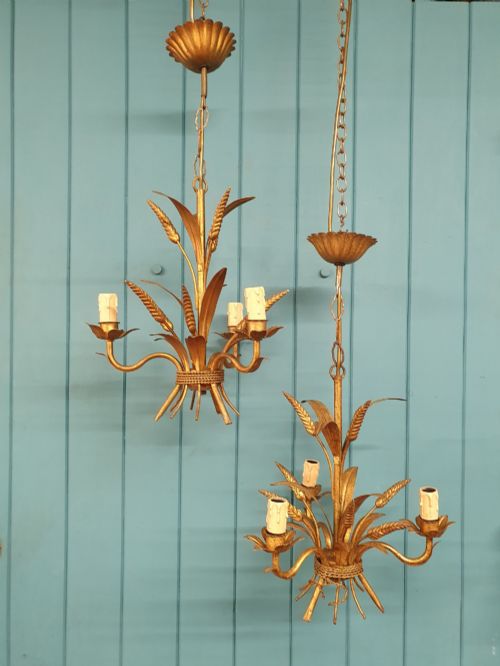
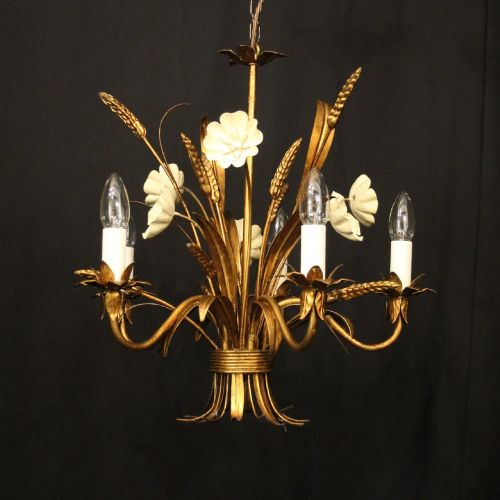
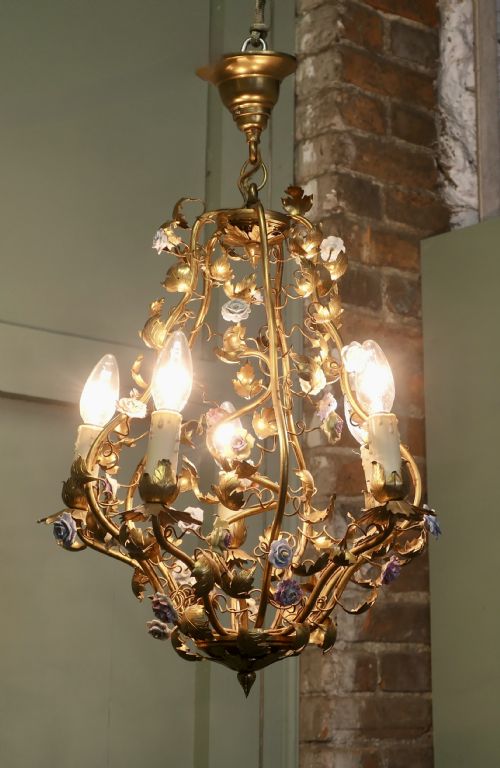
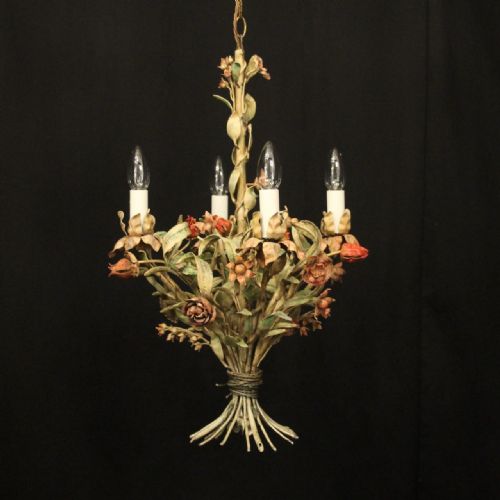
A french floral light fixture is typically encountered on this page as a chandelier, ceiling light, or wall light dating from the Edwardian period through to the 1930s. These pieces take various forms, from five-light and six-branch chandeliers to paired wall lights and smaller wire designs adorned with flowers.
The aesthetic draws on distinct regional styles including French Chateau, Rococo, Country, Mid-Century, Art Nouveau, and Empire. Buyers will find that painted metal, toleware, and ceramic floral elements frequently define the character of these light fittings.
How they were made
Construction relies upon metals such as brass, iron, and gilt or painted metal, often shaped into branching frames, wheatsheaves, and cherub arms. Toleware components and ceramic flowers are integrated directly into the metal armature to create botanical compositions.
Glass and crystal elements, including tent and waterfall configurations, accompany the metalwork to catch and refract the light. Polychrome finishes and silver gilding are applied to surface details to give depth to the floral motifs.
French Floral Light Fixture Retail Price Guide 2026
Typical asking prices for french floral light fixture among the pieces listed under this phrase on Sellingantiques today, from the lower quarter to the upper quarter. They describe what is for sale here now, not the wider market.
Materials span gilt metal, brass, iron, crystal, glass, ceramic, and painted metal.
What varies in quality
The distinction between standard and superior pieces rests on the intricacy of the metalwork and the modelling of the ceramic or toleware flowers. Hand-painted polychrome details and complex multi-branch wiring arrangements separate more elaborate chandeliers from simpler wire or single-branch forms.
Materials also indicate the tier of the piece, with heavier cast bronze, substantial crystal arrays, and fine brasswork demonstrating a higher grade of manufacture than basic painted iron.
Schneider
The French Floral Light Fixture Glossary
- Toleware
- Painted or lacquered sheet metal items, frequently utilised for decorative floral and leaf motifs on period light fixtures.
- Tent and waterfall
- A lighting configuration where strings of crystal beads form a tent shape above a tiered cascade of drops.
- Polychrome
- The practice of decorating architectural elements and light fittings in multiple colours, seen here on ceramic and metal flowers.
- Wheatsheaf
- A decorative motif shaped like bundled stalks of wheat, often rendered in gilded metal as the central body of a chandelier.
- Sconce
- A wall-mounted light fixture designed to hold bulbs or candles, frequently found paired in period interiors.
French Floral Light Fixture: Frequently Asked Questions
What periods do these lights come from?
The pieces span the Edwardian era and the early decades of the twentieth century, specifically covering 1900, 1920, and 1930.
Design influences across these decades range from traditional Rococo and Empire styles through to French Mid-Century and Art Nouveau.
What materials are used in these fixtures?
Construction primarily involves metals such as brass, iron, bronze, and gilt or painted metal. These are often combined with glass, crystal, ceramic, and toleware.
Floral and botanical details are typically formed from painted metal or ceramic elements integrated into the main metal branches.
Are these fixtures only available as chandeliers?
While chandeliers form the majority of the options, the selection also includes wall lights, ceiling lights, and table lamps.
Configurations range from large multi-light chandeliers down to smaller wire designs and paired wall sconces.
How do I identify a French Chateau style?
French Chateau style fixtures generally incorporate ornate metalwork, gilt finishes, and elements like crystal drops or tent and waterfall arrangements. They reflect formal interior decoration traditions.
By contrast, French Country or toleware pieces favour polychrome painted finishes and ceramic flowers for a softer appearance.