



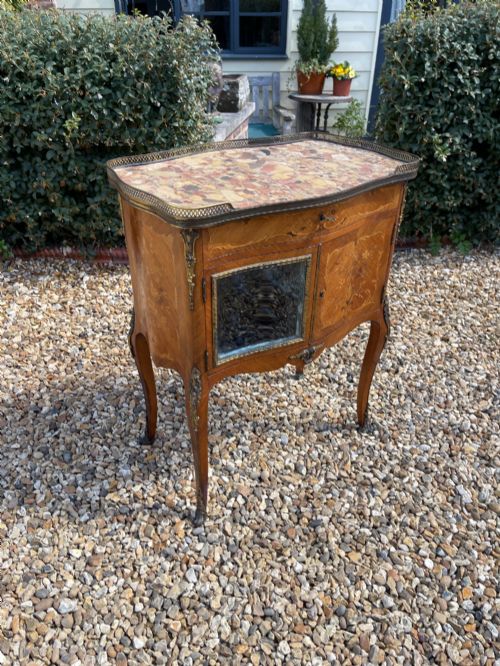


French Floral Commode
A French floral commode brings warmth and grand proportion to a room, offering surface space and deep storage wrapped in intricate wood veneers.
French Floral Commode
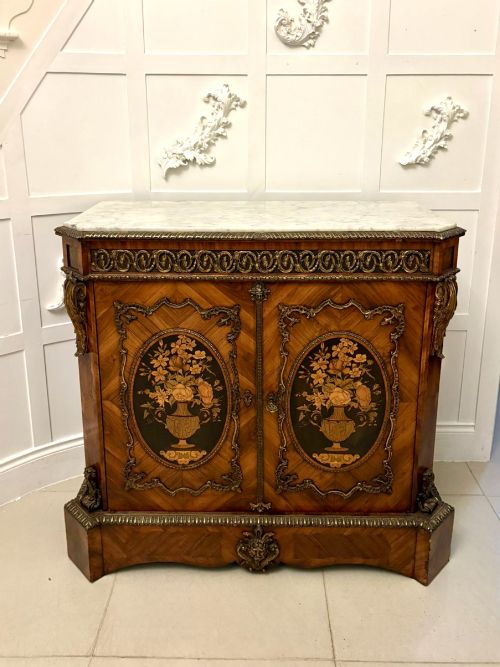
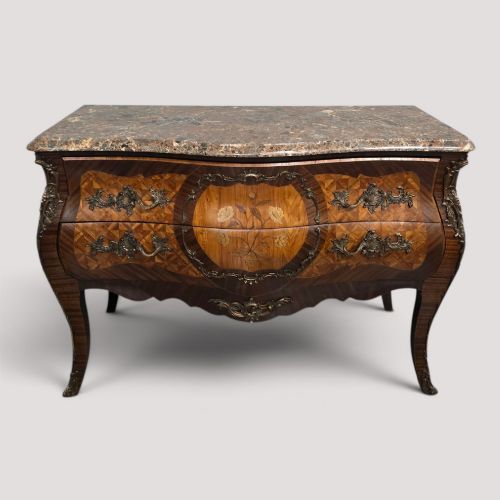
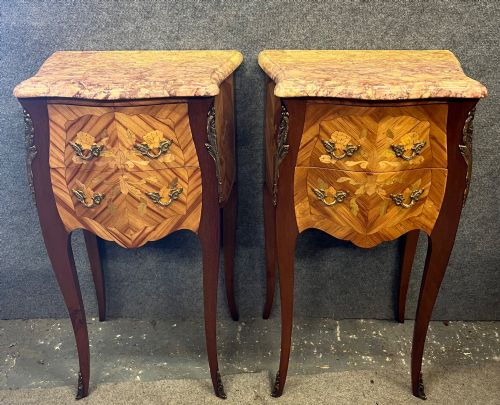
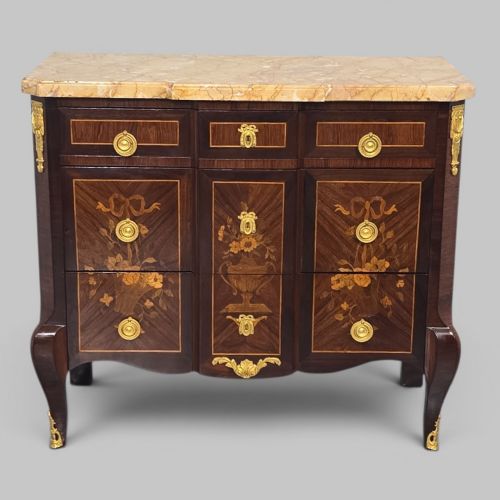
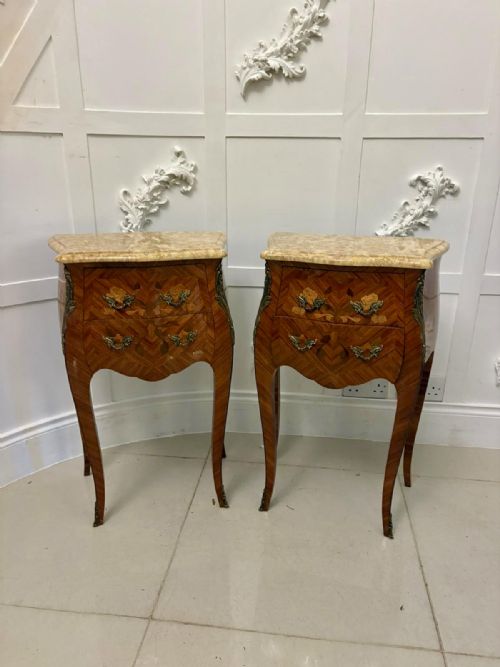
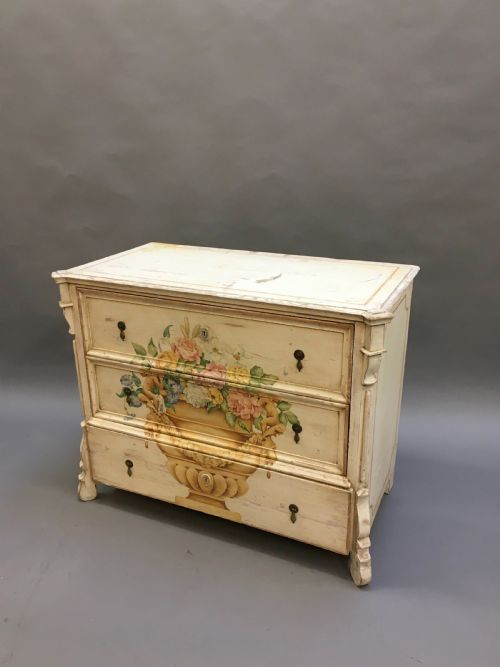
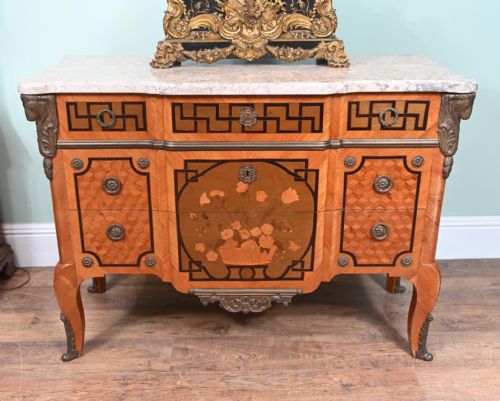
A french floral commode is a statement storage piece designed for the principal rooms of a grand home, combining practical drawer space with decorative wooden imagery. The typical specimen encountered here is a serpentine or bombé chest of drawers featuring floral marquetry panels, often topped with shaped marble.
Makers drew heavily on historical patterns, producing works that lean towards Louis XV and Louis XVI revivals alongside earlier eighteenth-century originals. Alongside traditional commodes, buyers encounter related forms such as bedside cabinets, sideboards, and demi-lune consoles sharing the same aesthetic vocabulary.
How they were made
Cabinetmakers constructed carcass frames from solid timbers such as walnut, oak, and pine, which provided structural stability for the decorative elements applied externally. Woods like kingwood, rosewood, and various fruitwoods were sliced into thin veneers to compose elaborate floral and pictorial marquetry scenes across the drawer fronts and sides.
The best pieces integrate heavy cast or chased ormolu and gilt bronze mounts that frame the marquetry panels and protect vulnerable corners. Finished surfaces are frequently capped with heavy slabs of Carrara or similar marble, cut to follow the undulating contours of the commode top.
French Floral Commode Retail Price Guide 2026
Typical asking prices for french floral commode among the pieces listed under this phrase on Sellingantiques today, from the lower quarter to the upper quarter. They describe what is for sale here now, not the wider market.
Listings feature items built across the eighteenth, nineteenth, and twentieth centuries, employing walnut, kingwood, rosewood, and marble.
What varies in quality
The distinction between ordinary and exceptional pieces lies primarily in the precision of the marquetry and the choice of timbers. Master workshops selected contrasting grain patterns and natural wood tones to give floral stems and petals a convincing three-dimensional depth, whereas lesser examples rely on simple geometric repeats or flat staining.
Hardware weight and execution also signal grade; solid, finely chased ormolu mounts fixed securely to the carcass elevate a commode far above those fitted with thin, pressed brass decorative elements. The fluidity of the serpentine or bombé carcass shape indicates the joiner's skill in handling complex curved forms.
Paul Sormani·Gonçalo Alvest
The French Floral Commode Glossary
- Marquetry
- The art of applying small pieces of veneer to a structure to form decorative patterns and pictorial scenes. This technique creates the floral displays characteristic of these commodes.
- Ormolu
- Gilded bronze mounts applied to furniture for decorative trim and edge protection. It requires careful casting and chasing by hand to achieve crisp detail.
- Bombe
- A swelling, outward-curving furniture shape associated with eighteenth-century revival styles. It demands high joinery skill to execute correctly in wood and veneer.
- Demi-lune
- A half-moon shape used for console tables and small cabinets designed to sit flat against a wall. This profile saves floor space while maintaining a decorative surface.
French Floral Commode: Frequently Asked Questions
Where should I place a commode?
These pieces suit reception rooms, large hallways, or spacious bedrooms where their decorative marquetry and marble tops can be appreciated.
They function well as serving surfaces or focal points beneath a large mirror or painting.
How do I care for the marble?
Clean the stone top regularly with a soft cloth and warm water, avoiding acidic household cleaners that can etch polished surfaces.
Use coasters under glasses and protect the stone from sharp impacts.
What is the difference between revival periods?
Nineteenth-century revival pieces often employ richer mounts and complex veneers to mimic eighteenth-century masterworks with high precision.
Later twentieth-century interpretations tend to simplify the internal construction while retaining the characteristic floral imagery.
Are these pieces suitable for daily storage?
The deep drawers provide practical space for linens, clothing, or household items depending on where the cabinet is placed.
Drawers should be loaded evenly and opened gently to preserve the historical runners and joints.