



French Floral Clock
These French floral clock pieces bring together painted porcelain, marquetry wood, and gilt bronze from the nineteenth century for any mantel or wall.
French Floral Clock
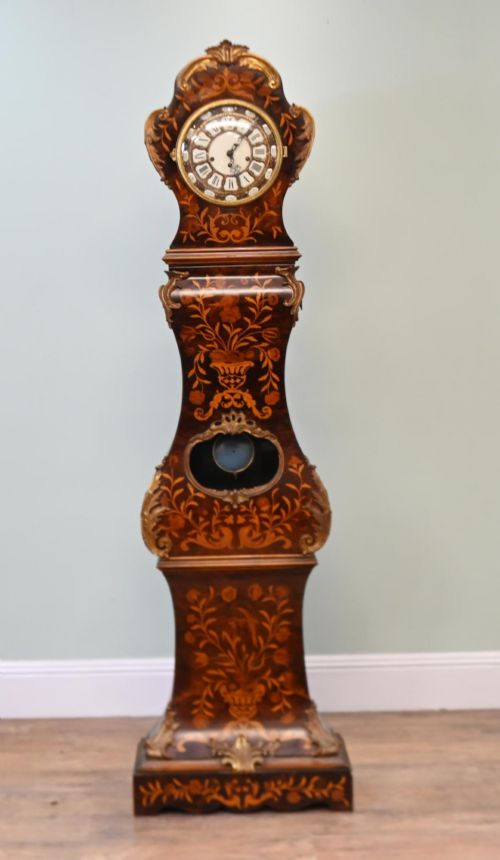
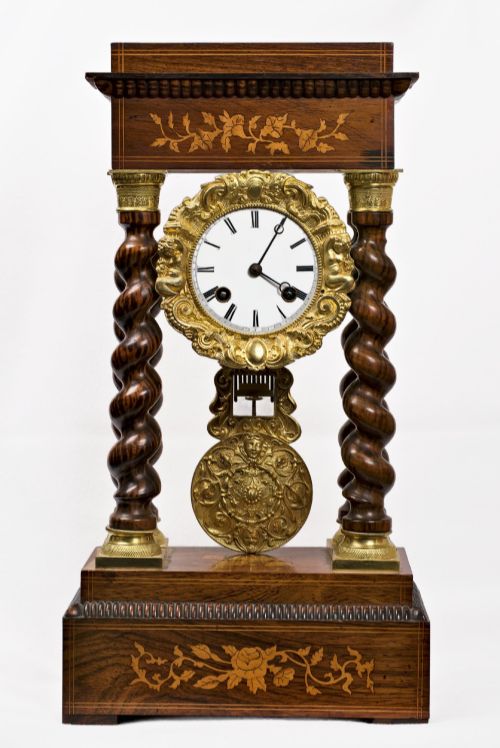
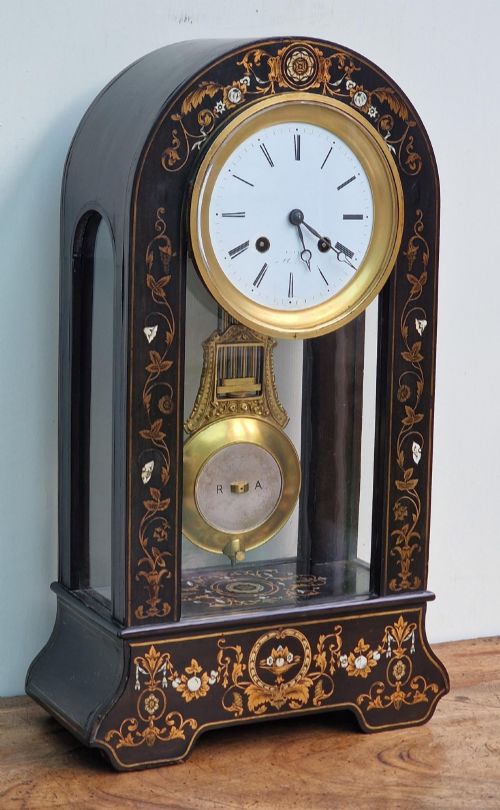
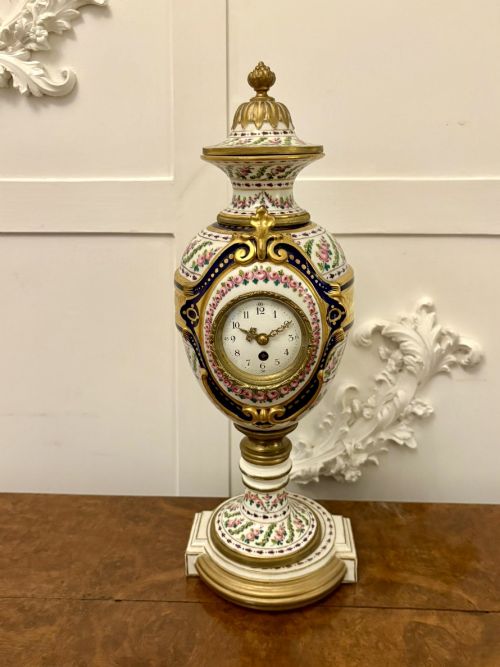
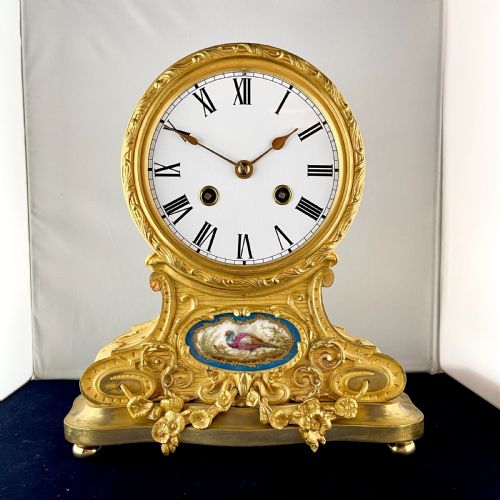
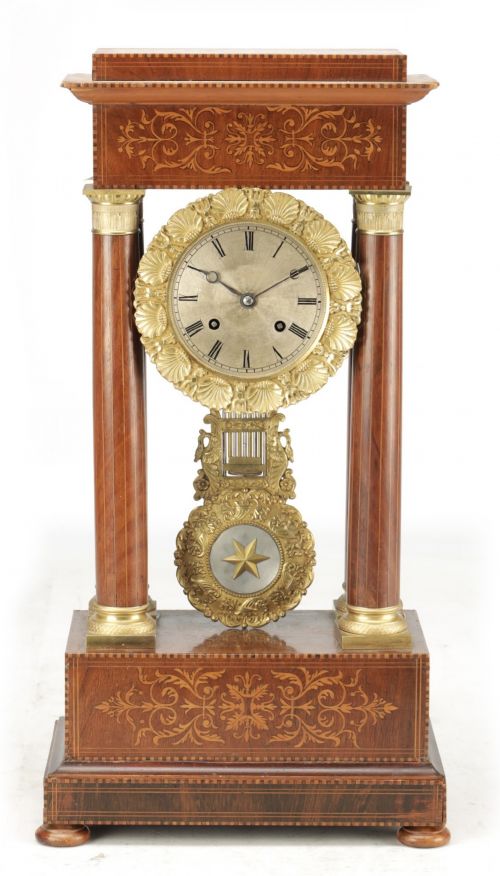
A french floral clock is a timepiece embodying continental styles from the nineteenth century, most often taking the form of a mantel clock, a clock garniture, or a wall clock. Buyers searching this phrase meet everything from rosewood portico clocks to porcelain urn-shaped designs and porcelain clock sets.
The objects span periods including the Victorian era, the nineteenth century, and the nineteen-thirties, with materials ranging from brass and glass to boxwood and ormolu. Mantle clocks and carriage clocks dominate the selection, frequently decorated with hand-painted porcelain or enamel flower designs.
Materials and construction
Watchmakers and cabinetmakers utilised timber such as rosewood and boxwood, shaping them into portico frames and marquetry inlaid mantel bodies. Metalworkers cast mounts in gilt bronze and ormolu, applying fire gilding to brass frames.
Porters and ceramicists fired porcelain urns and dial plates, hand-painting floral motifs in polychrome enamels before mounting movements behind glass bezels.
French Floral Clock Retail Price Guide 2026
Typical asking prices for french floral clock among the pieces listed under this phrase on Sellingantiques today, from the lower quarter to the upper quarter. They describe what is for sale here now, not the wider market.
Some carriage clocks double as botanical gardens, hiding miniature enamelled rose garlands inside their brass travel cases.
Variations in quality
The distinction between tiers rests upon the execution of the hand-painted porcelain and the crispness of the gilt bronze or ormolu casting. Finer pieces display deeply chased rococo revival scrolls and delicately detailed floral enamelling rather than flat, stencilled decoration.
Cabinetwork similarly separates ordinary examples from superior ones, where rosewood marquetry and fine wood veneers remain crisp and fully intact across shaped clock bodies and portico columns.
Henry Marc·Leroy and Fils·Savory and Fils A Paris·Marti·Malecot of Paris·Perivale of England·Meissen
The French Floral Clock Glossary
- Ormolu
- A gilded bronze technique used extensively for decorative mounts on nineteenth-century clock cases. It provides a bright golden finish through the application of a mercury-gold amalgam.
- Garniture
- A set of matching decorative objects, typically comprising a central clock flanked by two matching vases, urns, or candelabra. These sets were designed to sit together on a mantelpiece.
- Portico clock
- A architectural clock style featuring four supporting columns beneath a triangular pediment or flat top, popular in rosewood during the nineteenth century. The pendulum often swings visibly within the central opening.
- Marquetry
- The art of applying pieces of veneer to a structure to form decorative patterns, such as floral motifs on rosewood clock cases. Craftsmen cut thin slices of various woods to create contrasting surface pictures.
- Carriage clock
- A small, spring-driven portable timepiece with a carrying handle and glass panels, developed for travel by officers. Many examples feature enamel flower designs on the dial or surround.
French Floral Clock: Frequently Asked Questions
Where should I place a mantel clock?
These clocks suit prominent mantelpieces, sideboards, or console tables where their porcelain panels and gilt mounts remain visible. Ensure the surface is level to keep the pendulum swinging accurately.
Keep them away from direct sunlight and damp walls to protect the rosewood veneer, enamel dials, and delicate gilt bronze surfaces over time.
How do I wind an eight day clock?
Insert the winding key into the designated arbors on the dial face and turn gently until you feel firm resistance. Do not overwind the mainspring, as this can cause damage to the internal brass gears.
Most traditional movements require winding once a week to maintain accurate timekeeping throughout the household.
What is a clock garniture set?
A clock garniture is a matched grouping consisting of a central clock accompanied by side pieces such as porcelain urns or candlesticks. They were designed as a unified decorative display for large nineteenth-century mantels.
The pieces share identical materials, whether hand-painted porcelain, gilt metal, or rosewood, tying the decor of a room together.
How do I identify a Victorian French clock?
Look for stylistic cues such as Rococo Revival scrolls, gilt bronze mounts, and hand-painted porcelain panels depicting floral scenes. Maker signatures on the movement backplate or dial often confirm the French origin.
Materials like rosewood, ormolu, and champleve enamel frequently point to nineteenth-century production dates across these decorative timepieces.