





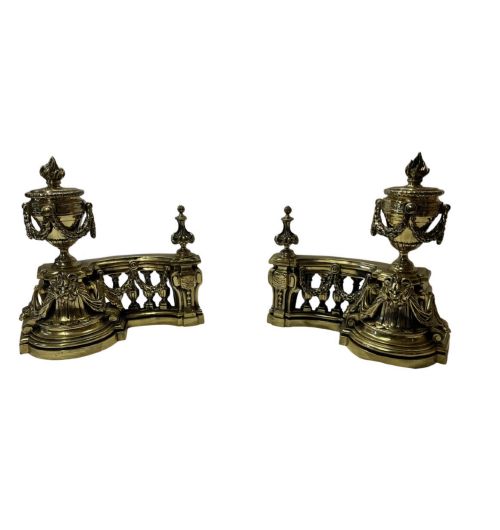


French Fireplace Dogs
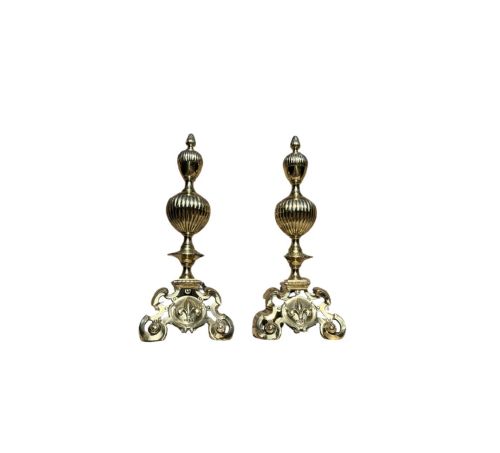
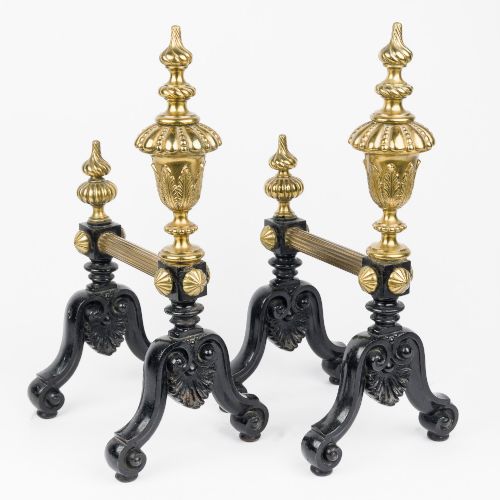
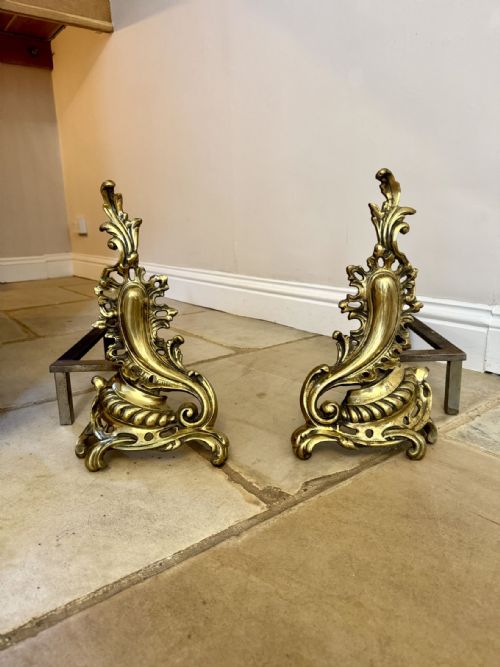
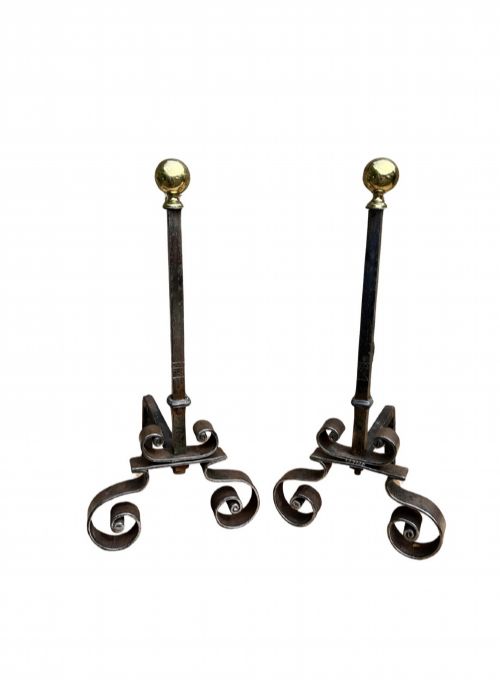
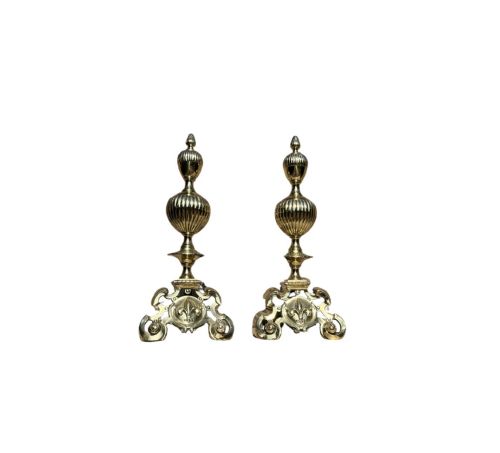
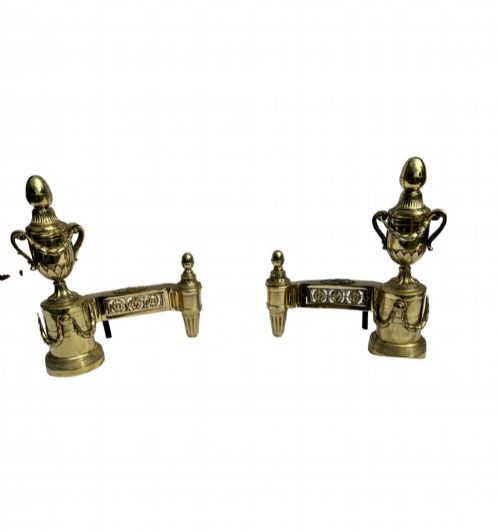
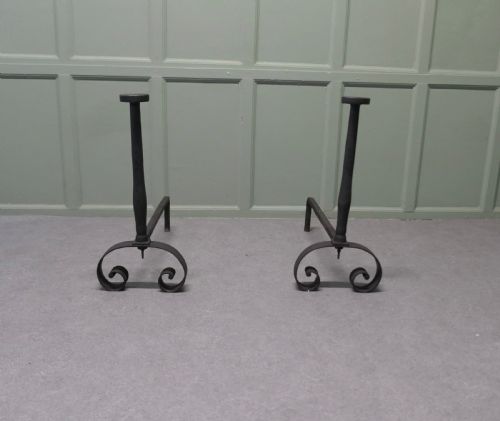
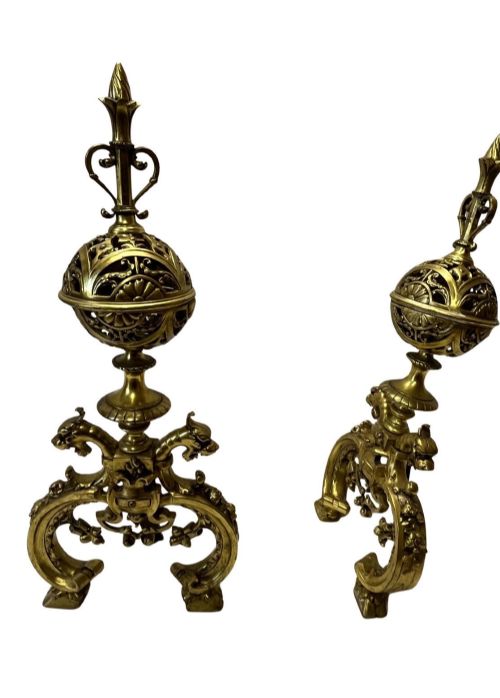
French fireplace dogs are sturdy metal supports placed in hearths to hold logs, bringing both function and ornamental French styling to a room.
French Fireplace Dogs
French fireplace dogs are hearth furniture designed to elevate firewood for better air circulation and cleaner burning. When searching for French fireplace dogs, you encounter matched pairs forged or cast in durable metals.
The pieces available span the nineteenth century, including specific dates from eighteen hundred to nineteen twenty and periods such as Victorian and Georgian. Styles lean heavily towards French Rococo, Neoclassical, Baroque, and Empire designs.
Forms include traditional andirons and chenets, sometimes accompanied by matching fenders or grates. Most examples display robust iron or brass construction paired with decorative bronze or ormolu mounts.
Materials and construction
Foundry workers utilised casting and wrought techniques to shape iron and brass into structural frames. Cast iron and wrought iron provide the heavy weight necessary to bear large logs safely within an active hearth.
Decorative elements often involve ormolu and gilt bronze, applying thin layers of gold to bronze bases for a polished finish. Parcel gilt details and patinated bronze surfaces highlight the sculptural figures and scrollwork characteristic of French styles.
French Fireplace Dogs Retail Price Guide 2026
Typical asking prices for french fireplace dogs among the pieces listed under this phrase on Sellingantiques today, from the lower quarter to the upper quarter. They describe what is for sale here now, not the wider market.
Listings feature heavy iron and brass construction, often enhanced with gilt bronze and ormolu mounts in rococo and neoclassical styles.
Evaluating the craftsmanship
Quality rests upon the weight of the metal and the crispness of the cast ornamentation. Heavy iron bodies combined with finely chased ormolu mounts demonstrate superior foundry work compared to lighter, simpler productions.
The articulation of figural elements, such as cherubs or rococo scrollwork, dictates the artistic merit of a pair. Clean casting seams and securely fastened components indicate careful manufacture and enduring structural integrity.
The French Fireplace Dogs Glossary
- Andirons
- Supports for logs in a fireplace, typically consisting of a horizontal bar on legs with an upright decorative front. They are synonymous with fire dogs and chenets.
- Chenet
- The French term for an andiron or fire dog, frequently used to describe ornamental hearth furniture featuring brass or bronze mounts. These pieces sit at the front of the hearth.
- Ormolu
- Gilt bronze created by applying a finely ground high-carat gold-mercury amalgam to a bronze object. This technique imparts a rich golden sheen to nineteenth-century fireplace fixtures.
- Rococo
- An ornate design style characterised by asymmetrical scrolls, shell motifs, and natural curves. It appears frequently in French fireplace accessories from the nineteenth century.
- Fender
- A low metal guard placed in front of a fireplace to contain sparks and ash. Some listings combine fenders with matching fire dogs.
French Fireplace Dogs: Frequently Asked Questions
What are french fireplace dogs used for?
French fireplace dogs hold logs above the hearth floor to improve airflow beneath the fire. This elevation helps wood burn more efficiently and allows ash to fall clear of the flames.
Beyond utility, these metal supports serve a decorative purpose in the room. Their ornate bronze and brass fronts provide a permanent focal point for the chimney breast even when no fire burns.
How do you clean brass and bronze chenets?
Dust accumulates on hearth accessories over time, requiring gentle cleaning with a soft dry cloth. Avoid harsh chemical polishes that strip away historical patina and surface gilding.
For stubborn soot, use warm water and mild soap on a damp cloth, drying the metal immediately. Patinated bronze and ormolu require particular care to preserve their original finish.
Can these fire dogs hold burning logs?
Iron and cast iron components handle intense heat and heavy logs without failing. These structural parts bear the weight and thermal shock of daily fires.
Decorative ormolu or gilt bronze sections remain at the front to stay cooler and protect delicate surface details. Pairs featuring heavy iron frames suit active fireplaces, while lighter ornamental pairs serve decorative functions.
How do you identify nineteenth-century styles?
Nineteenth-century pieces often emulate earlier reigns like Louis XIV, Louis XV, or Louis XVI. Look for characteristic motifs such as symmetrical classical lines in neoclassical pieces or asymmetric scrolls in rococo designs.
Material combinations also offer clues, as nineteenth-century foundries frequently paired cast iron bodies with ormolu mounts. Dates stamped on pieces or documented historical construction methods confirm the period.