
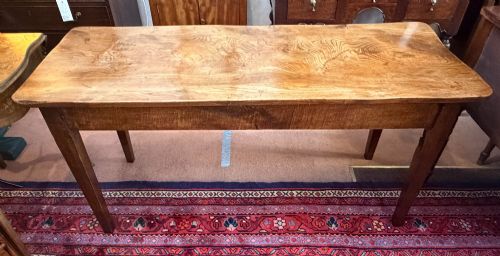
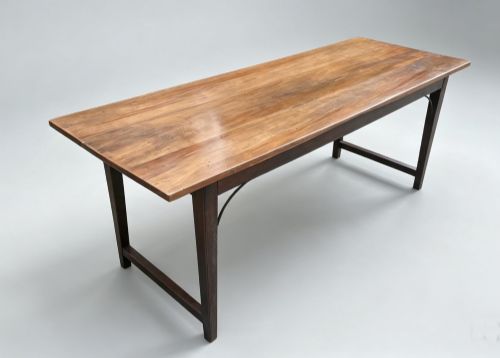
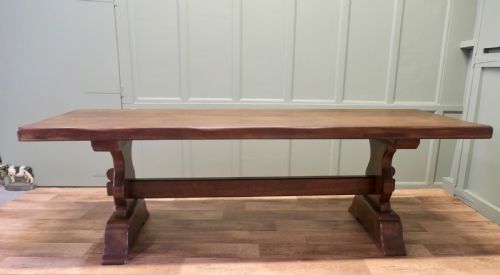
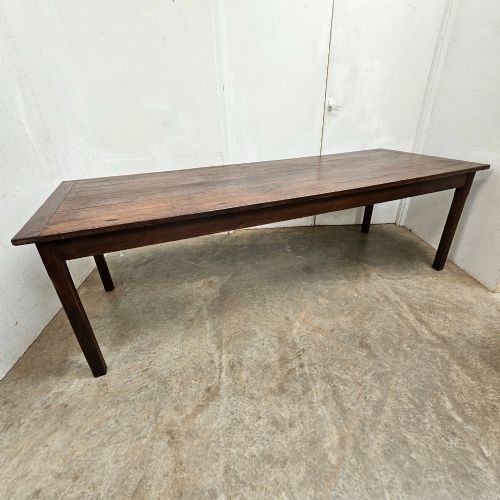


French Farm Dining Table
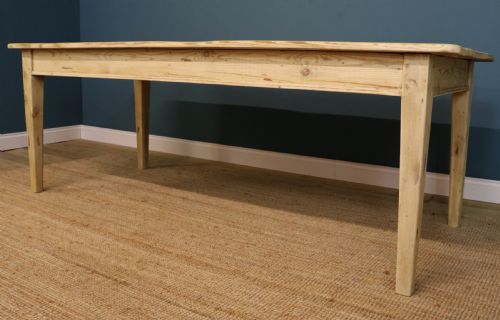
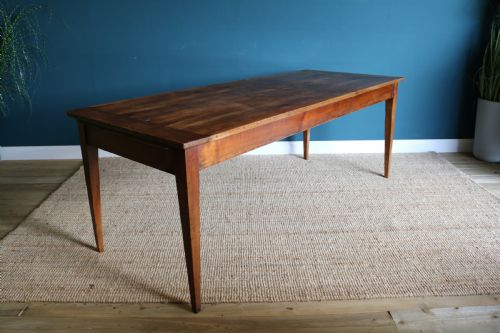
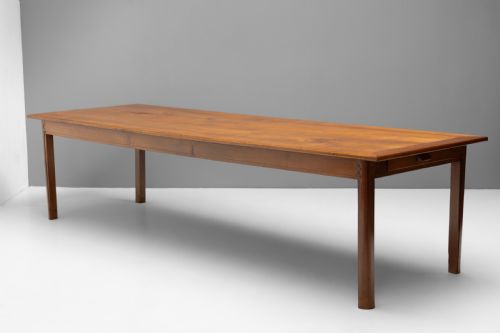
A french farm dining table anchors a kitchen with sturdy provincial character, offering generous proportions built for daily gatherings.
French Farm Dining Table
A french farm dining table serves as the hearty centrepiece of a provincial interior, combining robust construction with practical utility. These pieces originate largely from the nineteenth century, drawing on rural French traditions of communal dining and food preparation.
The selection ranges from traditional refectory formats to extendable and trestle constructions. Oak, fruitwood, and cherry predominate among the timbers, alongside pine and elm examples sourced from various regions.
Buyers encounter long boards designed to seat large numbers comfortably, often equipped with draw leaves, bread slides, or single drawers. These utilitarian additions underline the practical domestic history embedded in each piece.
How They Were Made
Carpenters constructed these tables using solid regional timbers like oak, cherrywood, fruitwood, and elm, selecting durable woods capable of withstanding heavy daily use. Planks were joined to form thick tabletops, sometimes supported by substantial trestle bases or sturdy legs.
Mechanisms for expansion, such as double draw leaves or bread slides, relied on precise wooden framing built beneath the surface. Surfaces show the marks of hand planing and long service, finished simply to protect the timber.
What Varies in Quality
The distinction between ordinary and superior examples lies in the selection of timber and the integrity of the original construction. Tables fashioned from dense oak or finely figured cherry with thick plank tops command greater appreciation than softer pine variants.
Proportion and structural balance also dictate standing, particularly in longer refectory formats where leg placement and apron depth affect stability. Untouched patination and original mechanical elements like functioning draw leaves elevate the standing of a piece.
The French Farm Dining Table Glossary
- Refectory table
- A long, narrow dining table traditionally used in communal dining halls and large farmhouses. These pieces provide substantial length and fixed rectangular proportions.
- Trestle table
- A table consisting of two or more supports connected by a horizontal beam holding a tabletop. This design allows for uninterrupted legroom along the length.
- Bread slide
- A pull-out board traditionally used for slicing bread or expanding workspace temporarily. It slides directly beneath the main surface.
- Parquetry
- A geometric mosaic of wood pieces used for decorative effect on tabletops. This technique showcases skilled carpentry through patterned wood arrangements.
- Draw leaf table
- An extendable table featuring two leaves hidden beneath the main top that pull out to lengthen the surface. It offers flexible sizing for larger gatherings.
French Farm Dining Table: Frequently Asked Questions
What woods were used for these tables?
Makers utilised local timber depending on regional availability across France. Oak, cherrywood, fruitwood, elm, and pine appear regularly throughout the inventory.
Hardwoods like oak and cherry provided exceptional durability for heavy kitchen work, while softer pine and fruitwood appeared in various provincial workshops.
How many people do these tables seat?
Proportions vary significantly, with many examples measuring eight feet or longer to accommodate large households. Refectory and harvest formats easily seat ten to twelve guests comfortably.
Shorter variants suit more compact spaces while retaining the generous overhangs typical of provincial dining furniture.
How do I care for an antique wood table?
Protect the surface from excessive moisture and heat by using mats and coasters. Regular dusting with a soft cloth preserves the timber without stripping the historic finish.
A light application of beeswax helps nourish older fruitwood and oak surfaces over time.