
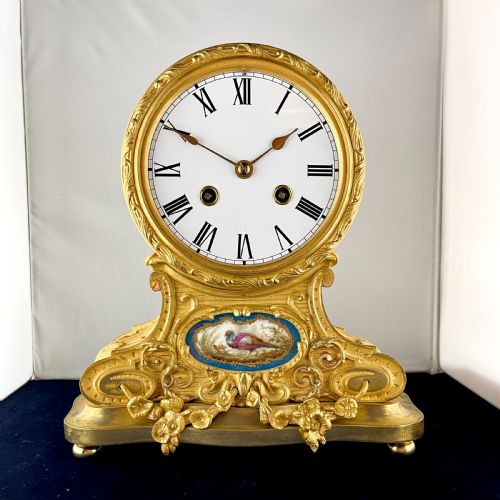


French Enamel Plaque
These french enamel plaque pieces are vibrant painted works mounted in gilt bronze, ormolu, and wood, prized for their rich colour and historic subjects.
French Enamel Plaque
A french enamel plaque is a decorative panel depicting classical portraits, figurative scenes, or heraldic subjects. When you search for a french enamel plaque, you encounter pieces that range from early painted works to later decorative arts.
The selections on this page appear across various forms, including wall art, mantel clocks, table mirrors, comports and tazzas, and pharmacy trade signs. Most examples date from the nineteenth century, alongside earlier eighteenth-century pieces and twentieth-century items.
Makers and workshops from Limoges dominate the tradition, producing painted copper panels that often fit into gilt bronze or ormolu mounts. Other notable variations include ceramic tiles and porcelain plaques reflecting revival styles.
Materials and construction
Makers formed these pieces using copper, porcelain, or ceramic as a base for vitreous enamel, applying powdered glass and firing the panels multiple times in a kiln. This process created smooth, durable surfaces capable of holding intricate painted details and deep colouration.
Many plaques are integrated into elaborate metalwork frames, utilising gilt bronze, ormolu, and gilded wood to create substantial decorative objects. These mounts frequently feature cast ornamentation typical of rococo and baroque revival styles.
Distinctions in quality
The quality of the surrounding metalwork contributes significantly to the overall piece, where chased gilt bronze and heavy ormolu mounts indicate higher workshop standards. Better examples demonstrate a secure, harmonious fit between the enamelled panel and its frame.
Samson·F. Bienvue·Sornin Marguerite
The French Enamel Plaque Glossary
- Limoges enamel
- Enamel painted on a copper base, originating from the French city known for this specific craft. These works often depict figurative scenes or portraits.
- Ormolu
- Gilded bronze used for decorative mounts and frames around plaques and clocks. This material provides a bright golden finish.
- Tazza
- A shallow bowl or cup mounted on a stem and foot, frequently incorporating inset enamel plaques. These served as decorative centrepieces.
- Drumhead clock
- A clock featuring a circular dial case resembling a drum, often supported by ornate bronze or marble bases. Enamel plaques sometimes decorate the surrounding housing.
French Enamel Plaque: Frequently Asked Questions
What periods do these plaques come from?
The available pieces primarily span the nineteenth century, with specific examples originating in the eighteenth century and the early twentieth century. Styles range from baroque and rococo revivals to art nouveau.
Most items reflect traditional French decorative arts, maintaining connections to historic workshops in Limoges and Parisian metalworking traditions.
How were these plaques originally displayed?
Many panels function as standalone wall art or trade signs designed for interior display. Others serve as component parts integrated into mantel clocks, table mirrors, and tazzas.
Metal mounts in gilt bronze and ormolu allowed these delicate painted surfaces to stand securely on furniture or hang directly on walls.
How do I care for an enamel plaque?
Enamel surfaces require gentle cleaning with a soft, dry cloth to remove dust without scratching the glass composition. Avoid harsh chemical cleaners or abrasive materials that could damage the painted layer.
Bronze and ormolu mounts benefit from minimal handling to preserve their original patina, keeping the objects away from direct moisture and extreme temperature changes.
What is the difference between porcelain and copper plaques?
Copper-based enamel plaques involve fusing powdered glass directly to a metal sheet through kiln firing, yielding rich painted compositions. Porcelain plaques utilise a ceramic clay body as the foundation for painted decoration.
Both methods produce durable decorative surfaces, but copper panels are particularly characteristic of the traditional Limoges enamel technique.