

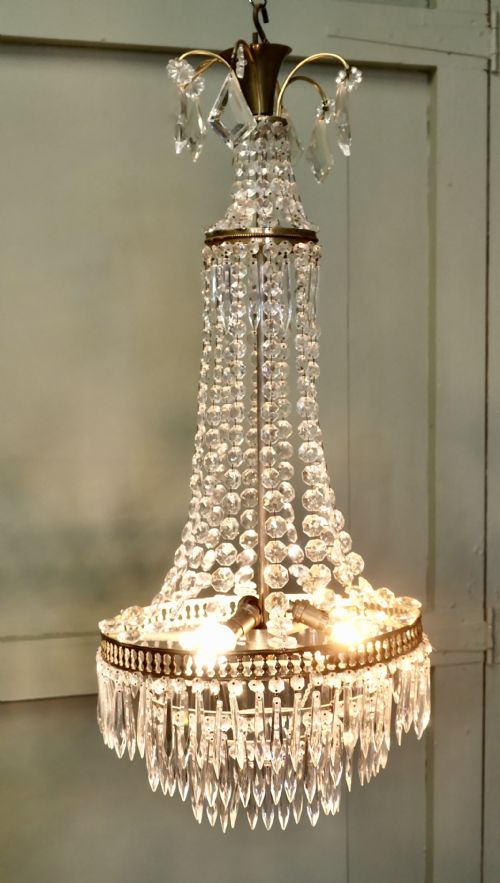
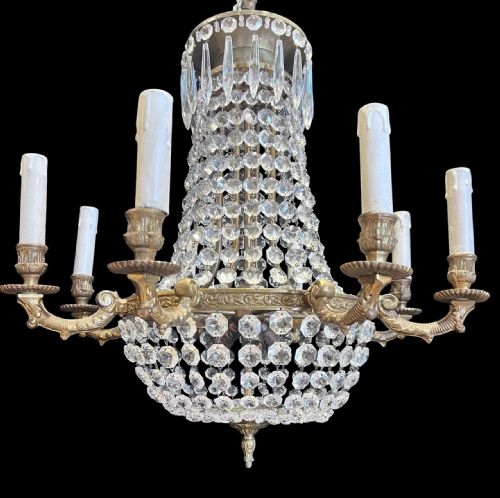
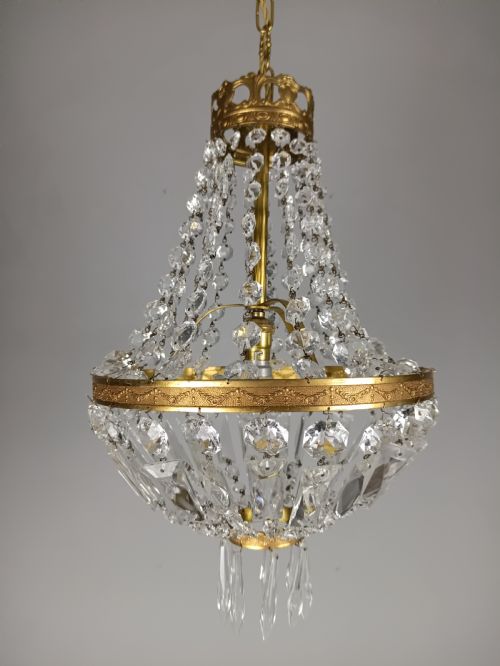

French Empire Tent Chandelier
A french empire tent chandelier brings soaring neoclassical elegance to a room with tiers of glittering crystals.
French Empire Tent Chandelier
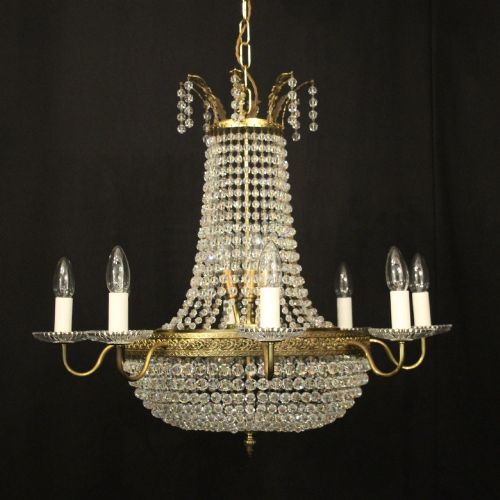
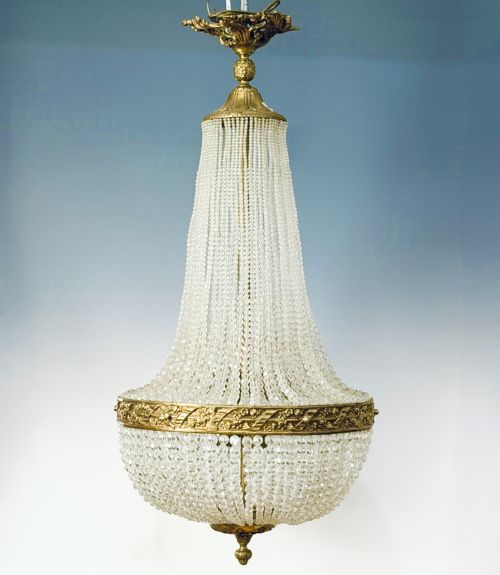
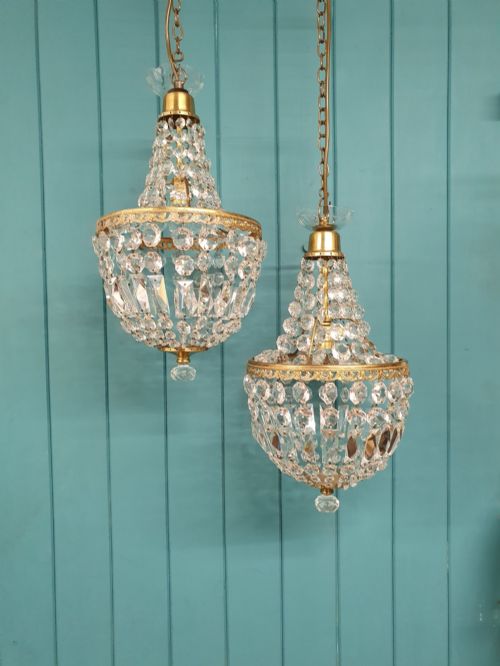
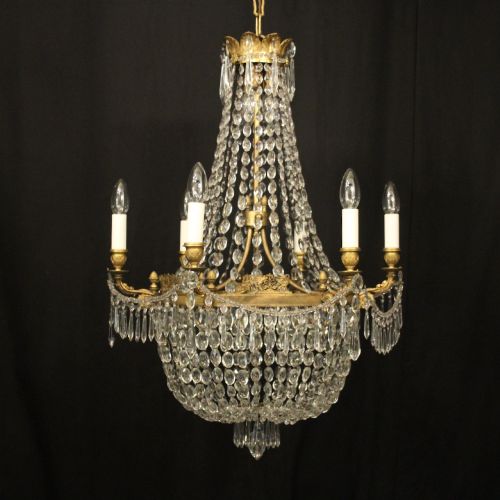
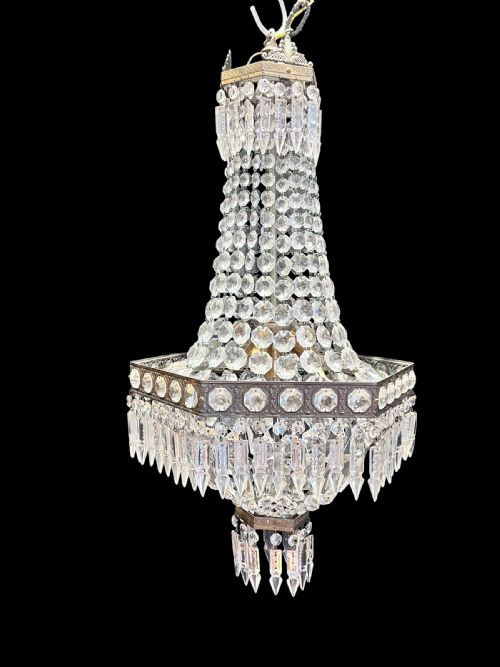
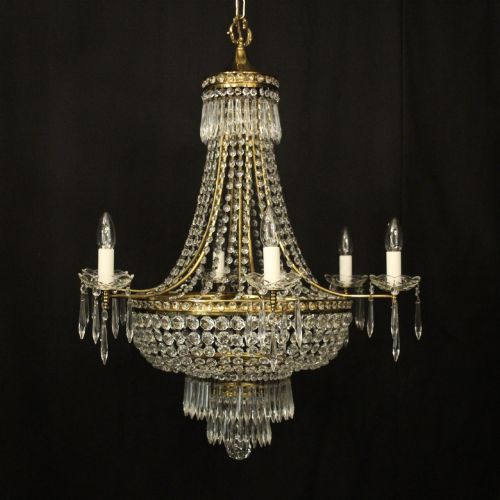
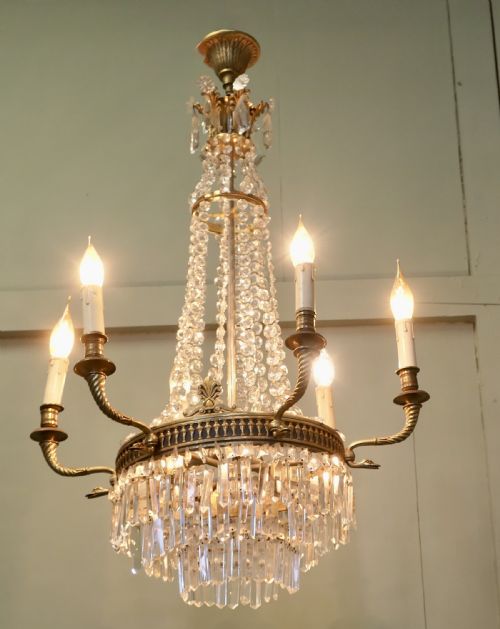
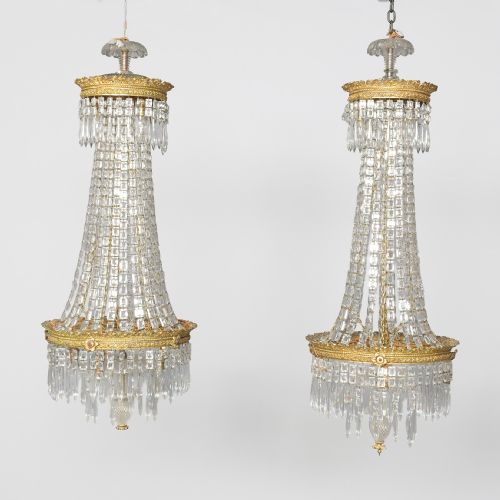
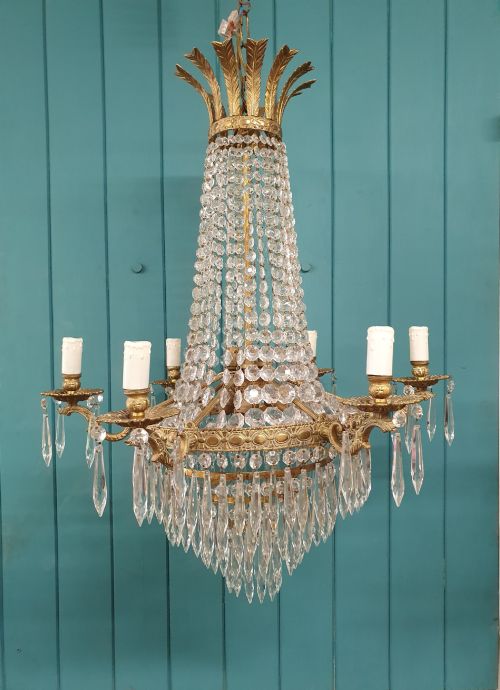
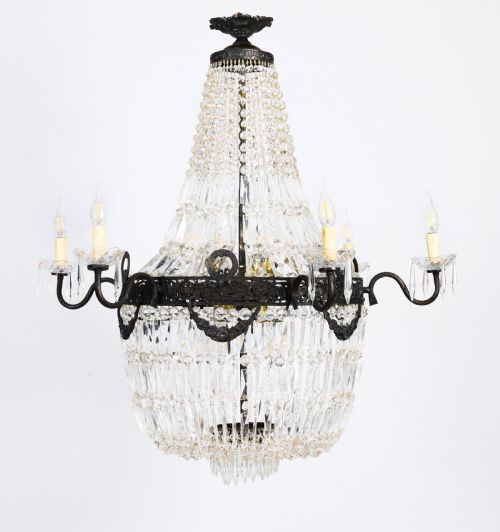
A french empire tent chandelier is a striking ceiling light defined by an upper canopy or tent of hanging crystal strands that cascade down to a central ring of lights. The pieces found here span from the eighteenth century through the nineteenth century and into the early twentieth century, including Edwardian examples and revivals from the 1920s and 1930s.
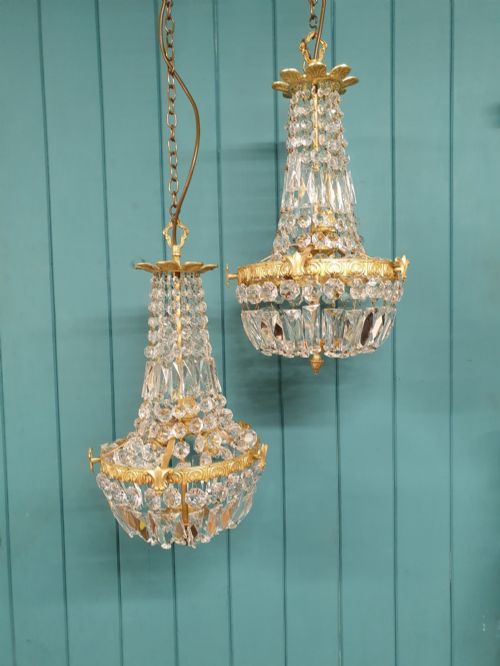
Most examples on this page follow the French Empire or Louis Revival styles, featuring substantial brass or bronze frames ornamented with cascades of cut glass. Forms range from intimate single-light fixtures to large ballroom chandeliers with sixteen or more branches and complex waterfall drops.
How They Were Made
Frames are constructed from cast brass, gilded bronze, or patinated bronze, providing a sturdy structural skeleton for the glass elements. Gilded finishes reflect the candlelight and gaslight for which these fixtures were originally designed.
Prisms, beads, and drops are fashioned from cut glass and crystal, wired onto the metal framework in precise arrays to form tents, baskets, and waterfalls. Leaf decorations and detailed castings often adorn the upper crowns and arms.
French Empire Tent Chandelier Retail Price Guide 2026
Typical asking prices for french empire tent chandelier among the pieces listed under this phrase on Sellingantiques today, from the lower quarter to the upper quarter. They describe what is for sale here now, not the wider market.
Object types seen include ceiling lights and chandeliers, configured as tents, baskets, and waterfalls.
What Varies in Quality
The density and precision of the crystal cutting dictate much of the visual brilliance, with finely faceted drops throwing sharper light refractions than simpler pressed glass. Heavier cast bronze or heavily gilded brass frames provide greater structural substance than lighter brass constructions.
The complexity of the assembly influences the character of the piece, from simple single-light baskets to multi-tiered chandeliers with integrated tents, bags, and waterfalls. Original patination and the completeness of the hanging crystal strands shape the visual integrity of the surviving fixture.
Wedgwood
The French Empire Tent Chandelier Glossary
- Tent
- The upper conical section of strung crystals that sweeps upward from the central band to a crown at the ceiling. This configuration defines the classic silhouette of the style.
- Waterfall
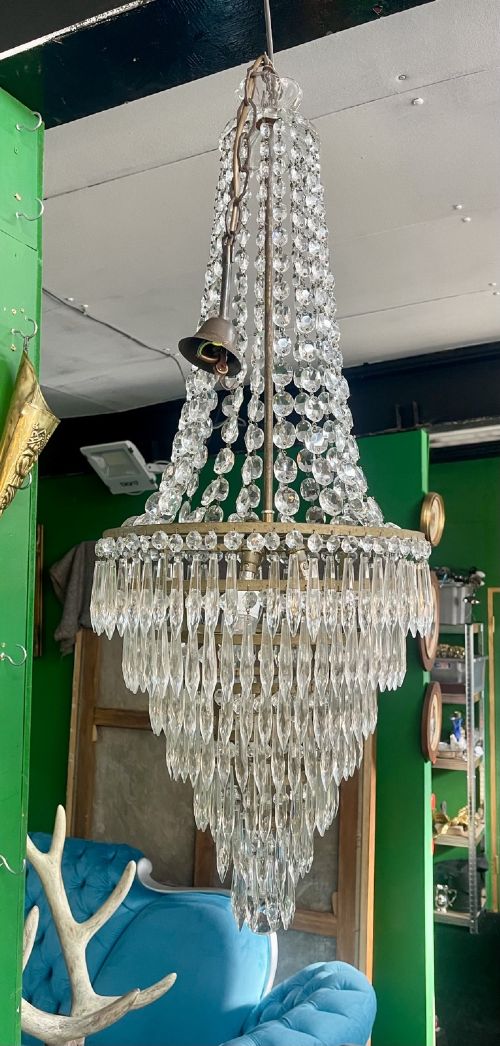
- A cascading tier of hanging crystals that flows downward from the central ring, resembling falling water. It adds considerable depth and movement to larger fixtures.
- Basket
- A rounded or bowl-shaped lower section composed of interwoven crystal strands suspended beneath the lights. It gathers the downward-flowing prisms into a cohesive termination.
- Prism
- A cut glass pendant designed to refract light into spectral colours. These elements hang from the frame and arms in various shapes and sizes.
French Empire Tent Chandelier: Frequently Asked Questions
How do I clean a tent chandelier?
Cleaning requires patience and a gentle touch, using a mild cleaning solution applied directly to a cloth rather than spraying the fixture. This prevents moisture from seeping into the vintage wiring or tarnishing delicate metal components.
Individual crystal strands can be wiped in place or carefully removed for a more thorough wash. Keeping the crystals free of dust ensures the glass maintains its bright refractive quality.
Where should I hang a french empire tent chandelier?
These fixtures suit spaces with adequate ceiling height, such as dining rooms, grand hallways, or living rooms with traditional proportions. Their cascading design draws the eye upward, making them a natural focal point in a high-ceilinged room.
Ensure the clearance beneath the chandelier allows for comfortable movement underneath, particularly in rooms where people stand or walk frequently. Smaller single-light versions offer an option for more compact spaces.
How do I date a french empire chandelier?
Dating relies on examining the casting methods of the metal frame, the style of the glass cutting, and the wiring or suspension fixings. Eighteenth and nineteenth-century examples often display hand-finished bronze work and older forms of hand-cut crystal drops.
Twentieth-century revivals and Edwardian pieces frequently incorporate machine-cut crystals and later wiring methods while imitating earlier neoclassical designs. Comparing the construction details against documented periods helps narrow down the age.
Are these chandeliers heavy?
Many of these fixtures possess substantial weight due to the combination of cast bronze or brass frames and dense quantities of crystal glass. Larger ballroom chandeliers require secure ceiling joists and appropriate fixings to support the load safely.
Professional installation is recommended to ensure the ceiling can bear the weight of the metal and glass structure. Smaller single-light baskets place far less demand on suspension points.