
French Empire Ceiling Light
A french empire ceiling light brings classical proportion and glittering cut glass to a room, turning overhead illumination into a focal point.
French Empire Ceiling Light
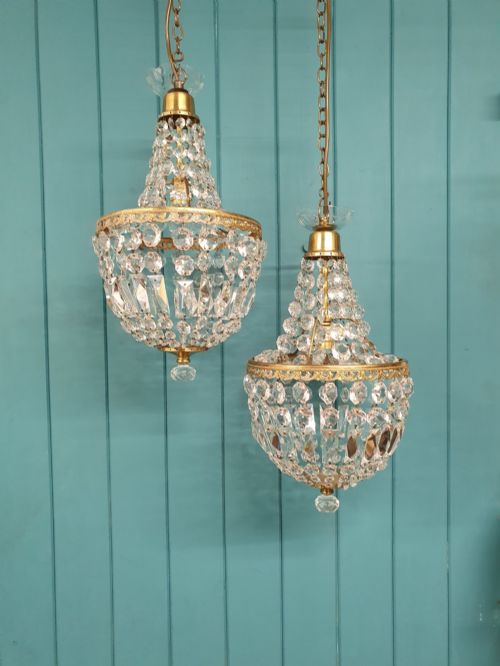
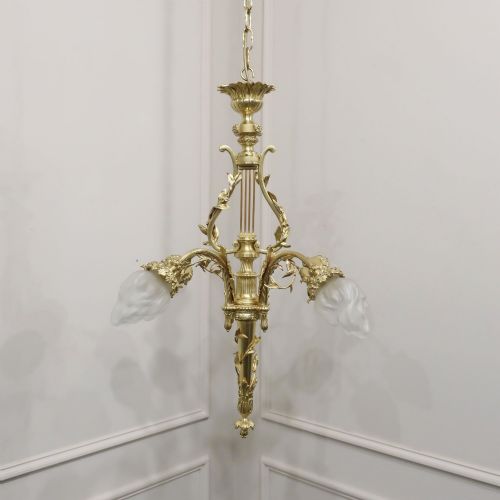
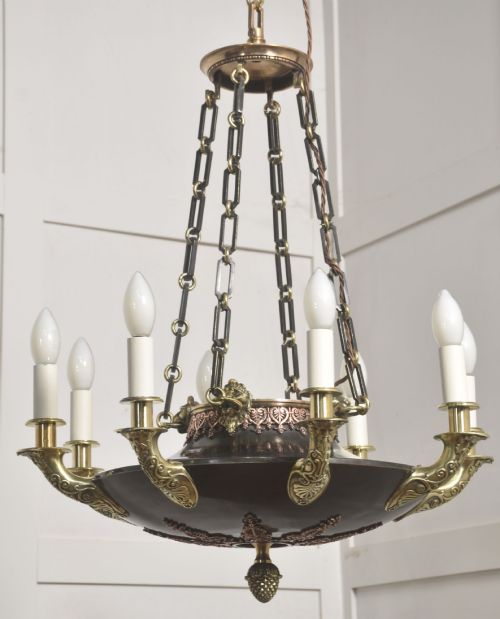
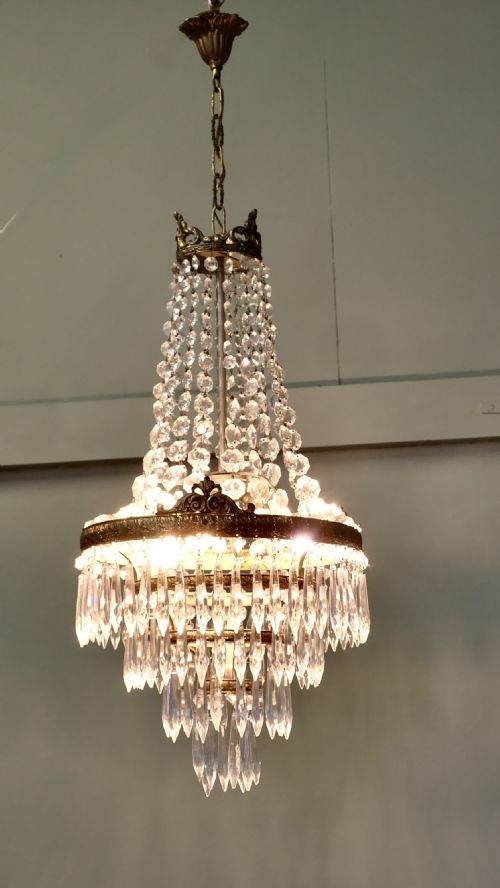
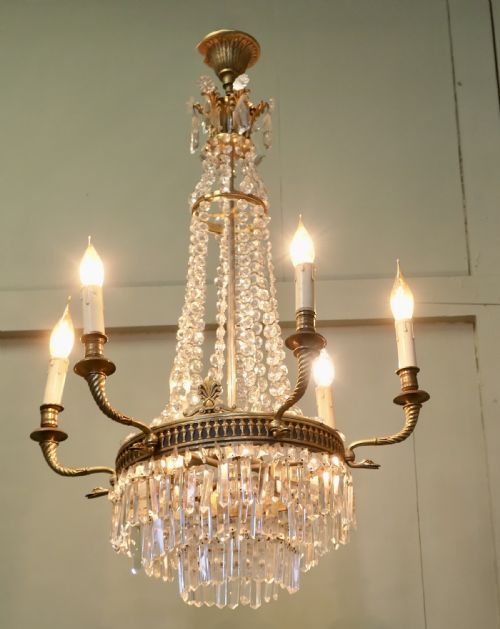
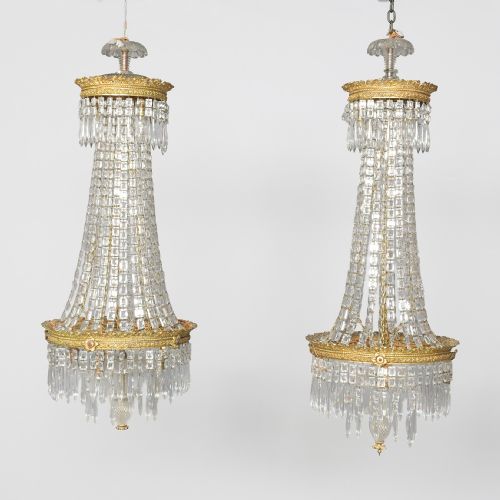
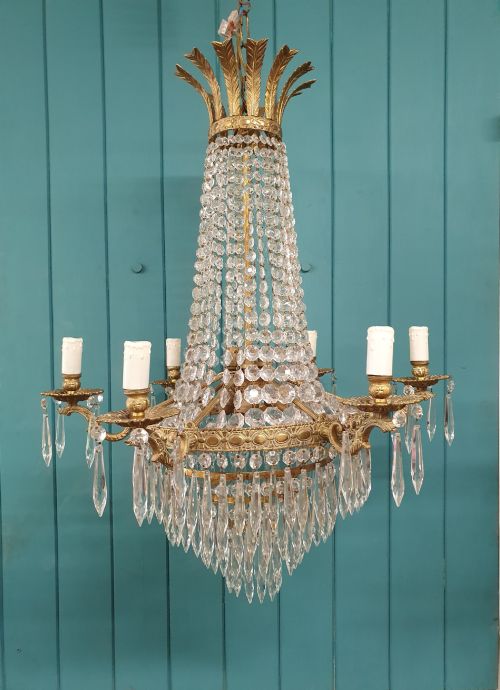
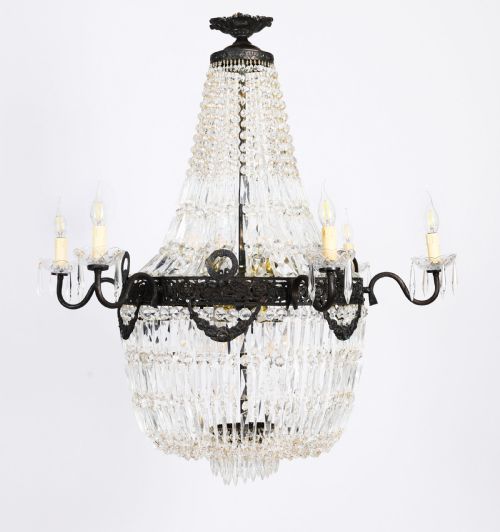
When buyers search for a french empire ceiling light, they encounter grand multi-light chandeliers and smaller basket or lantern forms designed for formal interiors. The selection spans the eighteenth, nineteenth, and early twentieth centuries, alongside revival pieces that imitate earlier neoclassical lines.
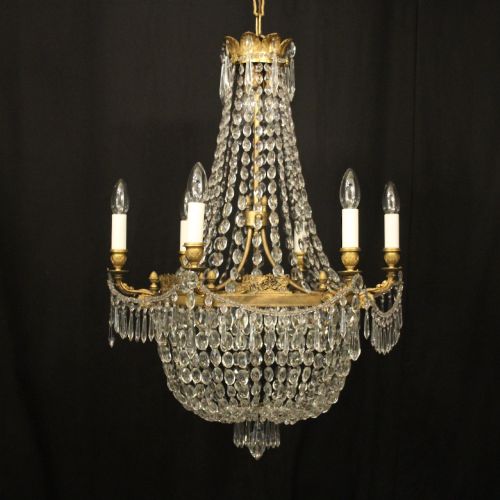
Most examples appearing here belong to the nineteenth and early twentieth centuries, including empire revival and art deco interpretations of classic motifs. These fixtures range from single-light basket pendants to large sixteen-light tent and waterfall structures with extensive branch formations.
How they were made
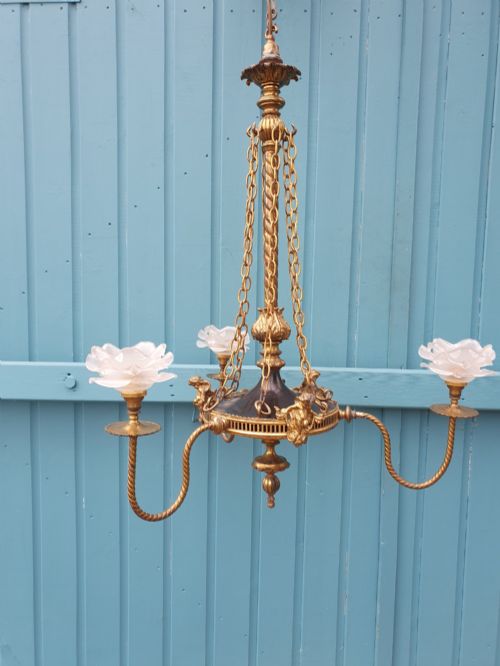
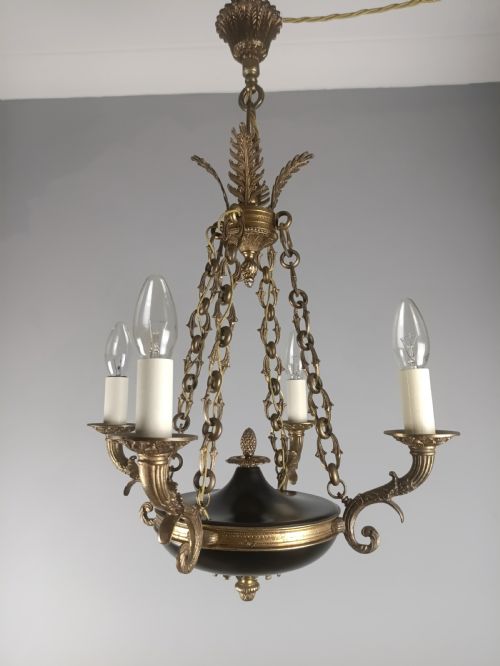
Maker workshops constructed these fixtures using cast bronze, gilt brass, and copper frames to support intricate arrangements of glass and crystal. Metal components often feature chased or gilded surfaces, paired with patinated or polished bronze finishes.
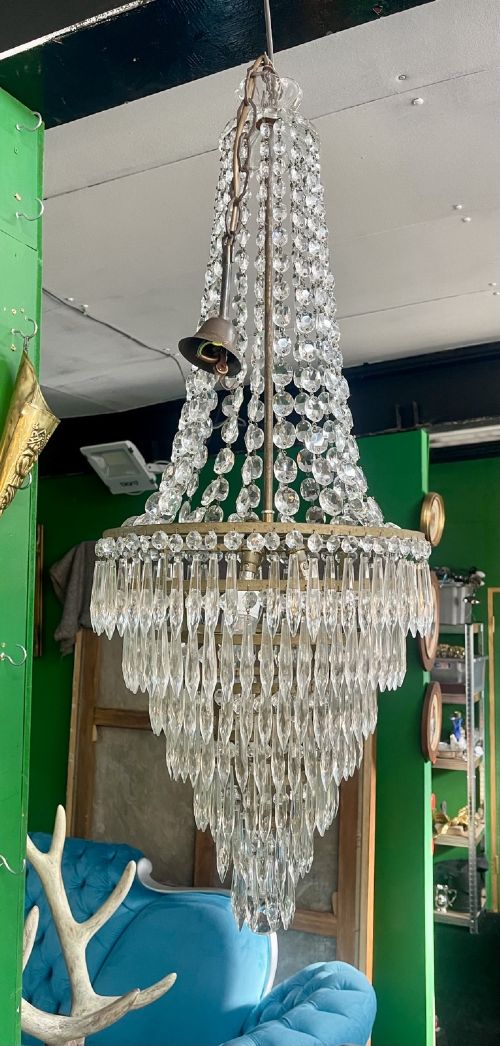
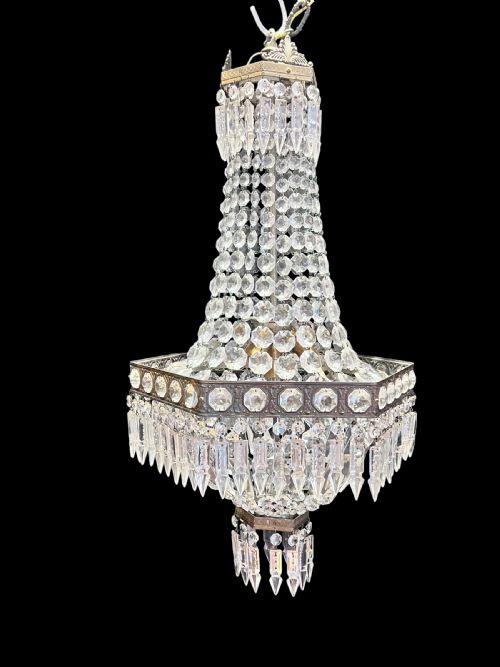
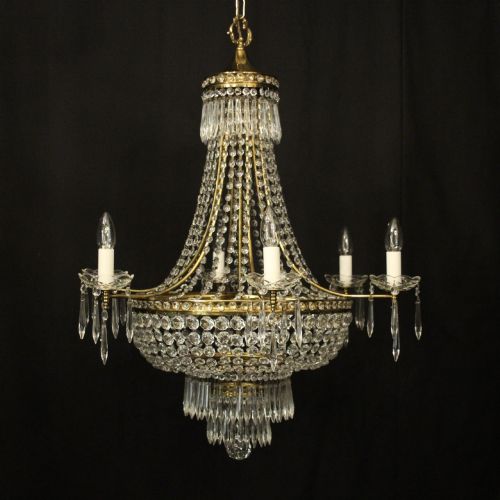
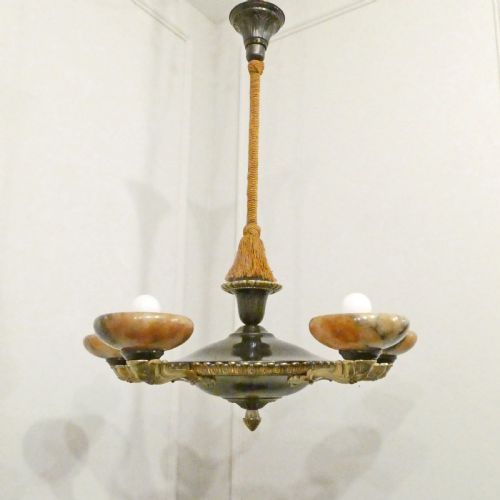
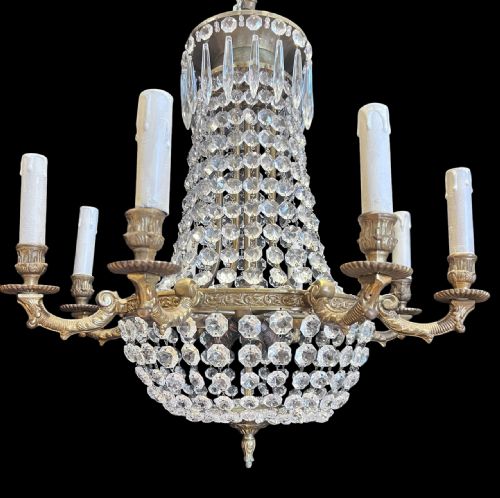
Prisms, beads, and cut glass plates form the characteristic tent and waterfall profiles, suspended in tiers above the arms. Alabaster and ceramic elements appear occasionally alongside metal and glass, while wired electrical fittings replace earlier candle holders in many surviving examples.
One particularly compact variant is historically catalogued by dealers as a prison bag chandelier, despite its elegant crystal facade.
What varies in quality
The sophistication of the cast metal ornamentation and the clarity of the cut crystal separate the finest fixtures from simpler productions. Heavier bronze castings and precise detailing on arms and leaf decorations indicate superior workshop standards.
Proportion and the integrity of the glass drop arrangements dictate the visual impact of the fixture when suspended. Complete tiers of matching prisms and substantial branch counts distinguish grand ballroom chandeliers from modest hall lights.
Wedgwood
The French Empire Ceiling Light Glossary
- Tent and waterfall
- A configuration where glass beads form a conical upper tent that cascades down into a wider waterfall of crystal drops.
- Gilt bronze
- Metal alloy coated with a layer of gold, providing a bright finish that resists tarnishing over decades of use.
- Basket chandelier
- A compact lighting fixture enclosed in a curved metal frame hung entirely with close-set crystal drops.
- Plafonnier
- A shallow ceiling light designed to sit close to the plaster surface rather than hanging on a chain.
- Prism
- A cut piece of glass designed to refract light across the room from the central candles or bulbs.
French Empire Ceiling Light: Frequently Asked Questions
How do I choose the right size chandelier?
Consider the floor area and ceiling height of the room before selecting a fixture. Large sixteen-light structures require substantial clearance, while compact basket lights suit smaller spaces.
Measure the drop length carefully to ensure the lowest crystals clear doorways and furniture. A well-proportioned light commands the room without dominating the ceiling space.
How do I clean an antique crystal chandelier?
Dust the metal frame and glass components gently with a soft brush or microfibre cloth. Regular maintenance prevents grime buildup on the intricate prism arrangements.
For thorough cleaning, apply a specialist glass cleaner to a cloth rather than spraying the fixture directly. This protects fragile metal finishes and wiring connections from moisture damage.
What defines the French Empire style?
The style draws inspiration from classical antiquity, featuring symmetrical lines and neoclassical motifs. Common elements include leaf decorations, urn shapes, and laurel wreaths executed in cast bronze or brass.
Lighting fixtures from this design vocabulary prioritise formal balance and architectural dignity. They bring a distinct sense of nineteenth-century grandeur to domestic interiors.