
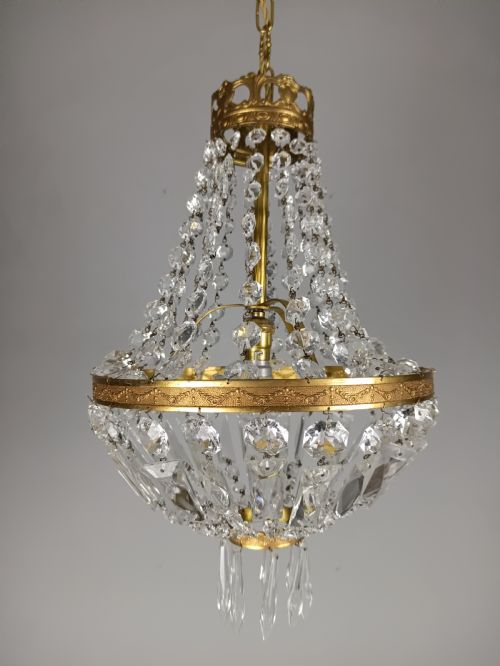


Cut Glass Waterfall Chandelier
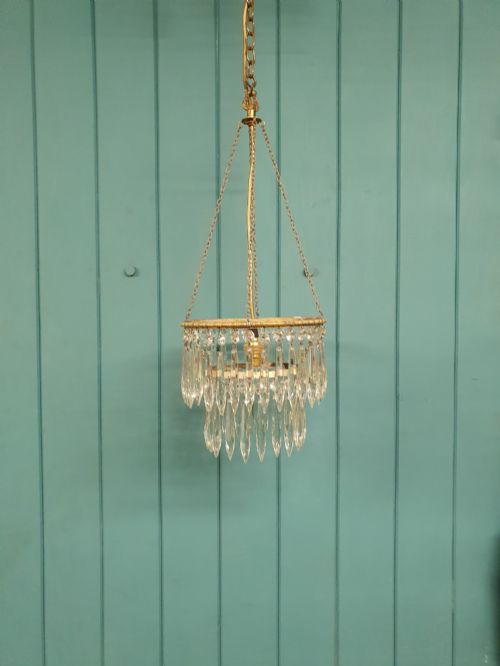
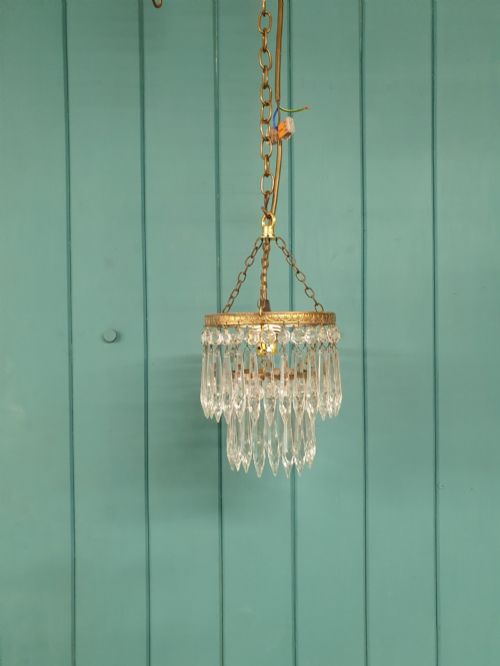
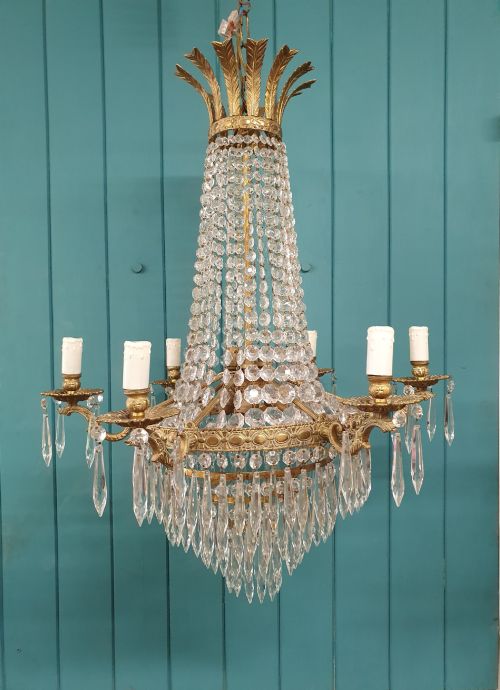
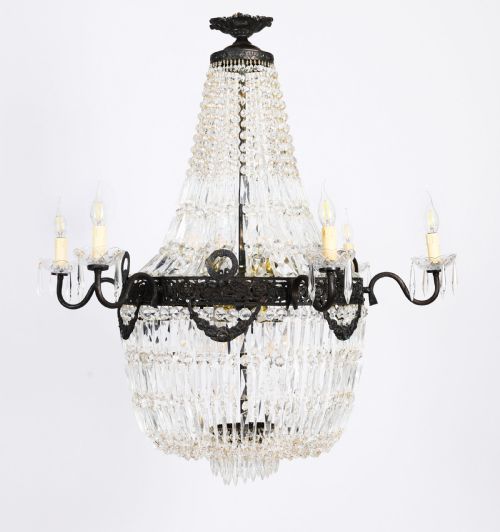
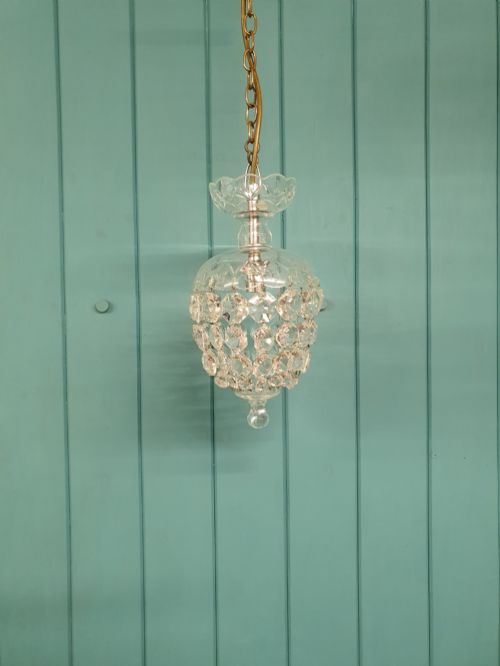
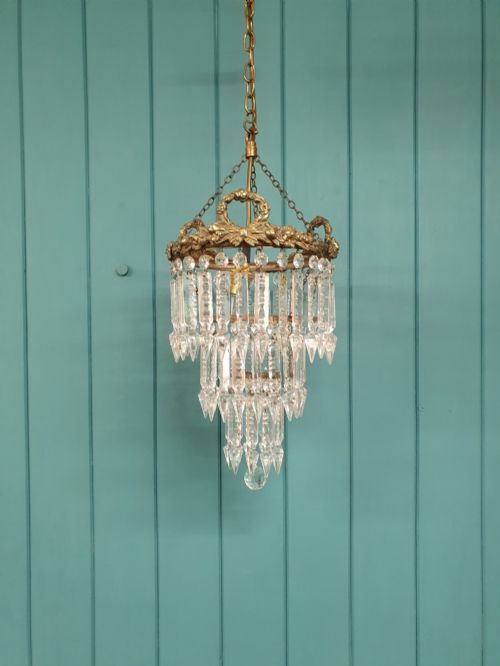
A cut glass waterfall chandelier hangs to catch the light, bringing layered tiers of crystal and glass drops into a room.
Cut Glass Waterfall Chandelier
When you search for a cut glass waterfall chandelier, you are looking at multi-tiered lighting fixtures designed to cascade light through dense arrangements of glass drops and prisms. These pieces span from the late nineteenth century through the Edwardian era and into the 1920s and 1930s, encompassing styles from French Empire and Regency to Louis Revival and Art Deco.
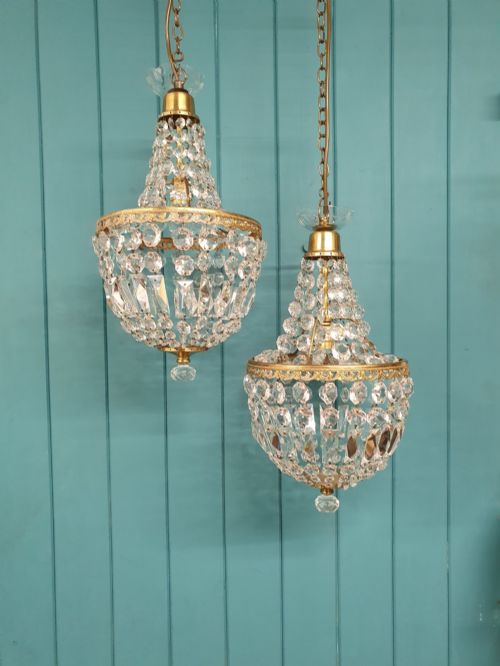
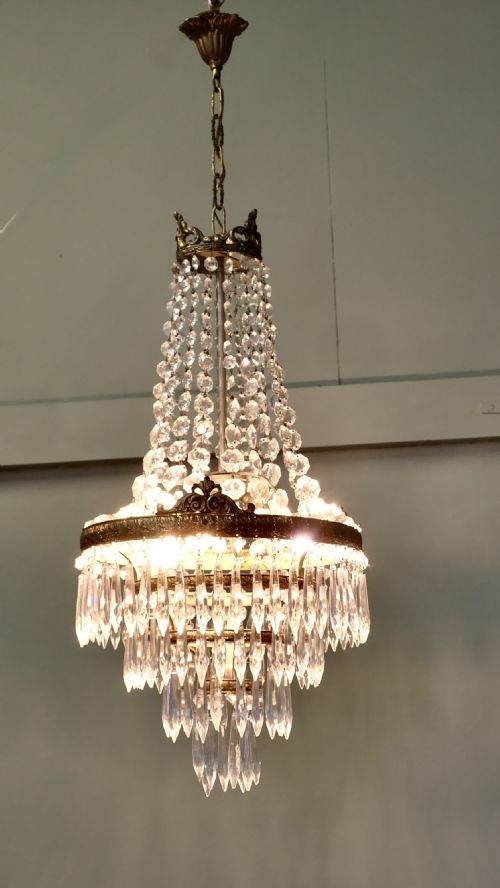
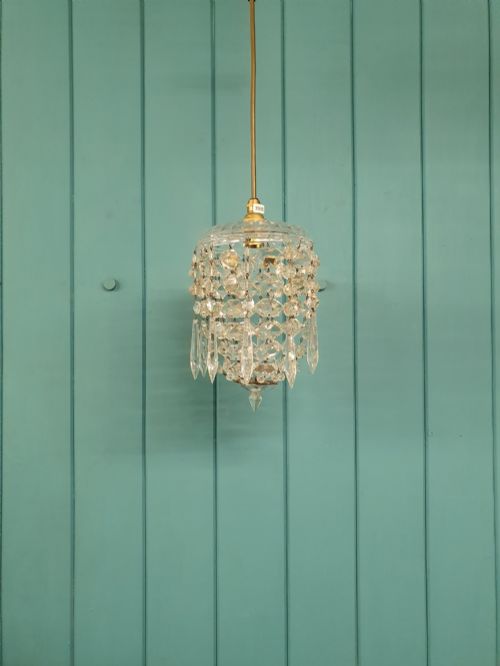
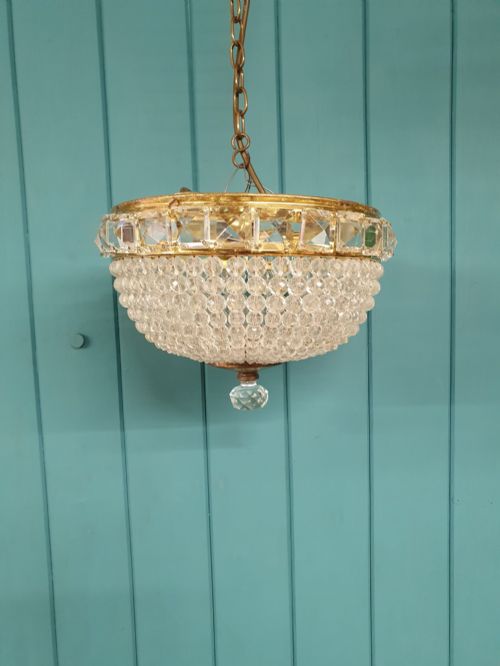
The most common formats you will meet on this page include bag and basket chandeliers, dome top designs, and tiered waterfall configurations. They appear in forms ranging from small six-inch spikes to large ballroom fixtures with numerous lights, originating from English and French workshops.
A buyer examining these fixtures will find that they function primarily as ceiling lighting and pendant lights, suspended by brass frames, patinated bronze, or metal mounts. Each style utilises specific arrangements of crystal drops, prisms, and lustres to distribute illumination across a space.
Materials and construction
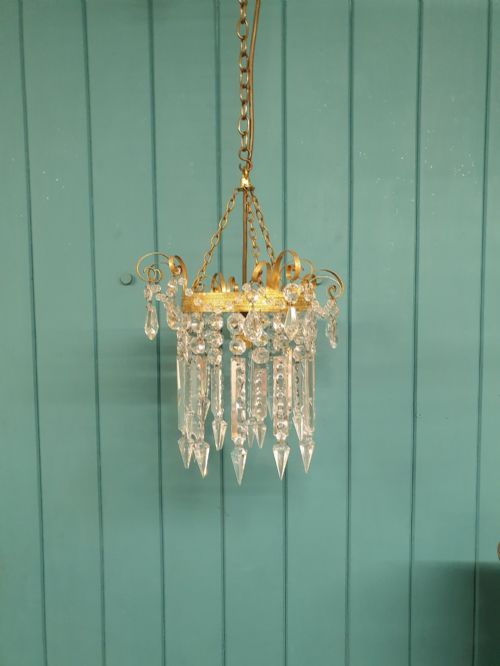
These chandeliers are constructed using metal frames of brass, patinated bronze, or general metalwork to support the weight of the glass components. Frames often feature decorative elements such as leaf motifs or gilt arms that anchor the hanging elements.
The suspended elements consist of cut glass, crystal, and crystal glass formed into drops, prisms, lustres, and spikes. These glass pieces are wired or pinned together in tents, bags, and cascading tiers to create the characteristic waterfall effect.
Listings feature pieces spanning from the 1880s through the Edwardian period, 1920, and 1930, constructed from brass, crystal, and patinated bronze.
Assessing quality and craftsmanship
Quality in these fixtures rests upon the clarity and cut of the crystal and glass components. Finer examples feature deep, sharp facet-cutting that refracts light effectively, paired with substantial brass or bronze mountings rather than lighter metal framing.
The complexity of the assembly distinguishes standard examples from superior pieces. Elaborate tent and bag configurations with dense tiers of drops and detailed metalwork require greater skill in construction than simpler single-tier designs.
The Cut Glass Waterfall Chandelier Glossary
- Tent and bag chandelier
- A lighting fixture featuring an upper conical section of glass strings resembling a tent, dropping down into a gathered basket or bag shape at the base. This dual structure creates the classic cascading silhouette.
- Lustre
- A cut glass or crystal pendant suspended from a chandelier to reflect and refract light. Lustres come in various shapes including drops, spears, and spear-heads.
- Prism
- A geometric piece of cut glass designed to refract light into spectral colours. Prisms are typically hung in rows along the arms or tiers of the fixture.
- Spike chandelier
- A vertical lighting form characterised by a central spire or spike surrounded by radiating arms and glass drops. They often appear in compact sizes suitable for lower ceilings.
- Louis Revival
- A decorative style drawing on seventeenth and eighteenth-century French royal aesthetics, utilised by makers in the early twentieth century to create ornate, multi-light fixtures.
Cut Glass Waterfall Chandelier: Frequently Asked Questions
How do I clean a waterfall chandelier?
Cleaning requires a gentle approach using a specialist glass cleaner applied with a soft cloth directly to the drops and prisms. It is best to clean the components in place to avoid damaging the delicate wire connections that hold the tiers together.
Heavily soiled fixtures may require individual removal of the glass elements, though this should be done methodically to ensure correct reassembly on the brass or metal frame.
What rooms suit a bag chandelier?
Bag chandeliers work well in spaces with adequate vertical clearance where the cascading tiers can be viewed from below. Their concentrated downward form makes them suitable for hallways, dining spaces, or bedrooms.
Smaller six-inch and eight-inch variants fit lower ceilings or intimate spaces, while larger eighteen-inch and ballroom fixtures demand higher architectural proportions.
How do I date an Edwardian chandelier?
Dating relies on examining the combination of metal mounts, wiring channels, and the specific cut of the crystal drops. Edwardian pieces often pair brass frames with early electrical wiring adaptations alongside traditional cut glass prisms.
Stylistic markers such as restrained Edwardian proportions or transitional Regency revival details help separate these pieces from later 1930s interpretations.
Are these chandeliers French or English?
Origin is often indicated by stylistic cues such as French Empire or Louis Revival forms versus traditional English tent and bag configurations. French pieces frequently incorporate patinated bronze or specific gilt arm treatments.
Documented pieces or distinct construction techniques provide further clues to whether a fixture emerged from an English workshop or a French atelier.