



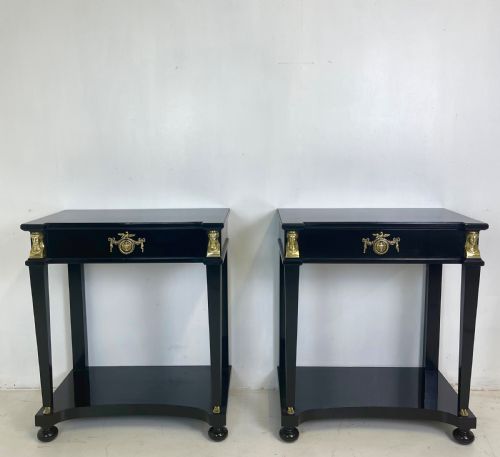


French Empire Bedside
These French empire bedside pieces bring classical symmetry and rich mahogany to a bedroom, offering a distinct architectural presence that anchors a room.
French Empire Bedside
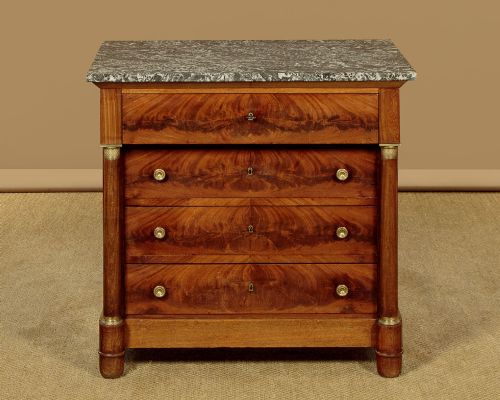
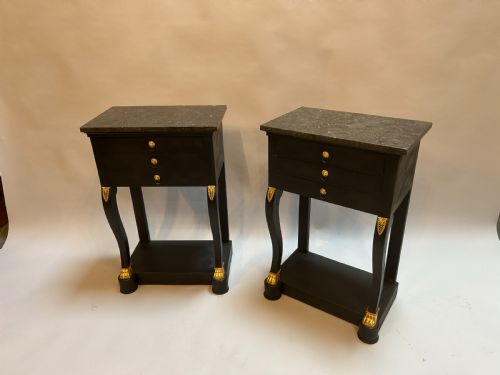
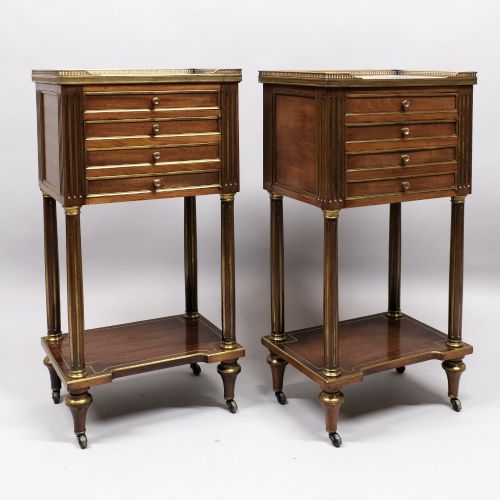
When you search for french empire bedside, you encounter a focused selection of small cabinets, cylindrical pedestals, and marble-topped nightstands rooted in nineteenth-century design. These pieces draw heavily on classical proportions, often appearing as mahogany cabinets with fitted marble tops or cylindrical cupboards designed for compact bedside utility.
The inventory on this page spans the original nineteenth-century production alongside later revival pieces from the Edwardian era and the early twentieth century. Alongside dedicated bedside cabinets, you find related forms like side tables, small chests, and occasional lamps that share the distinct neoclassical vocabulary of the style.
Originating in the grand tradition of French furniture making, these items prioritize functional storage within a formal aesthetic. The cylindrical pedestal cupboard and the marble-topped nightstand represent the most common forms you meet here, balancing dark timber bodies with contrasting metal mounts.
Materials and construction methods
Cabinet makers relied primarily on dense timbers like mahogany and burr elm, constructing carcases that received careful polishing to highlight the natural grain. Flame mahogany veneers often wrap around cylindrical bodies, requiring precise woodworking to maintain smooth curves on bedside cupboards and pedestals.
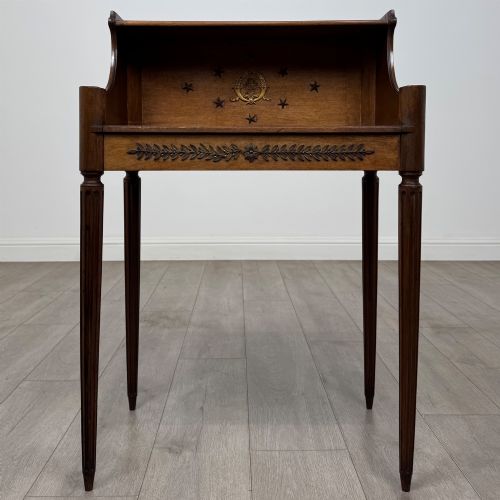
Metal ornamentation defines the decorative language, utilising cast bronze and ormolu mounts to accent corners, columns, and drawer pulls. These gilt metal elements are fastened to the timber frame, while inset marble slabs provide durable, polished surfaces for the tops of nightstands and side tables.
French Empire Bedside Retail Price Guide 2026
Typical asking prices for french empire bedside among the pieces listed under this phrase on Sellingantiques today, from the lower quarter to the upper quarter. They describe what is for sale here now, not the wider market.
Listings feature nineteenth-century pieces alongside early twentieth-century revival items, constructed from mahogany, marble, bronze, and ormolu.
Distinctions in quality
Quality rests heavily on the crispness of the cast ormolu mounts and the depth of the mahogany grain selected by the maker. Finer examples feature finely chiselled bronze details and thick, well-veined marble tops that fit flush within the timber framing.
Construction integrity separates standard production from superior pieces, particularly in the smooth operation of cylindrical doors and small drawers. The weight of the timber and the precision of the veneer work on curved surfaces indicate the level of craftsmanship invested in the cabinet.
The French Empire Bedside Glossary
- Ormolu
- Gilt bronze mounted onto furniture or lighting. This decorative technique involves applying a gold amalgam to bronze, creating a rich metallic contrast against dark timbers.
- Vide-poche
- A small pocket or table for emptying small items at the end of the day. These compact surfaces often accompany bedroom furniture for convenient placement of personal accessories.
- Commode
- A low chest of drawers or cabinet. In this context, it refers to larger bedside or side storage units featuring multiple drawers or enclosed shelving.
- Cylindrical pedestal
- A circular freestanding cabinet with a single door enclosing interior space. This form maximises floor space while offering concealed bedside storage.
French Empire Bedside: Frequently Asked Questions
How do I use a cylindrical bedside cupboard?
A cylindrical bedside cupboard provides enclosed storage for nighttime essentials while maintaining a small footprint beside a bed. The circular door opens to reveal shelves sized for books or personal items.
Its marble top offers a durable surface for a lamp or glass, protecting the timber underneath from daily wear.
What is a vide-poche table?
A vide-poche serves as a small utility table designed to hold pocket contents and small accessories. Historically placed near seating or beds, it keeps loose items organised.
The circular top and compact height make it a functional alternative to a standard bedside table.
How do I distinguish original nineteenth-century pieces from later revivals?
Original pieces from the nineteenth century typically display traditional joinery methods, heavier timbers, and hand-chiselled bronze ormolu mounts. Revival pieces from the early twentieth century often show standardised construction while closely copying the earlier neoclassical forms.
Examining the interior secondary woods and the wear patterns on the finish helps determine the exact period of manufacture.
How do I care for a marble top nightstand?
Marble surfaces require wiping with a soft, damp cloth to remove dust and spills without damaging the polished finish. Avoid using acidic cleaners that can etch the stone over time.
Treat the surrounding mahogany frame with traditional wax polish to nourish the timber grain and maintain its lustre.