

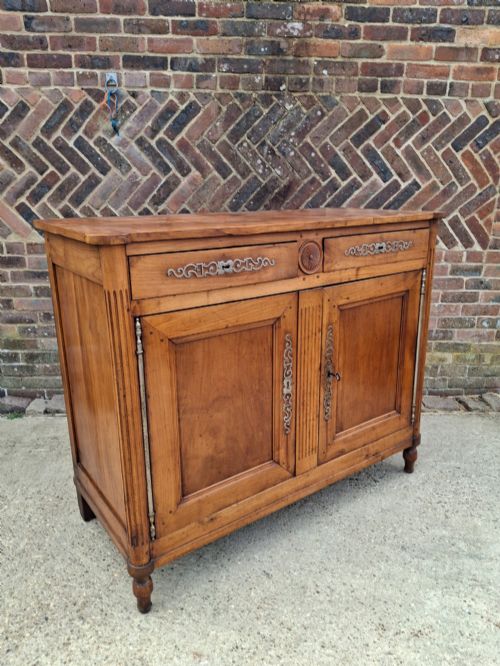
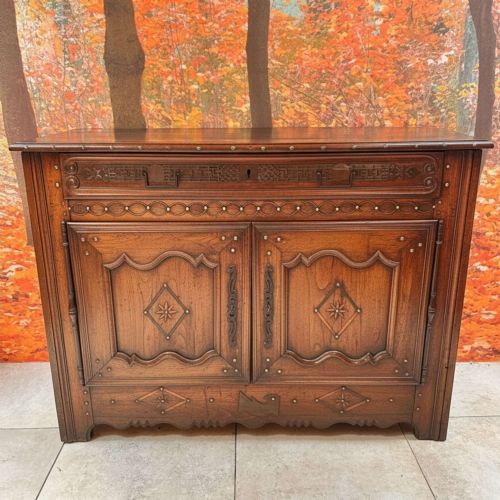
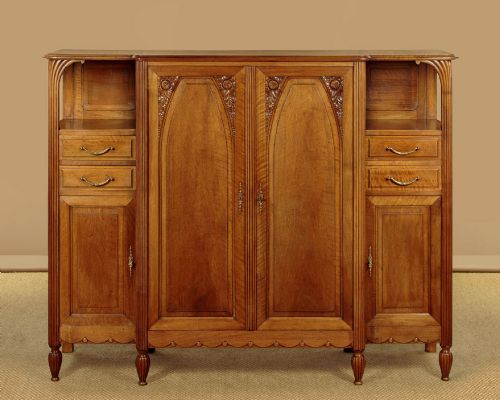
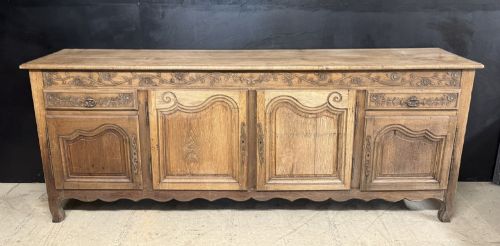


French Dining Sideboard
A French dining sideboard brings substantial storage and regional character to a room, ranging from robust provincial oak enfilades to sleek walnut Art Deco designs.
French Dining Sideboard
A French dining sideboard serves as a practical storage piece and a decorative focal point in a dining room, hallway or living space. When searching for a french dining sideboard, buyers encounter a diverse selection of forms including low buffets, enfilades, sacristy cabinets and credenzas.
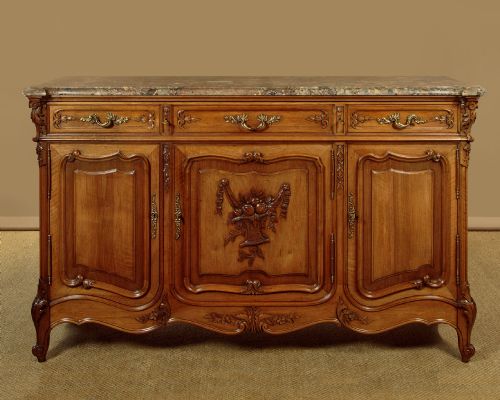
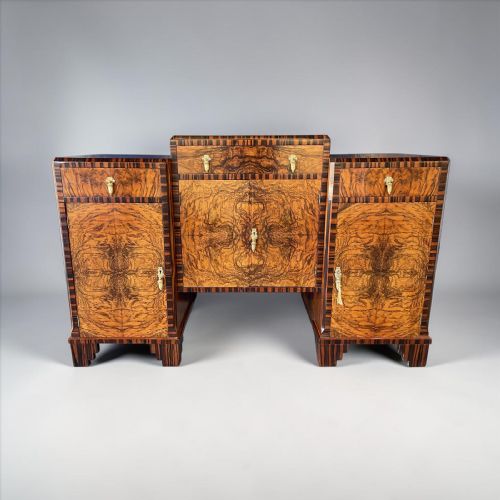
The pieces available span from the eighteenth century through to the Art Deco period of nineteen thirty. Oak, walnut and mahogany predominate, often paired with marble tops, brass fittings or glass doors.
Regional styles such as French Provincial and Louis XV sit alongside Victorian and Art Deco examples. These items function primarily for storing dining china, linen or glassware while anchoring the room's aesthetic.
How they were made
Cabinetmakers utilised solid timbers including oak, walnut, burr walnut and mahogany for the primary carcases and structural elements. Parquetry surfaces, carved motifs and turned details demonstrate traditional woodworking techniques across the nineteenth and twentieth centuries.
Exotic veneers such as calamander, macassar and ebony appear on later Art Deco pieces to create striking grain patterns and contrasting surfaces. Functional additions include brass hardware, marble slabs set into the top surface and mirrored backs.
French Dining Sideboard Retail Price Guide 2026
Typical asking prices for french dining sideboard among the pieces listed under this phrase on Sellingantiques today, from the lower quarter to the upper quarter. They describe what is for sale here now, not the wider market.
Listings span from the eighteenth century to nineteen thirty, incorporating oak, walnut, mahogany, burr walnut, marble and brass.
What varies in quality
Quality rests in the selection of timber and the precision of the joinery, from burr walnut figuring to the execution of hand-carved panels. Superior examples exhibit balanced proportions, refined carving and integrated hardware that complement the chosen wood.
The integrity of secondary materials, such as undamaged marble tops, original brass mounts and intact glass, distinguishes standard production from finer exhibition pieces.
The French Dining Sideboard Glossary
- Enfilade
- A long sideboard featuring a series of doors, typically three or more, designed for grand dining rooms. This form provides extensive horizontal surface space and internal storage.
- Buffet
- A low sideboard or cupboard used for serving food and storing dining ware. French examples often incorporate deep drawers and panelled doors.
- Parquetry
- Geometric wood patterns created by fitting small veneer pieces together on a tabletop or door front. This technique showcases the natural grain variations of oak and walnut.
- Credenza
- A sideboard or cabinet, frequently featuring glass doors or a mirrored back in Victorian and mid-nineteenth-century iterations. It acts as both a display surface and a storage unit.
- Serpentine
- A gently undulating curved front shape found on late nineteenth-century and Art Deco sideboards. This contour requires precise carpentry to execute across doors and drawers.
French Dining Sideboard: Frequently Asked Questions
What is a french dining sideboard used for?
These pieces provide substantial storage for dining room essentials such as cutlery, table linen, crockery and glassware. The top surface also serves as a convenient platform for serving food or displaying decorative objects during gatherings.
Historically, they formed the central storage hub in formal dining rooms and large kitchens. Today, they integrate easily into modern living spaces as focal storage furniture.
How do I identify an 18th century piece?
Eighteenth-century examples typically utilise solid oak or walnut with hand-carved panels, pegged joinery and simpler regional proportions. They often lack the elaborate veneers seen in later periods.
Examining the interior construction, backboards and drawer dovetails reveals the hand-tools and construction methods characteristic of the period.
How do I care for a marble top sideboard?
Marble surfaces require regular wiping with a damp cloth and mild soap to prevent staining from acidic liquids like wine or vinegar. Avoid placing abrasive cleaners or harsh chemicals directly onto the stone.
Applying a specialist stone sealer periodically helps protect the polished finish from moisture absorption and daily wear.